 lop News
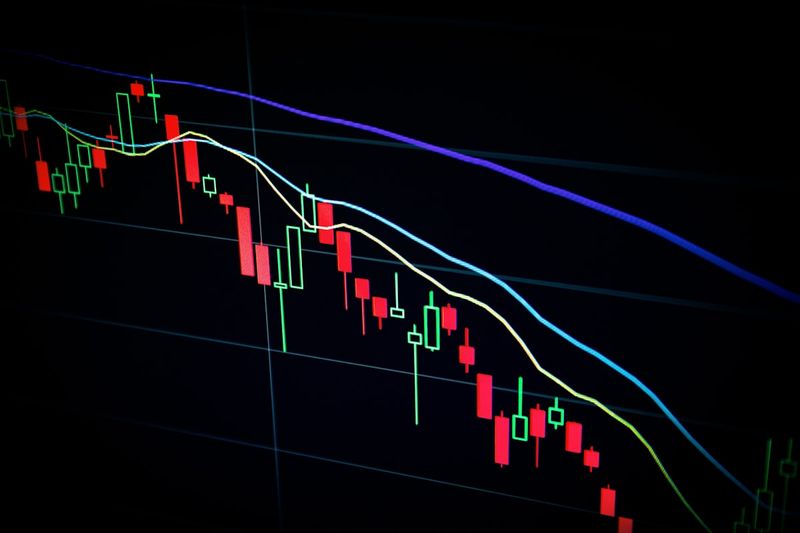
Three asset classes. One week. No shelter.
Stocks are bleeding. Bonds are selling off. Gold — the asset you buy when everything else is on fire — just posted its worst weekly decline in 43 years. The standard playbook says at least one of these should be going up. The standard playbook did not account for a war in the Persian Gulf rewriting the Federal Reserve’s rate path in the space of a fortnight.
The Numbers Are Ugly Everywhere
The S&P 500 fell 1.51% on Wednesday to close at 5,662, while the Nasdaq Composite lost 2.01% and the Dow Jones Industrial Average shed 444 points. The Russell 2000 slipped into official correction territory — a 10% decline from its recent high — and the Dow and Nasdaq are inches from joining it. Tech leaders Nvidia and Tesla each dropped 3%.
Normally, a stock rout sends money rushing into government bonds. Not this time. The 10-year Treasury yield surged to 4.38%, its highest level in months, as traders dumped bonds on the expectation that the Fed will have to keep rates elevated — or raise them. Since the Iran conflict began in late February, the 10-year yield has climbed from 3.96% to well above 4.2%, a move that reflects not a flight to safety but a flight from it.
And gold? Down nearly 10% for the week, bringing its total decline since the war started to 13%. For an asset whose entire reputation rests on being the thing you hold when the world goes sideways, that is a staggering failure of brand promise.
The Mechanism Is Straightforward — and Brutal
The connective tissue is oil. Brent crude topped $112 per barrel on Friday after Iraq declared force majeure at all oilfields operated by foreign companies and drones struck two refineries in Kuwait. The effective closure of the Strait of Hormuz has disrupted roughly 20% of global oil supply, sending Brent from $72 to over $112 in less than three weeks.
That energy shock feeds directly into inflation. February’s producer price index came in at 0.7% month-over-month — more than double the 0.3% analysts expected — driven by a 6% surge in unprocessed energy materials. Annual wholesale inflation hit 3.4%. Consumer prices rose 2.4% in February and are widely expected to accelerate as fuel costs filter through the economy.
The Fed, which held rates steady at 3.50–3.75% on Tuesday, is now boxed in. Officials trimmed their 2026 rate-cut projections from two to one, and the market has gone further: fed funds futures show that June rate-hike odds have climbed to roughly 15%, overtaking the probability of a cut for the first time. Traders are pricing in a 60% chance of a hike by October.
“A month ago, no one would have believed this,” said Ryan Detrick, chief market strategist at Carson Group, referring to the rate-hike probability.
Why Gold Broke
Gold’s collapse is the most counterintuitive piece of the puzzle, and it reveals how completely the rate calculus has overwhelmed geopolitical risk.
The logic runs in a circle: war drives oil higher, oil drives inflation higher, inflation keeps the Fed hawkish, hawkish policy strengthens the dollar and raises real yields — both of which are poison for gold, a non-yielding asset priced in dollars. The very crisis that should support gold is, through the transmission mechanism of energy inflation, destroying its investment case.
The dollar’s rebound has compounded the damage, making gold more expensive for international buyers at the worst possible moment. Gold is not failing despite the war. It is failing because of the war’s second-order effects.
The Stagflation Word
Fed Chair Jerome Powell dismissed stagflation concerns at his press conference on Tuesday, calling it “a 1970s term.” Markets are less sanguine. Yardeni Research raised its stagflation probability to 35% for 2026, up from 20% before the conflict. Goldman Sachs warned that a market correction is increasingly likely and that bonds will not cushion the fall.
Christopher Hodge, an economist at Natixis CIB Americas, called the three-month rate-hike possibility “nuts,” arguing the Fed typically looks through energy shocks and that rising gas prices will ultimately dampen demand enough to cool inflation on their own. He may be right eventually. But “eventually” is cold comfort when every traditional hedge in your portfolio is losing money simultaneously.
The last time stocks, bonds, and gold all declined together for a sustained period was 2022, when the Fed was aggressively hiking to fight post-pandemic inflation. The difference now is that the central bank hasn’t even started tightening — and markets are already pricing as though it must.
What happens next depends on two things no one can predict with confidence: how long oil stays above $100, and whether the Fed blinks. Until one of those questions resolves, investors are left with a market that has misplaced all of its safety nets at once.
Sources
- Stocks tumble Friday as losses mount from Iran war impact — CNBC
- Treasury yields climb as bonds sell off and fear grows that Fed rate cuts are off the table — CNBC
- Gold is having an awful week for a worrying reason — CNN Business
- June Fed rate hike odds just surpassed rate cut odds as stagflation fears grow — Fortune
- Goldman sees risks of market correction rising — and bonds won’t help weather it — CNBC
- Gold and silver sell-off accelerates as inflation fears grip global markets — CNBC
- Government bonds are having their safe haven status tested — CNBC