 lop News
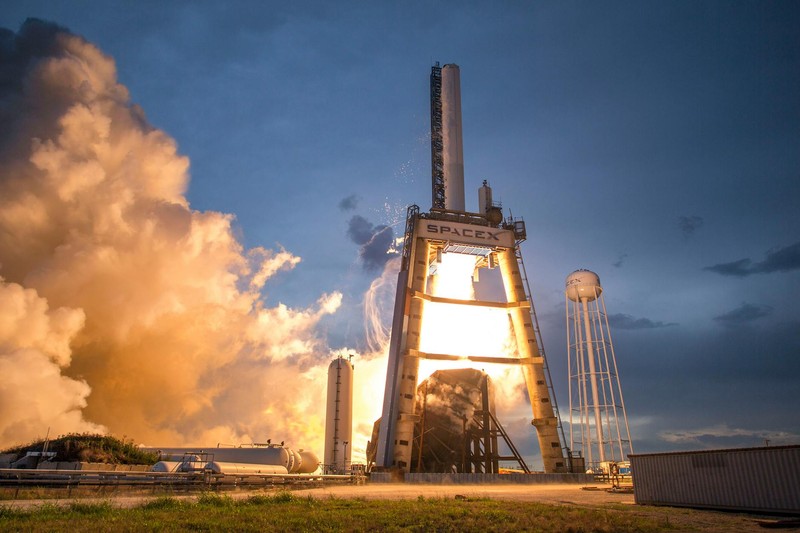
Following an aborted rehearsal attempt on May 9, a fully stacked Starship V3 stood fully fueled on its launch pad in South Texas for the first time — and the countdown ran to completion.
SpaceX completed a wet dress rehearsal of its newest Starship variant on May 12 at the freshly built Pad 2 at Starbase, loading more than 5,000 metric tons of supercooled liquid methane and liquid oxygen into the largest rocket ever assembled. The test validates that the fueling systems, ground support equipment, and software can handle the thermal and mechanical stresses of an actual launch.
The message is straightforward: Starship V3 is not aspirational. It is launch-ready.
Taller Than Anything That Has Flown
At 408 feet (124 meters), Starship V3 is the tallest rocket ever built — roughly the height of a 40-story building, and about 45 feet taller than the Saturn V that carried Apollo astronauts to the Moon. It is a few feet taller than the previous Starship version. In its fully reusable configuration, the vehicle is designed to carry up to 150 metric tons of cargo to orbit, according to SpaceX.
The numbers grab attention, but the upgrades run deeper than dimensions.
What V3 Actually Changes
The vehicle features higher-thrust, more efficient Raptor V3 engines on both the Super Heavy booster and the Starship upper stage. The booster now carries three grid fins instead of four — each 50% larger and significantly stronger, with a new catch point and repositioned placement to reduce heat exposure during hot staging, according to SpaceX.
The hot stage itself has been redesigned: it is now integrated into Super Heavy and will not be discarded during flight, a concrete step toward full reusability. The fuel transfer tube, which channels cryogenic fuel to the booster’s 33 Raptor engines, has been completely redesigned and is now roughly the size of a Falcon 9 first stage. SpaceX says this enables all 33 engines to start simultaneously and allows faster, more reliable flip maneuvers.
The upper stage received what SpaceX describes as a “clean-sheet redesign of its propulsion system,” increasing propellant tank volume and improving the reaction control system for in-flight steering. V3 also includes propellant feed connections for off-Earth fuel transfer — the capability engineers must master before Starship can go anywhere beyond low-Earth orbit.
Flight Plan and What Comes Next
SpaceX is targeting May 19 for the first launch of Starship V3, with a 90-minute window opening at 6:30 p.m. EDT from Starbase.
The mission profile — Flight 12 overall for the Starship program — will send the upper stage eastward on a suborbital trajectory. About 17.5 minutes after liftoff, the vehicle will begin deploying 22 dummy Starlink V2 satellites. Ship will relight one of its six Raptor engines in space before splashing down in the Indian Ocean approximately 65 minutes after launch, according to SpaceX’s mission description.
Super Heavy will not attempt the return-to-launch-site catch that SpaceX has pulled off on previous flights. Instead, the booster will steer to a soft splashdown in the Gulf of Mexico — a conservative choice for a redesigned vehicle on its first flight.
The test also marks the debut of Pad 2 at Starbase, which features faster fueling capabilities and shorter booster-catching arms.
The Bigger Picture
Starship V3 arrives after a seven-month gap since the last Starship flight in October 2025, which went entirely according to plan. That downtime was spent building a new launch pad and a substantially new vehicle — an iterative cadence that has become SpaceX’s signature, and one that is producing results on a timeline that has surprised even close observers of the program.
If V3 performs as intended, the next steps sharpen into focus: in-orbit refueling demonstrations, satellite deployment at scale, and eventually the crewed lunar landings planned under NASA’s Artemis program. SpaceX has not published revised timelines for those milestones. But a successful Flight 12 would turn the critical refueling capability from a future goal into a near-term test objective — and that is when Starship stops being a test program and starts being a transportation system.
Discussion (10)