 lop News
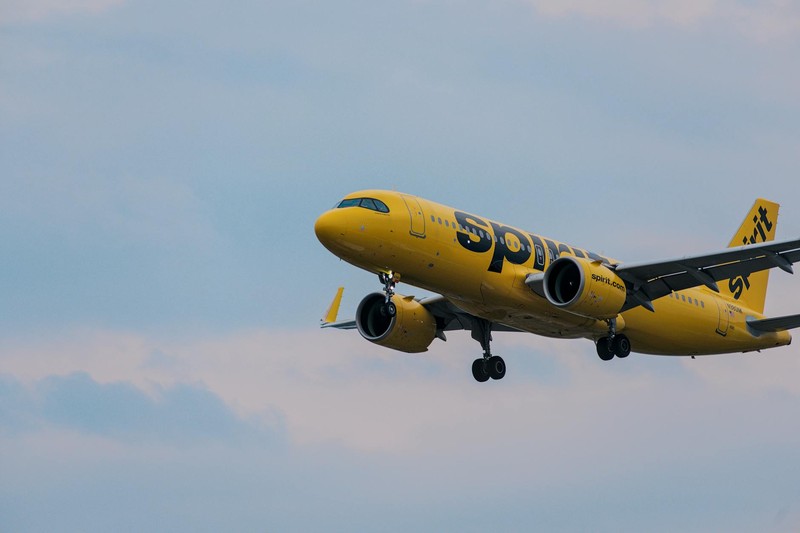
Spirit Airlines cancelled every flight on its schedule Saturday and began winding down operations, marking the end of the largest ultra-low-cost carrier in the United States. Stranded passengers scrambled to rebook. Rival carriers mobilized. And on TikTok, someone decided the people should just buy the airline themselves.
The shutdown came after a last-minute White House rescue package failed to materialize, according to multiple reports. Spirit had cited soaring fuel costs as a major factor in its collapse — the same margin-crushing pressure that had haunted the carrier through months of bankruptcy proceedings and failed merger attempts.
Rivals Step In
American Airlines, Delta Air Lines, United Airlines, and JetBlue all said they would offer special fares to stranded Spirit passengers whose flights were cancelled, according to France 24. Several carriers also indicated they would consider hiring Spirit employees — a small mercy for pilots, flight attendants, and ground crew who showed up to find their workplace had simply ceased to exist.
One Spirit pilot received what colleagues described as an “overwhelming” send-off from Southwest Airlines staff after his final flight was cancelled, according to reports. The moment, captured and shared widely online, was the kind of human vignette that briefly makes the aviation industry look like a community rather than a collection of competing balance sheets.
Reuters reported that Spirit said most customers had been refunded following the abrupt shutdown — though “most” is doing significant work in that sentence. Passengers mid-itinerary, those who booked through third parties, and anyone holding credits rather than cash fares face a messier recovery.
How Spirit Died
The causes were not mysterious. Spirit had been circling the drain for well over a year. Its attempted merger with JetBlue, valued at $3.8 billion, was blocked by a federal judge in January 2024 on antitrust grounds. The Justice Department argued — correctly, as it turned out — that eliminating Spirit as an independent competitor would raise fares for budget-conscious travelers. The irony is that Spirit is now being eliminated as a competitor anyway, just through attrition instead of acquisition.
Fuel costs were the proximate cause. Spirit operated an older, less fuel-efficient fleet than its larger rivals, and its razor-thin margins left no cushion when jet fuel prices climbed. The carrier filed for Chapter 11 bankruptcy protection in late 2024 and had been searching for a path forward ever since. The White House rescue package that might have extended its life never arrived.
The Crowdfunded Airline
Which brings us to the surreal part. A Spirit Airlines fan launched a crowdsourcing campaign called Spirit 2.0, aiming to purchase the airline out of bankruptcy and run it as a customer-owned cooperative. The campaign, promoted heavily on TikTok, has gathered roughly $23 million in pledges, according to Google Business.
The enthusiasm is real. The math is not.
Spirit’s assets — its fleet, routes, gate slots, and brand — would likely fetch hundreds of millions, if not billions, in bankruptcy court. Twenty-three million dollars would not cover a single new Airbus A320, let alone the dozen-plus aircraft a functioning airline requires. Then there are the operating costs: fuel, maintenance, crew salaries, insurance, regulatory compliance. Running an airline is a notoriously capital-intensive business. The idea that a crowdsourced cooperative could materialize overnight to compete with carriers that have decades of infrastructure and billions in revenue is, charitably, a long shot.
The campaign’s website reportedly carries the tagline: “The people can own it.” A nice sentiment. The people will also need about $2 billion and a Federal Aviation Administration operator’s certificate.
What Disappears With Spirit
The loss of Spirit matters beyond the immediate disruption to travelers. For years, Spirit was the carrier other airlines had to beat on price. Its bare-bones model — charge for carry-ons, charge for seat selection, charge for water — kept the base fare low enough to force competitors to offer matching deals on overlapping routes.
Without Spirit in the market, the ultra-low-cost segment in the US shrinks considerably. Frontier and Allegiant remain, but neither has Spirit’s route network or scale. Analysts have noted that the disappearance of a major budget carrier tends to push fares upward on routes where no direct low-cost competitor exists — which is to say, a lot of routes.
The travelers who lose the most are the ones with the least flexibility: people visiting family, students, workers commuting to seasonal jobs. They are not the demographic that typically drives airline policy debates, and they are unlikely to be rescued by a TikTok campaign.
Spirit’s collapse is, at its core, a story about what happens when a business built on being the cheapest option runs out of ways to keep costs below revenue. The send-offs were touching. The refunds are helpful. The crowdfunding is optimistic. None of them are bringing the airline back.
Discussion (10)