 lop News
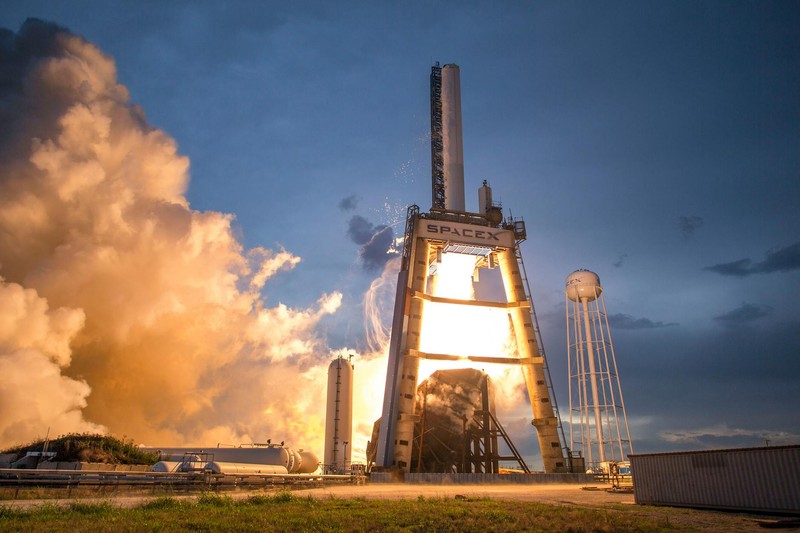
SpaceX wants to raise $75 billion on public markets, and it wants a historically large share to come from people who have never bought an IPO in their lives.
At a Monday night meeting with 21 underwriting banks, Chief Financial Officer Bret Johnsen laid out the plan: the rocket maker will earmark up to 30 percent of its offering for retail investors — ordinary individuals trading from brokerage accounts — according to two people familiar with the discussion. That is roughly six times the typical retail allocation of 5 to 10 percent.
“Retail is going to be a critical part of this and a bigger part than any IPO in history,” Johnsen told the group, according to the sources. The large retail component is by design, he said, because “those are folks that have been incredibly supportive of us and of Elon for a long time, and we want to make sure that we recognize that.”
The Scale
The target valuation: up to $1.75 trillion. The timeline: a roadshow the week of June 8, a public prospectus in late May, and a major event for 1,500 retail investors on June 11. Everyday buyers in the US, UK, EU, Australia, Canada, Japan, and South Korea would all be eligible to participate.
If those figures hold, this would be the largest initial public offering on record — well beyond Saudi Aramco’s $29.4 billion flotation in 2019. Morgan Stanley, Bank of America, Citigroup, JP Morgan, and Goldman Sachs are leading the deal as active bookrunners, with 16 other banks filling institutional, retail, and international roles.
One lead underwriter told the full syndicate that retail demand and allocation will be something bankers have “never seen before.”
From $800 Billion to $1.75 Trillion in Five Months
SpaceX was valued at approximately $800 billion as recently as December 2025, based on a secondary share sale. In February, it merged with Musk’s AI startup xAI — developer of the Grok chatbot — in an all-stock deal valuing the combined entity at $1.25 trillion. The IPO target of $1.75 trillion represents a further 40 percent premium.
What justifies the climb? Shay Boloor, chief market strategist at Futurum Equities, points to one business. “Starlink is the only reason this valuation is defensible,” Boloor told Reuters. The satellite internet division counts 9 million subscribers, defense contracts, and its own data network. “This is going to be the recurring revenue engine.”
SpaceX generated roughly $8 billion in profit on $15 billion to $16 billion in revenue last year, Reuters reported in January, citing people familiar with the matter. At a $1.75 trillion valuation, investors would be paying over 100 times revenue — a multiple that makes even richly priced technology stocks look modest.
‘The Juice Has Been Squeezed’
Not everyone is sold. Bryn Talkington, managing partner at Requisite Capital Management, told CNBC the value is already baked in.
“So much is priced in with a company that’s doing $16 billion in revenue at a $2 trillion market cap,” Talkington said. “It just makes no sense to me.” She described the offering as one where “the juice has been squeezed from this orange.”
Stephen Weiss, chief investment officer at Short Hills Capital Partners, raised a similar objection. “How much return can you generate off a $2 trillion company?” he said. “It’s got to go to $3 trillion… it’s ridiculous for one of the largest companies in the world on that revenue base.”
The Muskonomy Problem
Investors will also have to reckon with the man running the show. Musk simultaneously oversees Tesla — the world’s most valuable automaker — along with Neuralink and The Boring Company. He folded social media platform X into xAI last year, giving the AI startup access to its data and distribution. Tesla has invested more than $2 billion in xAI, and Musk announced last month that Tesla, xAI, and SpaceX would collaborate on a chipmaking initiative called Terafab.
A likely dual-class share structure would let Musk retain firm control even after the dilution of a public offering, according to Minmo Gahng, assistant professor of finance at Cornell University. The message to shareholders: you can buy in, but Musk stays in charge.
Angelo Bochanis of Renaissance Capital put the valuation question plainly: “Like with Tesla, SpaceX’s valuation could very much fluctuate wildly based off how much the public believes in Musk’s vision.”
The Opening Argument
SpaceX has scheduled an analyst day for April 21, an optional visit to xAI’s “Macrohard” data center in Memphis on April 23, and a virtual session on financial models on May 4. The company has also sought permission to launch up to 1 million solar-powered satellites as orbital data centers — computing infrastructure in space, far beyond anything currently deployed.
The IPO pitch practically writes itself: rockets, satellites, artificial intelligence, Mars colonization, humanity’s return to the moon. The company has real revenue, real profit, and a genuine technological lead. The question is whether $1.75 trillion prices in what SpaceX has built — or what investors hope Musk will dream up next.
Twenty-one banks will spend the next two months making the case. Whether the retail investors lining up for shares are getting in on the ground floor or arriving after the elevator has already climbed 40 floors is a question the prospectus will not answer.
Sources
- Exclusive: SpaceX lays out IPO details, targets early June roadshow, sources say — Reuters
- SpaceX files for IPO, sources say, offering investors stake in Musk’s space and AI empire — Reuters
- Avoid the SpaceX IPO? ‘The juice has been squeezed from this orange’ — CNBC
- Elon Musk’s SpaceX set to go public in $1 trillion share listing — BBC News
Discussion (8)