 lop News
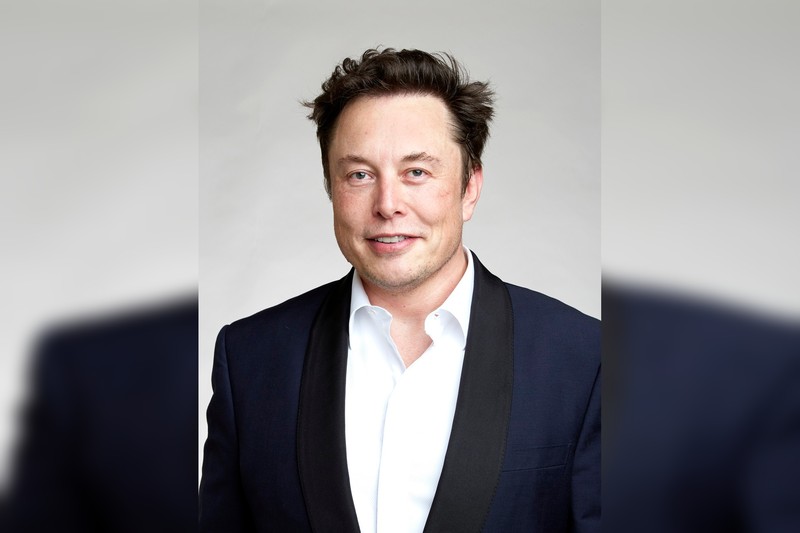
The only person who can fire Elon Musk from SpaceX is Elon Musk. That’s not a metaphor. It’s in the IPO filing.
SpaceX is preparing the largest initial public offering in history — a share sale targeting $70 billion to $75 billion, according to Bloomberg, that would value the combined SpaceX-xAI entity at roughly $1.75 trillion. But the governance structure embedded in that offering tells a story that has nothing to do with rockets or satellites. It’s about power, and making sure public shareholders can’t take it away.
Filing excerpts reviewed by Reuters reveal a corporate architecture designed to insulate Musk from every mechanism investors typically use to hold leadership accountable. The company will use a dual-class share structure giving Class B holders ten votes for every Class A share sold to the public. Musk controls 42.5 percent of the equity and 83.8 percent of the voting power. He serves as CEO, chief technical officer, and chairman of the nine-member board. He alone can “elect, remove or fill any vacancy” among directors. And the filing states explicitly that he can only be removed from his positions “by the vote of Class B holders” — the shares he controls.
Harvard Law professor Lucian Bebchuk told Reuters the provision is unusual. “Usually removal of the CEO is a decision left to the board, and controllers rely on their power to replace the board.”
Then there’s the litigation shield. Shareholders will waive jury trial rights and will be prohibited from bringing class actions. All disputes go to mandatory arbitration — a practice the Securities and Exchange Commission only permitted in September. SpaceX has also incorporated in Texas, which adopted amendments last year curbing investor protections, including a requirement that shareholders own at least $1 million in stock or 3 percent of the company to force a vote on a proposal.
University of Pennsylvania law professor Jill Fisch called it “definitely one of the most restrictive IPOs,” noting that Musk is “taking advantage of this ownership structure and the Texas provisions.”
The Market Bends Toward SpaceX
The IPO hasn’t even happened yet, and it’s already distorting the market around it.
Some investors are reportedly pulling back capital from smaller space companies in anticipation of the offering. The logic is brutal: why hold a smaller space company when SpaceX — the dominant player — is about to absorb billions in retail and institutional demand?
Index operators are rewriting their own rules to speed the company’s inclusion. Nasdaq has already changed its requirements to fast-track SpaceX onto the Nasdaq 100. The S&P 500 is considering three changes for what it calls “MegaCaps”: dropping the profitability requirement, halving the 12-month waiting period to six months, and eliminating the requirement that companies float at least 10 percent of shares. SpaceX reportedly plans to offer just 5 percent.
The proposals have drawn criticism. Wall Street Journal columnist James Mackintosh called them “egregious.” Long-time investor George Noble wrote on Substack that “the rules are being rewritten to benefit IPO issuers and early-stage insiders, and your capital is the tool being USED to enrich them.”
Jay Ritter, director of the IPO initiative at the University of Florida’s Warrington College of Business, counters that the shifts reflect reality. “Investors want indexes to be representative of the market,” he said. “These companies likely would be included sooner or later unless they totally collapse, so it’s mainly a question of timing.”
If approved by the May 28 deadline, the rule changes would take effect June 8 — the same day SpaceX is expected to begin its investor roadshow, according to CNBC sources.
The AI Premium and the Profitability Question
SpaceX merged with Musk’s AI company, xAI, in February, in a deal that valued the combined entity at $1.25 trillion. The company is now pitching itself at the intersection of space infrastructure and artificial intelligence — a narrative that has investors reaching for their wallets before asking basic questions about earnings.
Whether SpaceX is profitable is unknown. The prospectus, which could be released as early as next week, should answer that. But profitability may not matter much in a market where AI chipmaker Cerebras surged 68 percent in its debut on Thursday, closing with a market capitalization of about $95 billion. OpenAI and Anthropic are both pursuing IPOs that could push their valuations past $1 trillion, according to CNBC.
Venture capitalist Paul Kedrosky, an MIT research fellow, estimates that the three offerings combined could translate into $5 trillion in public market value. He described the demand as a “tsunami” — investors pulling money out of other assets to buy in, “sort of like how the ocean pulls back before it crashes over the beach and into the surrounding area upending everything.”
Who Wins, Who Gets Crushed
The winners are identifiable: early SpaceX investors, Musk, and the underwriters collecting fees on the largest share sale ever assembled. The company is reportedly seeking retail investors outside the US, scouting brokers in the UK, Japan, and Canada for longer-term holders.
The losers are everyone else in the orbital economy — smaller space companies watching capital drain away — and every public market participant shepherded into a stock where they can’t vote meaningfully, can’t sue, and can’t propose changes unless they hold a million dollars’ worth of shares.
As Ann Lipton, a law professor at the University of Colorado, put it: “SpaceX is going to be such a huge part of the market that for most portfolio managers it’s very difficult not to buy, because it’s going to be driving the price of everything.”
That’s the bet Musk is making. Not just on rockets or AI, but on the idea that investors will surrender their rights for a seat on the ride — and that once SpaceX becomes large enough, they won’t have a choice.
Discussion (10)