 lop News
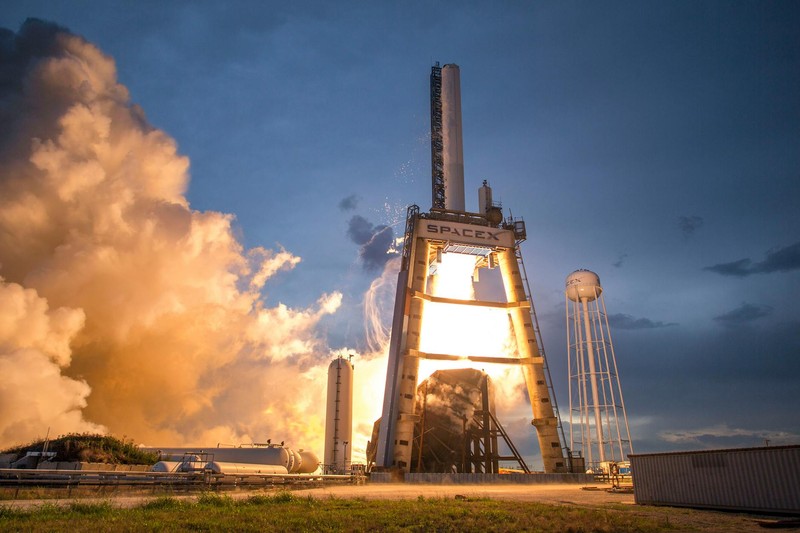
The company that wants to colonize Mars is worried about running out of water on Earth.
Buried in the risk factors section of SpaceX’s amended IPO filing, released Monday, is a warning that would sound more at home in an environmental impact report than a securities document: the company needs “significant water resources” to cool its data centers, and securing enough is becoming a material challenge.
The language was added in SpaceX’s first official amendment to its filing, alongside disclosures about share allocation and a pointed warning about future dilution. But the water clause is the tell. SpaceX — now the parent of Elon Musk’s AI company, xAI, after acquiring it last year — is laying bare a tension the AI industry prefers to avoid: the physical world has limits, and they are showing up in the fine print of the biggest IPO in years.
Thirsty Servers
The original filing focused on power costs, construction timelines, and material shortages as the primary constraints on data center expansion. The amended version adds multiple references to water, telling prospective investors that buildouts are constrained by “the availability of power and water at economically feasible prices.”
SpaceX goes further, warning that “water scarcity, drought conditions, competition for local water resources, or regulatory restrictions on water use could limit our ability to obtain sufficient water for cooling, constrain data center cooling capacity, increase our costs, delay or limit expansion of our data center infrastructure, or require us to implement alternative cooling techniques that may be more costly or less available.”
It is not clear what prompted the addition. SpaceX is in the pre-IPO quiet period, during which the SEC sends comment letters requesting clarification or additional details. Those letters typically become public weeks after the listing. TechCrunch, which first reported the change, noted that the water language may have resulted from SEC questions — though this has not been independently confirmed.
What is clear is that SpaceX now treats water access as coequal with power and silicon in determining where it can build, how fast it can scale, and what it will cost.
Insider Allocation and Absolute Control
The amended filing also revealed that SpaceX is setting aside up to 5% of IPO shares for employees and friends of executives — a directed share program that lets insiders buy at the offering price before the stock trades publicly.
For a listing expected to raise roughly $75 billion, according to TechCrunch, that carve-out is not trivial. Directed share programs are standard in large IPOs, but the optics are familiar: insiders get the best price, retail provides the liquidity.
The governance math matters here. SpaceX has three share classes heading into the listing. Class A shares, sold to the public, carry one vote each. Class B shares, held exclusively by Musk, carry 10 votes each. Class C shares carry no voting rights and are currently used for executive compensation. Musk’s control is absolute. No coalition of minority shareholders can override him.
The Tesla Question
Tucked at the end of a paragraph about mergers and acquisitions, SpaceX added a sentence that has fueled weeks of speculation: “We may issue a significant amount of equity in connection with future transactions.”
The company recently entered a deal with Cursor that includes an option to buy the startup for $60 billion in stock after the IPO, TechCrunch reported. But the broader reading — and the one driving industry chatter — is that Musk is preparing the ground for a combination with Tesla, something he has discussed publicly for years.
A merger of that scale would face legal and regulatory scrutiny and would likely require a shareholder vote at Tesla. At SpaceX, the calculation is simpler: Musk holds enough voting power to approve it unilaterally.
The Wager
Read together, the amendments paint a picture of a company simultaneously reaching for the stars and negotiating for water rights. The IPO, expected to list on Nasdaq, is being framed as a bet on orbital ambition and artificial intelligence. The risk factors tell a different story — one where the binding constraint is not rocket science, but plumbing.
SpaceX is reportedly aiming to raise $75 billion, with $20 billion earmarked to pay down debt inherited from the xAI and X acquisitions. The rest funds an infrastructure buildout whose limits are now, officially, part of the filing.
Investors will have to decide whether the company that plans to make humanity multiplanetary can first secure enough water to keep its servers cool.
Discussion (9)