 lop News
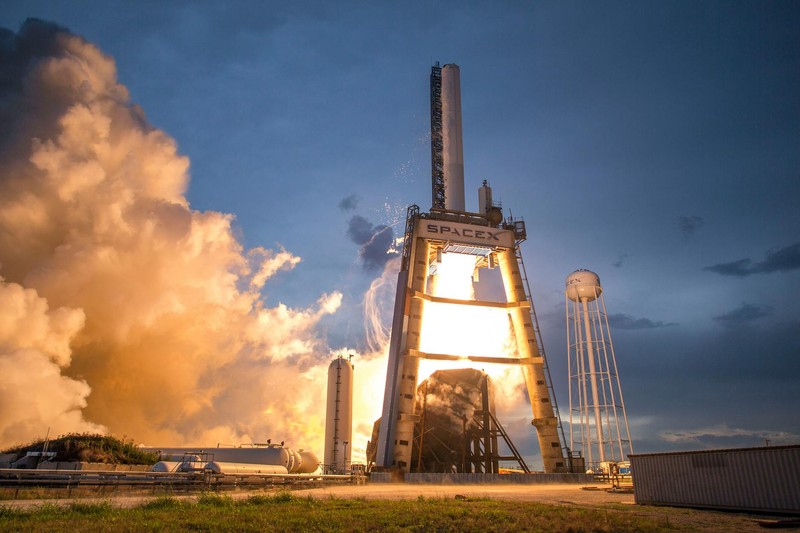
SpaceX — the world’s most valuable private company for the better part of a decade — is finally going public. The terms Elon Musk has set should concentrate a few minds.
The S-1 prospectus, now public after a confidential SEC filing on April 1, confirms a $1.75 trillion listing valuation and a $75 billion raise that would make it the largest IPO in history, more than 2.5 times Saudi Aramco’s 2019 record. It also confirms that Musk will answer to shareholders only when he chooses to.
Musk holds approximately 42% of SpaceX’s equity but controls roughly 79% of the votes through a dual-class share structure granting insiders 10 votes per share. SpaceX will operate as a “controlled company,” exempt from requirements that a majority of its board be independent directors, according to excerpts reviewed by Reuters. Just 3% to 4% of Russell 3000 companies operate with insider-majority boards, per a 2024 National Association of Corporate Directors study.
The Two Businesses
SpaceX is really two companies bolted together. The core launch and Starlink satellite business generated $15 billion to $16 billion in revenue in 2025, with Starlink alone contributing more than $10 billion from 9.2 million subscribers and $4.42 billion in operating profit.
Then there is xAI, Musk’s AI startup and parent of social media platform X, acquired in an all-stock deal in February. The combined company swung to a $4.94 billion loss on $18.67 billion in consolidated revenue, driven by capital spending that more than doubled to $20.74 billion — a nearly fivefold increase over two years, more than half of it on AI infrastructure. The prior year, SpaceX posted a $791 million profit on $14.02 billion in revenue.
The $1.75 trillion valuation implies roughly 80 times projected 2026 revenue of approximately $22 billion, according to Forbes. The prospectus warns that initiatives to develop “orbital AI compute and in-orbit, lunar, and interplanetary industrialization” involve “significant technical complexity and unproven technologies, and may not achieve commercial viability.”
The Governance Architecture
Stanford corporate governance professor David Larcker noted that the structure “seems to alleviate some of the things that have been legally painful for Tesla” — a reference to a Delaware judge’s 2024 ruling rescinding Musk’s $56 billion pay package on grounds of board capture. Musk won restoration of the package in December.
The filing shows Musk serving as CEO, chief technical officer, and chairman of a nine-member board. His compensation last year was $54,080, but he stands to receive 60 million additional shares if SpaceX hits a $6.6 trillion market cap and builds orbital data centers, according to The Information. Vesting conditions include “a permanent human colony on Mars with at least one million inhabitants.”
Former Fidelity fund manager George Noble described the share structure as “the most SHAMELESS structural manipulation of a major index” in a widely shared post, arguing retail investors are being offered as exit liquidity for insiders.
The Tesla Problem
The listing comes at an uncomfortable moment for Tesla. Investors frustrated by slowing EV demand and unfulfilled robotaxi promises now have an alternative Musk bet. Ross Gerber, CEO of Gerber Kawasaki, which manages over $4 billion, was blunt: “If I sell my Tesla shares, nobody’s going to argue that it’s not overvalued. And if I want to buy the sizzle, I’m going to buy SpaceX.”
Baird analyst Ben Kallo expects most investors to hold both, expanding what he called “investment in the overall Elon complex.” But governance concerns follow Musk across companies. A board member of a public fund that holds Tesla and plans to buy SpaceX told Forbes that “the same governance issues will continue at SpaceX.”
Gerber sees an eventual Tesla-SpaceX merger as inevitable — and the current two-public-company structure as a governance minefield. “You can’t really run two public companies and not have conflict of interest lawsuits constantly,” he said.
The Offering
SpaceX is targeting a June Nasdaq listing, with Bank of America, Goldman Sachs, JPMorgan Chase, and Morgan Stanley as senior underwriters. The offering includes an unusually large 30% retail allocation — roughly three times the norm for an IPO of this size. Whether the timeline holds depends on market conditions; the Nasdaq has been volatile amid the US-Iran conflict and rising oil prices.
Musk has presented investors with a proposition unusual in its clarity: the largest IPO in history, stakes in satellite internet, rocket launches, and artificial intelligence, a price tag demanding faith in technologies that do not yet exist, and governance that guarantees shareholders will have no say in any of it. The market now decides whether that is enough.
Sources
- Exclusive-SpaceX IPO filing shows Elon Musk can retain board control — Channel News Asia (Reuters)
- SpaceX’s public IPO filing confirms Musk and insiders retain dominant voting control — The Next Web
- Musk and insiders to retain voting control of SpaceX after IPO, filing shows — RTE (Reuters)
- SpaceX’s IPO Could Leave Tesla Eating Rocket Dust — Forbes
Discussion (9)