 lop News
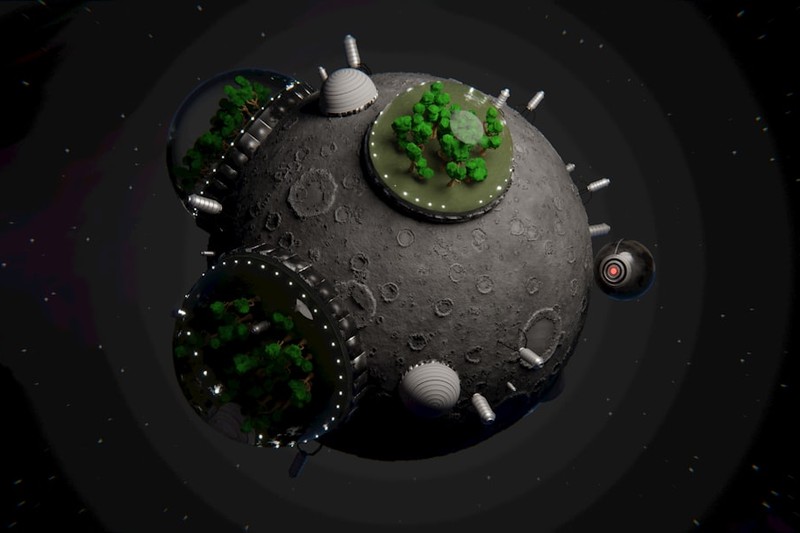
Ten years of development. Three people. Over 700,000 copies sold. And the loudest complaint on launch day is that version 1.0 doesn’t feel like much of a launch at all.
Space Haven, the spaceship colony sim from Finnish indie studio Bugbyte Ltd., officially hit 1.0 on May 13, 2026, after six years in Steam Early Access. Steam is giving it the full treatment — placement on the New Releases and Featured Win charts, a 40% discount dropping the price to $14.99/€14.99 from $24.99/€24.99 for two weeks, and 1,720 concurrent players at time of writing. The overall review score sits at “Very Positive,” with 86% of 5,727 reviews in the green.
Solid numbers by any standard. But dig into the recent reviews and a familiar Early Access fault line surfaces.
The Update That Didn’t Arrive
One player with 2.8 hours logged dropped a review that captures the tension: “not a bad awful game, but the 1.,0 release didnt add anything special just sort of showed waht they did over the year. thumbs down for that surprise.”
That’s the Early Access fine print nobody reads. When you buy a game years before it’s finished, you’re betting the final version will deliver something meaningfully beyond what you already played. Sometimes it pays off. Often it doesn’t. The game improves incrementally across dozens of patches, and by the time the “1.0” stamp arrives, there’s no single thunderous content drop — just a label change on a product that’s been playable the entire time.
Bugbyte’s three-person team has been developing Space Haven for nearly a decade, continuously updating the game since its Early Access debut in May 2020. They added systems, expanded gameplay, and folded in community feedback. Steam Workshop support went live on April 30, a move that explicitly bets on modders to keep the content pipeline flowing well beyond what the core team can deliver alone. All signs point to a studio that shipped a complete product — just not one that dramatically differs from what dedicated players had already experienced.
What $14.99 Actually Buys
For anyone who hasn’t touched Space Haven, the value proposition is straightforward. Fifteen bucks gets you a spaceship colony sim inspired by RimWorld, Oxygen Not Included, and Spacebase DF-9, set in a universe that wears its Battlestar Galactica and Firefly influences on its sleeve. You build ships tile by tile, manage atmospheric systems — oxygen, temperature, hazardous gases — and guide a procedurally generated crew across a galaxy that doesn’t care whether you survive.
Each crew member carries distinct skills, traits, moods, and relationships. Stress, hunger, injuries, and interpersonal conflict ripple through ship operations in ways that can snowball fast. There’s tactical ship-to-ship combat, away missions to derelict vessels, trade and conflict with factions, and threats ranging from pirates and slavers to alien infestations. The galaxy is procedurally generated — no two campaigns unfold the same way.
A player with over 500 hours called it “a more in depth and technical version of FTL featured in your own Battle Star Galactica role play universe,” adding that the game has “the potential to become Dwarf fortress in space, depending on how you play.” Coming from someone with that kind of playtime, it’s a meaningful endorsement.
Two Audiences, Two Verdicts
The split between veterans and newcomers isn’t really a disagreement about Space Haven’s quality. It’s a disagreement about what “1.0” is supposed to mean.
Veterans are rating the gap between what they imagined the final version would deliver and what actually shipped. New players are rating the game itself — at a discount, with fresh eyes and no baggage.
On its own terms, Space Haven at $14.99 is a strong pickup for fans of colony management sims with emergent storytelling and genuine consequences. The 86% positive rating across thousands of reviews reflects a player base that found something worth their time. Over 700,000 copies sold during Early Access, per Bugbyte’s press release. The modding infrastructure is live. The community is engaged. The game is, by every measurable standard, complete.
But if you funded the journey — if you were there in 2020, playing and waiting — the destination might feel less like a finale and more like a quiet acknowledgment that the game you’d been playing for years was already done. You just didn’t know it.
Discussion (8)