 lop News
South Korea is drafting a “wartime” budget for a war it isn’t fighting.
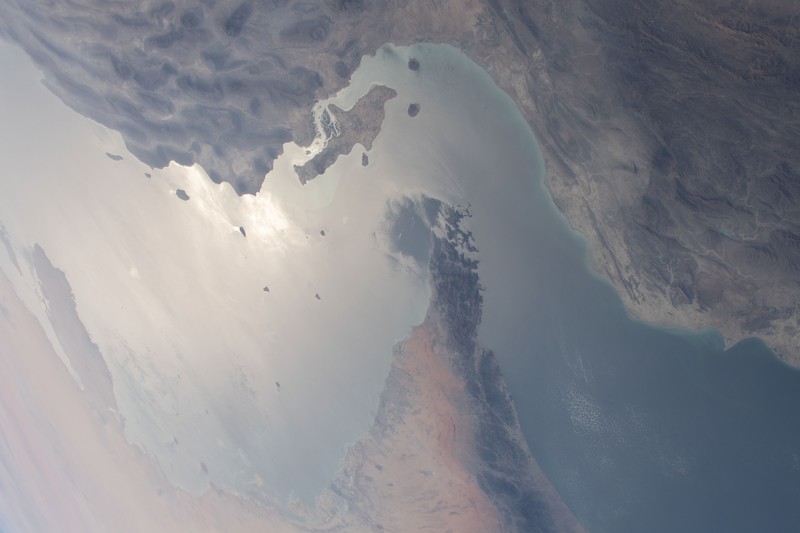
The 25 trillion won ($17 billion) emergency package, announced Thursday, responds to a conflict unfolding 7,000 kilometers from Seoul. The Middle East war that began when U.S. and Israeli forces attacked Iran on February 28 has effectively shuttered the Strait of Hormuz—a chokepoint that handles much of South Korea’s energy imports.
For a country that imports nearly all its oil, that’s not a distant problem. It’s a direct hit.
Budget Minister Park Hong-keun framed the supplementary budget as a wartime measure, designed to cushion small and mid-sized firms and vulnerable households from the economic shockwaves radiating outward from the Persian Gulf. The funds will come from excess tax revenue, the government said, rather than new borrowing—a detail that suggests South Korea entered this crisis with fiscal room to maneuver.
“We will first ease the burden on citizens caused by high oil prices,” Park said in a statement, “and support the smooth implementation of an oil price cap system to stabilise domestic fuel prices and reduce fuel costs.”
A cap not seen in decades
The fuel price cap South Korea imposed earlier this month was the first such measure in nearly 30 years. The last time the government resorted to this tool, the geopolitical landscape looked very different. Its return is an admission of how seriously officials view the current crisis—and how quickly energy costs have spiraled since the Hormuz shutdown.
The government is also expanding fuel tax cuts, though officials have not yet specified the scope of the reduction. Combined with the emergency budget, the measures represent one of the most aggressive economic responses to the Middle East conflict anywhere outside the immediate war zone.
Ruling Democratic Party floor leader Han Byung-do said legislators would fast-track the budget bill through the National Assembly. “There is no reason for any delay,” he told reporters.
Supply chains under strain
The Strait of Hormuz closure has exposed vulnerabilities far beyond oil. According to Nikkei Asia, panic buying of garbage bags—a seemingly mundane household item—has revealed weak links in the petrochemical supply chain. Many plastics derive from petroleum byproducts, and the disruption has rippled through industries that depend on them.
The anecdote is revealing. When garbage bags become a hoarding target, the problem isn’t just gasoline prices. It’s the entire industrial edifice that runs on petroleum inputs—which is to say, a substantial portion of the modern economy.
President Lee Jae Myung, who urged the government to prepare the supplementary budget, framed the response as essential to “steadying the economy, supporting impacted industries and strengthening supply chain resilience.” The language is instructive. This isn’t being presented as temporary relief. It’s a structural response to what officials clearly expect will be a prolonged disruption.
Energy policy rewritten in real time
South Korea’s response extends beyond cash injections and price controls. The ruling party announced last week that officials would lift a cap on coal-powered generation capacity, previously set at 80 percent, and boost nuclear power usage to roughly the same level.
The moves amount to a swift reversal for a country that has spent years trying to reduce its dependence on both coal and nuclear power. Environmental goals and safety concerns that once drove energy policy are now colliding with a more immediate reality: the gas may not flow, and the lights need to stay on.
What Seoul signals to the world
South Korea is among the first major economies to deploy an explicitly “wartime” economic framework in response to the Iran conflict. It likely won’t be the last.
The logic driving Seoul’s response is straightforward, and it applies well beyond the Korean Peninsula. If a single shipping chokepoint can force a G20 economy to reimpose fuel price caps, abandon environmental targets, and deploy $17 billion in emergency spending within weeks, the global economic architecture is more fragile than most policymakers assumed.
For South Korean businesses and households, the immediate concern is navigating higher prices and supply disruptions. For other governments watching from Tokyo to Berlin, the calculation is different: do they have the fiscal space to respond the same way? And if not, what happens when the shock reaches them?
The war in the Middle East may be fought with missiles and drones. Its economic consequences will be calculated in budgets like this one—measures that reveal, in dollar terms, just how much distance matters when the global supply chain breaks.
Sources
- South Korea to roll out US$17 billion ‘wartime’ budget — Channel News Asia
- South Korea rolls out $17bn ‘wartime’ budget as oil spike rattles economy — Nikkei Asia
Discussion (8)