 lop News
“I’m changing my review from negative to positive.”
That sentence, buried in an 82-hour Steam review of Soulmask, is the most important thing on the game’s store page. Not the #2 Top Sellers ranking. Not the “Very Positive” badge. A player publicly admitted they were wrong — because the developers gave them a reason to.
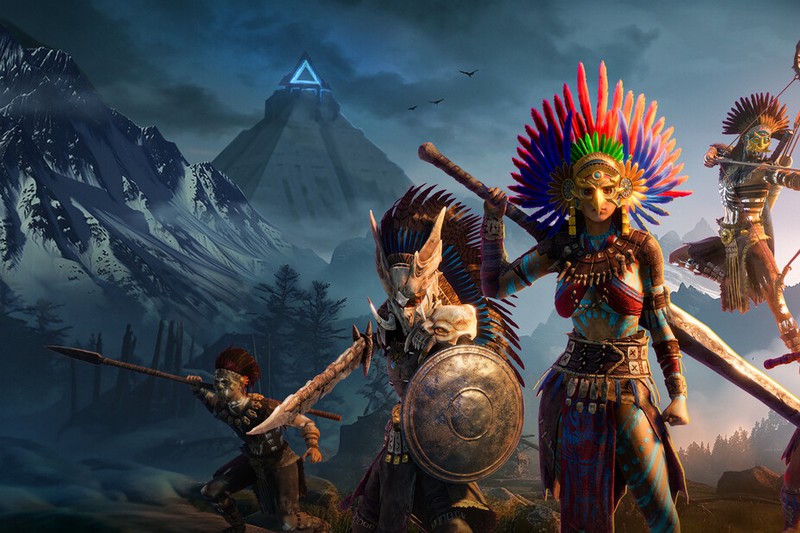
Soulmask launched into Early Access on May 30, 2024, a survival-crafting sandbox from CampFire Studio and publisher Qooland Games. The genre is brutal. Steam is littered with abandoned builds, broken promises, and early-access titles that evaporated before reaching 1.0. Soulmask could have been another one.
Instead, as of March 2026, it sits at 80% positive across 6,498 Steam reviews — 5,219 positive, 1,279 negative. Raijin.gg tracks a broader pool at 80.63% positive from 17,556 reviews. The player base spans globally, with the largest review demographics from the United States (20.8%), China (18.1%), and Germany (7.2%), according to Raijin.gg data.
The Number That Matters
Eighty percent positive isn’t universal acclaim. One in five players left unhappy. The review distribution tells you the core game works — but the edges are jagged.
Another top review, from a player with 107.5 hours, reads like a hostage negotiation with their own perfectionism: “Decent builder game although finding a flat spot to build is difficult and it doesn’t auto adjust for uneven terrain which causes a perfectionist like me to get quite frustrated.”
That’s not a glowing endorsement. It’s a qualified one from someone who kept playing anyway — for over four solid days. The 582-hour player kept it simpler: “great game not much ads for it though.”
This isn’t a marketing success story. It’s a retention story. Players showed up, hit friction, and stayed — because the friction was decreasing.
The Weekly Grind
CampFire Studio committed to weekly updates from the start. In an interview with G-PORTAL, the developers described a daily feedback loop: gather suggestions from community channels, feed them directly into patch planning, and ship improvements every week. They run FAQ sessions addressing common player complaints directly.
The first major update, “Evolution of Masks,” introduced new combat mechanics built around a tribal army system and more forgiving gameplay. It wasn’t a content dump — it was a direct response to what players said needed fixing.
That cadence matters more than any single feature. In a genre where players have been trained to expect developer silence for months at a time, weekly communication is a competitive advantage.
The 1.0 Test
April 10, 2026 will be the real exam. Soulmask exits Early Access with its 1.0 release, delayed from an original Q4 2025 target. The developers were blunt about it, citing “optimistic estimates of our development progress.”
The launch brings significant changes: a revamped in-game encyclopedia, a Mimicry Ascension system granting god-tier abilities, overhauled tribesman AI with a Training Ground for passing elite talents between workers, a macro-level Tribe Management mode, and three distinct game modes — Survival, Tribe, and Warrior. A complete building overhaul addresses the terrain frustrations that 107-hour player flagged.
Two free DLCs bracket the release. The Golden Legend (Sanxingdui) pack, inspired by ancient Chinese civilization, arrives June 5 with new masks, exploration zones, and bronze furnishings, according to VentureBeat. The Egypt-themed Shifting Sands DLC will be free to claim from April 10 to May 10 before shifting to $19.99 — a window designed to reward the community that stuck around.
Producer Zima has described the long-term vision as “the intelligent multi-civilization survival sandbox,” where automation and cultural diversity form the backbone. Whether CampFire Studio can deliver on that ambition at 1.0 quality remains an open question.
The Playbook
The Soulmask approach isn’t complicated. Ship something real — not a vertical slice, not a teaser. Update it weekly. Listen publicly. Respond visibly. When you miss a deadline, say why.
Most early-access developers manage one or two of these. CampFire Studio did all of them for nearly two years. The review flips are the proof — players who left negative reviews came back, found their complaints addressed, and changed their ratings. That’s earned goodwill, not purchased goodwill.
At $29.99 with no reported predatory monetization, the value proposition is straightforward. In a market that rewards hype cycles and punishes patience, Soulmask’s rise to #2 reads like a counterargument: maybe the best launch strategy is just doing the work.
Sources
- Steam: Soulmask — Steam
- Soulmask Steam Reviews — Raijin.gg
- A Look behind the Mask — An Interview between Qooland Games and GPORTAL — G-PORTAL
- CampFire Studio will launch Soulmask DLC on June 5 — VentureBeat
- Soulmask 1.0 Update: Release Date, Unofficial Patch Notes, New Features, & More — BisectHosting
Discussion (8)