 lop News
The United States has revoked the green cards and detained two family members of Qassem Soleimani — the Iranian general killed by an American drone strike six years ago — bringing the Iran war into domestic immigration enforcement in a way that should trouble anyone holding a US permanent resident card.
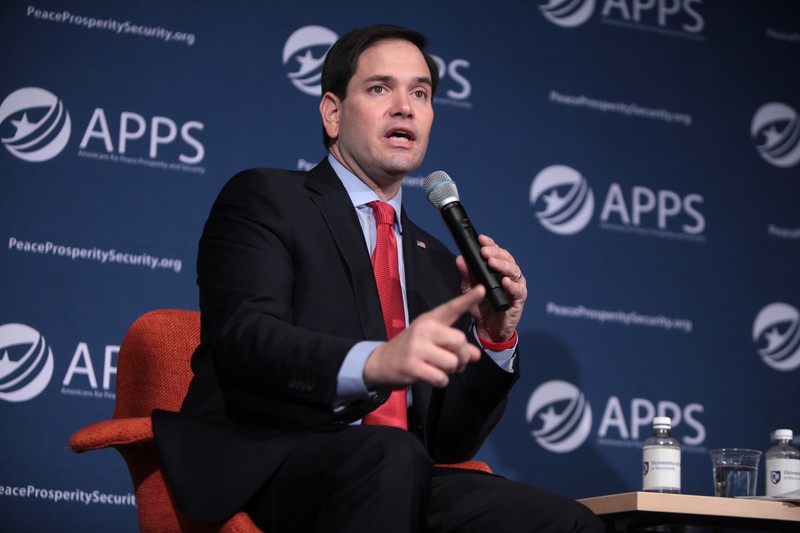
Hamideh Soleimani Afshar, Soleimani’s niece, and her daughter were arrested by Immigration and Customs Enforcement agents on Friday night after Secretary of State Marco Rubio personally terminated their lawful permanent resident status. Both are now in ICE custody pending removal. Afshar’s husband has been barred from entering the country.
The State Department’s stated rationale rests almost entirely on political speech. In a statement released Saturday, the department described Soleimani Afshar as “an outspoken supporter of the totalitarian, terrorist regime in Iran” who “promoted Iranian regime propaganda” and “voiced her unflinching support” for the Islamic Revolutionary Guard Corps (IRGC), a US-designated terrorist organization. Rubio, in a social media post — since deleted, though widely reposted — added that she had “celebrated attacks on Americans and referred to our country as the ‘Great Satan.’”
That is the full public case: social media posts and political statements. No criminal charges have been filed. No allegations of material support for terrorism have been made. The government is deporting legal residents for what they said on the internet about a country the United States is now bombing.
A Broader Sweep
The Soleimani detentions are not isolated. Earlier this month, Rubio revoked the legal immigration status of Fatemeh Ardeshir-Larijani — daughter of Ali Larijani, the former secretary of Iran’s Supreme National Security Council, who was killed in an Israeli airstrike on March 17. Her husband, Seyed Kalantar Motamedi, also had his legal US immigration status revoked. Both have already departed the United States and are permanently barred from returning, according to the State Department.
Ardeshir-Larijani had been working in oncology at Emory University’s School of Medicine in Georgia. A Change.org petition calling for her deportation gathered over 157,000 signatures. Republican Congressman Earl “Buddy” Carter wrote to Emory demanding the university act, arguing that “America’s medical institutions must not serve as a safe harbor for individuals connected by blood and loyalty to regimes that openly call for the death of Americans.” She was no longer employed by Emory as of January, according to the student newspaper The Emory Wheel.
In the Soleimani case, far-right activist Laura Loomer publicly claimed credit, writing on social media that she had reported Soleimani Afshar to the State Department and thanking Rubio for what she called “a big scalp.” An online petition calling for Afshar’s deportation had gathered more than 4,000 signatures after the war began, according to Al Jazeera.
The Legal Question
Legal permanent residents of the United States have historically enjoyed substantial due process protections. Revoking green card status requires establishing deportability under specific grounds in the Immigration and Nationality Act — typically criminal convictions, fraud in the immigration process, or material support for terrorism.
The State Department has not alleged material support. It has alleged speech: political statements, expressions of allegiance to a foreign government whose military arm the US designates as terrorist. Whether expressing political sympathy — without any demonstrated material connection to a designated group — meets the legal threshold for deporting a lawful permanent resident is a question the courts will likely have to settle, assuming the detainees have access to counsel.
War, Exported Inward
All of this comes five weeks into the US-Israeli military campaign against Iran, which began on February 28. According to MSN, the conflict has killed at least 3,300 people in the region and 13 US military personnel, though these figures have not been independently verified. On April 1, President Trump declared in a national address that the war would continue for several more weeks, vowing to “finish the job” and pledging to send Iran back to “the Stone Ages, where they belong.”
The arrests reflect a broader pattern. The Iran conflict is no longer confined to Iranian airspace — wartime logic is migrating from the battlefield to the immigration system, the university campus, and the social media feed. The State Department separately noted that in early December, well before the war began, it had revoked or declined to renew visas for several Iranian diplomats and staff at Iran’s mission to the United Nations.
No one was at war in December. The visas were pulled anyway.
When a government begins deporting legal residents for being related to the people it has killed — and does so on the strength of Instagram posts — the distance between foreign war and domestic repression has narrowed past the point of comfort.
Discussion (8)