 lop News
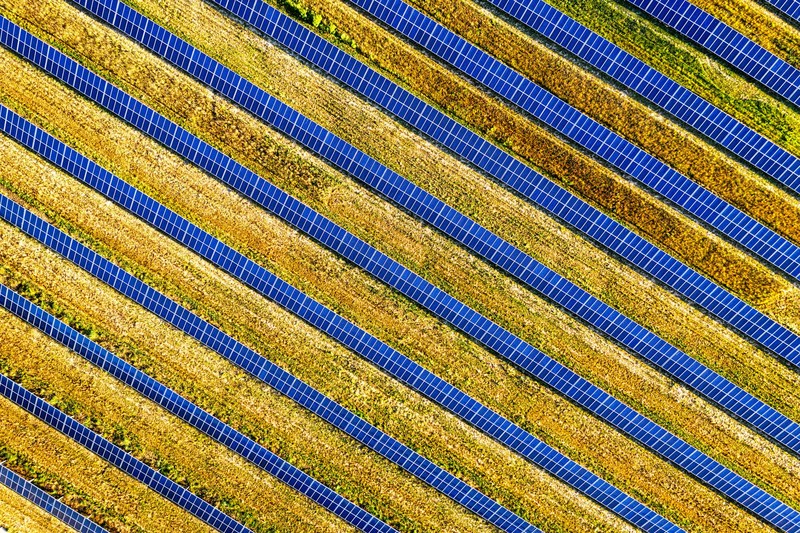
600 terawatt-hours. That’s how much electricity solar panels added to the global grid in 2025 — the largest single-year increase ever recorded for any power generation technology, according to the International Energy Agency.
For the first time on record, a modern renewable source contributed more to global energy supply growth than any fossil fuel. Solar PV accounted for over 25% of the increase in worldwide energy supply last year. Natural gas, the longtime workhorse of growing economies, managed 17%.
What “Overtaking” Actually Means
The milestone deserves precision. Solar is not yet the world’s largest electricity source by total generation — coal and gas still produce more in absolute terms. What shifted is the growth accounting: when the world needed more energy in 2025, solar delivered more of that new supply than anything else. The pecking order of energy expansion has changed.
Overall global energy demand grew just 1.3% in 2025, below the previous decade’s average of 1.4% and a sharp deceleration from 2024. The IEA attributes the slowdown to weaker economic growth, milder temperatures in some regions, and improving efficiency.
Electricity tells a different story. Power consumption surged roughly 3% — more than twice the rate of overall energy demand. Electric vehicle sales jumped over 20% to surpass 20 million units, roughly one in four new cars sold globally. Data center power demand grew 17%. Industry, buildings, and appliances remained the largest drivers.
China Falls, the US Rises — in Emissions
The geography of this transition matters as much as the technology.
China still accounted for the largest share of global energy demand growth, but its growth rate dropped sharply to 1.7% as renewables displaced coal and efficiency gains took hold. The country’s energy-related CO2 emissions actually declined. India’s emissions were flat for the first time since the 1970s, excluding the pandemic — aided by a strong monsoon season that reduced cooling demand.
The United States told a more complicated story. Energy demand growth hit its second-highest level this century, excluding post-recession years. Data centers accounted for roughly half of total US electricity demand growth, according to the IEA. But higher natural gas prices pushed utilities toward coal, and a colder winter drove up fossil fuel use. The result: advanced economies saw emissions grow faster than emerging and developing economies for the first time since the 1990s.
Batteries, Nuclear, and the Scale Question
Solar isn’t scaling alone. Battery storage was the fastest-growing power sector technology in 2025, with roughly 110 gigawatts of new capacity — exceeding the largest annual natural gas capacity additions on record. Nuclear saw over 12 gigawatts of new reactors begin construction across multiple regions.
Collectively, renewables and nuclear met nearly 60% of the growth in global energy demand. Clean electricity generation exceeded the total increase in power demand — meaning new low-carbon sources more than covered the world’s additional electricity needs.
The cumulative effect is substantial. The IEA calculates that solar, wind, heat pumps, and other clean technologies deployed since 2019 now avoid annual fossil fuel consumption equivalent to the entire energy demand of Latin America. They displace natural gas demand equal to roughly half of global LNG exports.
Panels Are Easy. Grids Are Hard.
The numbers are striking. The caveat is structural.
Adding generation capacity is not the same as delivering reliable electricity. Transmission infrastructure, grid modernization, and long-duration storage have not kept pace with the speed of solar deployment in many regions. The 600 terawatt-hours added in 2025 reflects panels installed and connected — but integrating that much variable generation into aging grid systems is an engineering challenge that will shape the next decade.
Oil demand still grew, by 0.7%. Coal use fell in China but rose in the US. Global energy-related CO2 emissions still crept upward by 0.4%. Solar is winning the growth race. The broader energy system has not yet been rewired.
As IEA Executive Director Fatih Birol put it: “Electricity consumption is growing much faster than overall energy demand — and one energy source is growing much faster than any other.”
The direction of travel is clear. Whether the infrastructure follows is the question that will determine whether this milestone marks a turning point or a high-water mark.
Discussion (8)