 lop News
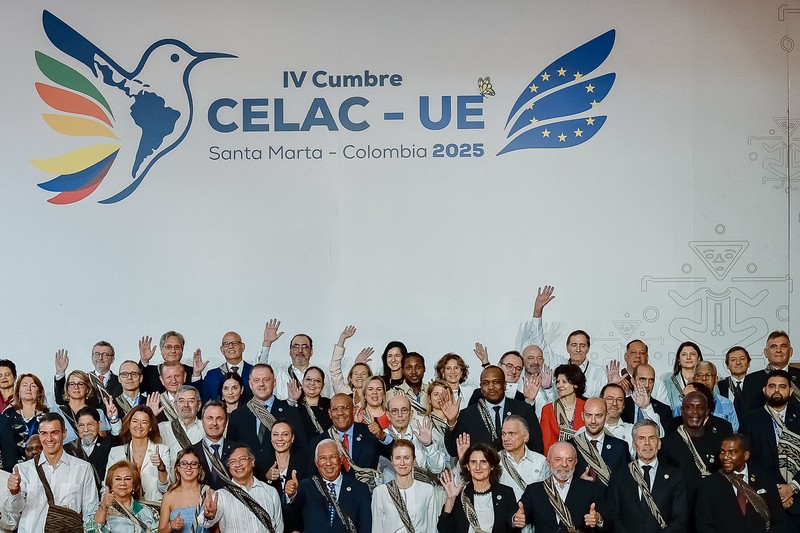
Fifty-nine countries walked out of a two-day conference in Colombia this week having agreed to draw up national roadmaps for phasing out coal, oil, and gas. No one has to follow through. No deadlines were set. No enforcement mechanism exists.
The Conference on Transitioning Away from Fossil Fuels, co-hosted by Colombia and the Netherlands in the Caribbean city of Santa Marta, produced what organizers called a “historic breakthrough”: the first international gathering dedicated specifically to coordinating an exit from the fuels driving global warming.
The coalition of 59 signatories covers more than half of global GDP, nearly a third of global energy demand, and roughly a fifth of fossil fuel supply, according to The Guardian. Almost half are fossil fuel producers — including Australia, Mexico, and Nigeria — who will be expected to outline how they intend to wind down output.
The absence is starker than the attendance.
Who isn’t in the room
The US, China, India, Russia, Saudi Arabia, Qatar, and the United Arab Emirates did not participate. The US State Department told NPR it would “not participate in the bogus climate agenda,” calling the shift to clean energy “destructive.” China, the world’s largest coal consumer, simply didn’t attend.
The Santa Marta conference was designed as a “coalition of the willing” — limited to countries prepared to commit to a phaseout. That filter excluded the governments most invested in fossil fuel production. It also means the countries responsible for the bulk of global emissions are not bound by anything discussed here.
Born from frustration
The gathering was an end run around the UN climate process. For three decades, the annual COP summits have operated under consensus rules, allowing any single country to block action. At COP28 in Dubai in 2023, nations agreed to “transition away from fossil fuels in energy systems” — a landmark first. No mechanism followed. At COP30 in Brazil last November, roughly 80 countries pushed for a concrete roadmap. The proposal was blocked. Colombia and the Netherlands then announced the Santa Marta talks as a parallel track.
“We decided that the transition away from fossil fuels could no longer remain a slogan but must become a concrete, political and collective endeavour,” said Colombia’s environment minister and conference chair, Irene Vélez Torres.
Voluntary by design
What emerged was less a plan than a framework for plans. Countries were asked to develop national roadmaps detailing how they will end fossil fuel production and use. There are no stipulations on structure, no common metrics, and no deadlines for completing the transition.
France became the first developed country to release a roadmap during the conference: coal by 2027, oil by 2045, fossil gas by 2050. Deutsche Welle reported that the plan consolidates existing targets without new commitments. NGOs welcomed it but called it insufficient.
A split is already visible. Some countries — particularly from the Global South — want a legally binding treaty. Others prefer nonbinding commitments. Andrés Gómez, Latin America coordinator for the Fossil Fuel Treaty Initiative, described the divide: some countries “want to continue in a way that’s nonbinding, after thirty COPs.”
Tuvalu’s minister Maina Talia was blunt: “At the end of the day, they are voluntary.”
The money problem
Financing may be the sharpest sticking point. Fossil fuels receive approximately $920 billion in subsidies worldwide, according to data cited by Dutch climate minister Stientje van Veldhoven. Borrowing costs for clean energy projects in developing countries can reach 15%, compared with roughly 2% in Europe and North America, according to the AP — creating what researchers call a “debt–fossil fuel trap.”
The EU’s climate chief, Wopke Hoekstra, said Europe’s fossil fuel import bill increased by over EUR 22 billion in two months — “without a single additional unit of energy.”
What comes next
A second conference is scheduled for early 2027 in Tuvalu, the Pacific island nation scientists believe could disappear under rising seas by 2100. Co-hosted by Ireland, it will test whether the coalition can move from voluntary gestures toward binding commitments. Colombia has also established a scientific panel to advise countries on their roadmaps.
Participants say they will feed progress into COP31 in November. But the structural tension remains: 59 countries made a promise they are free to break, against a deadline the climate will not extend.
Johan Rockström, director of the Potsdam Institute for Climate Impact Research, told the opening plenary that the world will “inevitably” breach 1.5 degrees Celsius within the coming decade. Recovery is still possible, he said — “but it requires accelerating transitions away from fossil fuels.”
Then he added: “I have, as a scientist, never felt so encouraged.”
The encouragement and the emergency coexist. Whether Santa Marta’s roadmaps become policy or paperwork will be answered by the next conference — and the next decade of emissions data.
Sources
- ‘Historic breakthrough’: Colombia climate talks end with hopes raised for fossil fuel phaseout — The Guardian
- In the midst of an energy crisis, countries make plans to ditch oil, gas and coal — NPR
- Colombia climate conference highlights lack of financing for shift from fossil fuels — Associated Press
- First dots on the roadmap to exiting fossil fuels — Deutsche Welle
Discussion (9)