 lop News
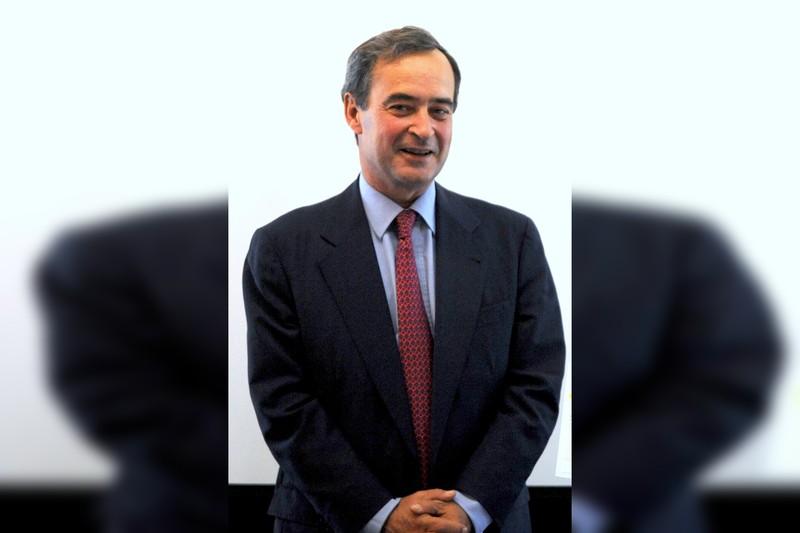
Bruno Lafont will spend the next six years in a French prison. His crime: running a cement company.
Specifically, the former CEO of Lafarge was convicted on Monday of financing terrorism — paying nearly €5.6 million to the Islamic State group and al-Nusra Front to keep a cement factory operating in northern Syria during the country’s civil war. A Paris court ordered Lafont, 69, to begin serving his sentence immediately. His lawyer said he will appeal.
A corporate chief executive personally going to prison over terrorism financing is rare by any standard. Lafarge’s case is the first time a company has been tried in France on such charges, and the conviction sends a clear signal to multinationals operating in conflict zones: paying designated terrorist groups to keep the lights on is not a business expense — it is a crime.
“A Genuine Commercial Partnership”
The facts are stark. Between 2013 and 2014, as other multinational companies pulled out of Syria, Lafarge stayed. Through its subsidiary Lafarge Cement Syria, the company paid intermediaries who funneled money to ISIS and Jabhat al-Nusra, then al-Qaeda’s Syrian affiliate. More than €800,000 secured safe passage for employees and trucks through checkpoints. Another €1.6 million purchased raw materials from quarries under ISIS control.
Presiding judge Isabelle Prevost-Desprez did not soften the finding. Lafarge had established what she called “a genuine commercial partnership with IS.” The payments, she said, were “essential in enabling the terrorist organisation to gain control of Syria’s natural resources, allowing it to finance terrorist acts within the region and those planned abroad, particularly in Europe.”
The French national counter-terrorism prosecutor’s office characterized the motive plainly in its closing argument: “a single aim: profit.”
Lafarge had completed its $680 million Jalabiya factory in 2010, months before Syria’s civil war erupted. When the conflict intensified, the company evacuated expatriate staff but left Syrian employees in place until ISIS seized the factory outright in September 2014. Those employees described a daily existence shaped by fear — checkpoints, sniper fire, kidnappings, the constant threat of armed reprisals.
“Lafarge was aware of what was happening to us — the checkpoints, the threats, the daily fear — but chose to risk the lives of its employees for profit,” former Syrian employees said in a statement after the verdict. They are still waiting for compensation.
The Disparity at the Heart of the Verdict
Eight former Lafarge employees were found guilty on Monday. Christian Herrault, the former deputy managing director, was sentenced to five years. Firas Tlass, a Syrian intermediary who channeled payments to jihadist groups, received seven years in absentia. Sentences for the others ranged from 18 months to seven years.
Herrault argued the company stayed out of concern for local staff. “We could have washed our hands of it and walked away, but what would have happened to the factory’s employees?” he told the court.
Prosecutors were unmoved. They said Lafont “gave clear instructions” to keep the plant running — a decision they called “staggering in its cynicism.”
For all the gravity of the individual sentences, the financial penalty imposed on the company itself sits in sharp relief. Lafarge was fined €1.12 million ($1.32 million) and had €30 million in assets confiscated. The fine amounts to roughly 20 percent of what the company paid to terrorist groups, and a rounding error for a firm that spent $680 million building the factory in question.
In 2022, Lafarge faced a separate case in the United States, where it pleaded guilty to conspiring to provide material support to terrorist organizations and paid $778 million in forfeiture and fines — a sum that dwarfs the French penalty.
Lafarge, now part of the Swiss conglomerate Holcim following a 2015 merger, said it “acknowledges the court’s finding, which concerns a legacy matter involving conduct that occurred more than a decade ago and was in flagrant violation of Lafarge’s Code of Conduct.” Holcim has maintained it had no knowledge of the Syria dealings.
What Comes Next
Lafont’s appeal will test whether higher French courts uphold the principle that corporate leaders bear personal criminal liability for funneling money to designated terrorist groups. A separate case alleging complicity in crimes against humanity remains ongoing.
The advocacy groups Sherpa and the European Center for Constitutional and Human Rights, which filed complaints alongside former Syrian employees, called the ruling “a major turning point in the fight for corporate accountability.” The question now is whether that turning point extends beyond a single cement company — or whether the mathematics of corporate risk assessment remains what it was in Syria in 2013, when Lafarge’s leadership apparently concluded that the fine was worth the profit, and the people left behind were someone else’s problem.
Discussion (10)