 lop News
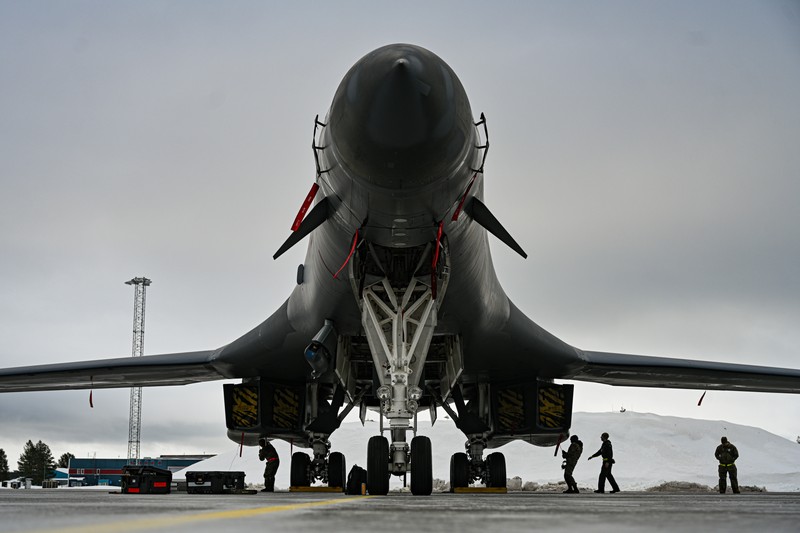
Six weeks ago, B-2 bombers were striking Iranian nuclear sites. Now Donald Trump says a peace deal is days away.
“We’re going to see what happens. But I think we’re very close to making a deal with Iran,” the US president told reporters outside the White House on Thursday. Hours later, in Las Vegas, he went further: the war “should be ending pretty soon.”
The shift in tone is dramatic even by Trump’s rhetorical standards. The same president who declared on March 6 that there would be “no deal with Iran except UNCONDITIONAL SURRENDER” now speaks of signing an agreement in Islamabad, possibly within days, and attending the ceremony in person. The whiplash begs a question: what has actually changed on the ground to justify the optimism, and how much of it is a president staring down unpopular midterms while oil hovers near $100 a barrel?
What shifted
Several concrete developments have altered the picture since the first round of talks in Islamabad collapsed over the weekend.
The most significant may be movement on Iran’s stockpile of highly enriched uranium. Trump told reporters Thursday that Iran had “agreed to give us back the nuclear dust that’s way underground” — his shorthand for roughly 970 pounds of enriched uranium buried under sites damaged by US B-2 strikes. Two Iranian sources told Reuters there were signs of a compromise on the stockpile, with Tehran considering shipping part of it out of the country. If confirmed, that would address a core American demand.
The gap on nuclear timelines has narrowed, though not closed. According to people familiar with the proposals, the US pressed for a 20-year suspension of all Iranian nuclear activity. Tehran countered with a halt of three to five years. Trump claimed Thursday that Iran had offered not to possess nuclear weapons for more than 20 years — a formulation that may represent common ground between the two positions, though the distinction between a weapons pledge and a full program suspension is considerable.
Pakistan’s mediation has also gained momentum. Field Marshal Asim Munir, the army chief who has emerged as the key broker, has been in Tehran since Wednesday and, according to a diplomatic source, made a breakthrough on “sticky issues.” A Pakistani source involved in the mediation told Reuters the two sides would first sign a memorandum of understanding, followed by a comprehensive agreement within 60 days. “Detailed agreement comes later. Both sides are agreeing in principle. And technical bits come later,” the source said, speaking on condition of anonymity.
The economic pressure on all parties has intensified. The IMF has downgraded its global outlook and warned that prolonged conflict could push the world toward recession. Brent crude futures sat at $98.17 a barrel on Friday morning — down on deal hopes but still a punishing premium. The Strait of Hormuz, normally carrying a fifth of the world’s oil and gas, remains effectively closed, with only a trickle of the 130-plus daily vessels that passed through before the war getting through. The US naval blockade on Iranian ports, imposed after the Islamabad talks failed, could choke off roughly 2 million barrels per day of Iranian crude destined for China, according to analysts cited by CNA.
The theaters still burning
Trump’s optimism notwithstanding, the war is not a single conflict but a cluster of interconnected fronts, each with its own fragilities.
In Lebanon, a 10-day ceasefire between Israel and Hezbollah took effect at midnight Thursday, but it was already fraying. The Lebanese Army reported Israeli shelling of southern villages within 30 minutes of the truce’s start. Israel’s military said it was looking into the reports. The terms of the ceasefire, per the State Department, prohibit offensive operations but preserve Israel’s right to self-defense against “planned, imminent, or ongoing attacks” — language broad enough to justify continued strikes. Israel has also made clear it will not withdraw from southern Lebanon during the truce, with army chief Eyal Zamir ordering that all territory up to the Litani River be turned into a “Hezbollah terrorist kill zone.”
Iran has insisted that any peace deal must also cover Lebanon — a demand the US and Israel have resisted. Trump has tried to split the threads, pursuing the Lebanon ceasefire separately while keeping the Iran talks on their own track. Hezbollah official Bilal Lakkiss told NBC News the group would not comply with Israel’s disarmament demand “except within a framework tied to a broader national security vision.”
The Strait of Hormuz remains a mutual siege. Iran’s closure has devastated global energy markets. The US blockade, enforced by more than 10,000 sailors, Marines, and airmen across over a dozen warships, has sealed the other end. Iran’s military has warned it could expand the shutdown to the entire Gulf, Gulf of Oman, and Red Sea if Washington continues — a threat that, if carried out, would be catastrophic for global trade.
The credibility gap
For all the genuine diplomatic movement, Trump’s track record invites skepticism.
He declared on March 9 that the war was “very complete” and falsely claimed Iran’s military had been destroyed and the Strait of Hormuz had reopened, according to a Wikipedia summary of the conflict’s timeline. On March 24, he insisted the US and Israel had “won,” even as Iranian missile strikes continued. His claim Thursday about the “nuclear dust” was not confirmed by Iran or any intermediary government. The White House did not respond to follow-up queries from the AP about the terms or to whom the uranium would be surrendered. Trump has previously made claims about Iran’s nuclear program that turned out to be imprecise, the AP noted.
Iranian officials have struck a cautious note. Ambassador Amir Saeid Iravani told the UN General Assembly on Thursday that despite “deep mistrust of the United States, stemming from its repeated betrayal of diplomacy,” Iran would “nevertheless enter the negotiation in good faith and remain cautiously optimistic.” Foreign Minister Abbas Araghchi accused the US of “maximalism, shifting goalposts, and blockade” after the Islamabad talks failed. Iran’s parliamentary speaker, Mohammad Bagher Ghalibaf, said the US had failed to gain Iran’s trust.
No second round of US-Iran talks has been officially scheduled, according to Pakistan’s Foreign Ministry. An official at the Iranian Embassy in Islamabad told Reuters a meeting could come “sometime later this week or earlier next week,” but added that “nothing is finalised as of now.” A White House official told CNBC that further talks were “under discussion” but nothing had been set.
The ceasefire expires April 22. The Lebanon truce lasts 10 days. The Strait of Hormuz stays shut. Oil stays expensive. And a president who has declared victory in this war at least twice already is telling reporters to watch for “an amazing two days ahead.”
The world will know soon enough whether this is diplomacy in earnest or the fourth premature victory lap.
Sources
- Trump says Iran war should end ‘soon’, both sides may meet at weekend — Channel News Asia
- Iran war live updates: Israel and Lebanon agree to 10-day ceasefire; Trump says deal with Iran ‘very close’ — AP News
- US and Iran in indirect talks to extend two-week ceasefire — The Guardian
- More U.S.-Iran peace deal talks are in discussion, White House says — CNBC
- 2026 Iran war ceasefire — Wikipedia
Discussion (13)