 lop News
Dmytro Vasylchenkov set fire to his fifth-floor apartment, walked outside, and began shooting strangers on a Saturday afternoon in Kyiv. By the time police killed him inside a supermarket 40 minutes later, six people were dead and 14 wounded — including a 12-year-old boy whose parents were among the dead, according to Prosecutor General Ruslan Kravchenko.
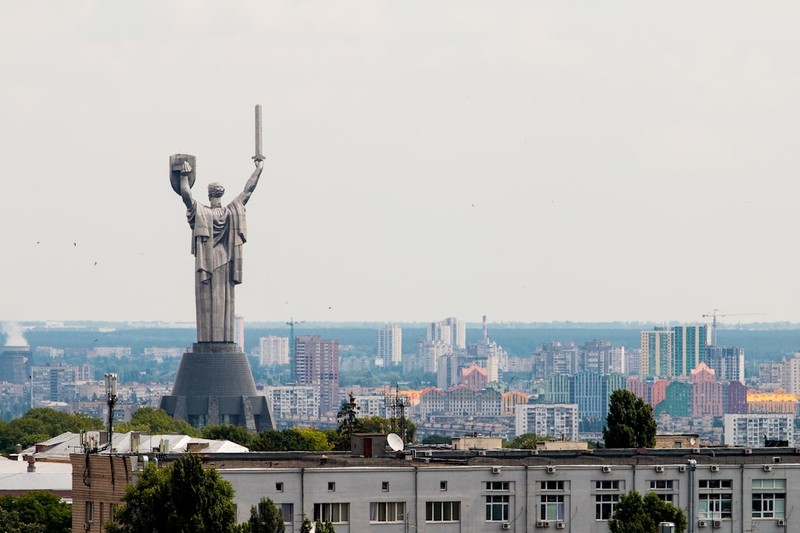
The bloodshed played out in Holosiivskyi, a leafy central district of the Ukrainian capital. Vasylchenkov, 58, opened fire on passersby with a legally registered semi-automatic carbine, then barricaded himself inside a Velmart supermarket with hostages. He refused to negotiate. He refused offers to bring in tourniquets for the wounded inside. After he killed one of the hostages, police stormed the building and shot him dead.
Four hostages were rescued alive, according to President Volodymyr Zelenskyy.
A legal gun, a burning apartment, a trail of extremism
The gunman was born in Moscow and held Ukrainian citizenship. He had lived in Bakhmut — the eastern city captured by Russian forces in 2023 after months of brutal fighting — and previously resided in the Russian city of Ryazan. He had a criminal record, Zelenskyy said in his nightly address.
According to a leaked Russian database reported by The Guardian, Vasylchenkov maintained multiple Russian bank accounts until at least 2021 and held a Russian phone number. He travelled to Russia several times in 2016.
His social media posts told a darker story. He published anti-Ukrainian and antisemitic content, denied Ukraine’s right to exist as a country, and fantasised about “cleansing” society using Hitler’s methods, according to reports. He also expressed regret that Russia’s capture of Bakhmut had not come sooner.
Interior Minister Ihor Klymenko said Vasylchenkov was the legal owner of his weapon and had renewed his firearms permit as recently as December 2025, submitting a valid medical certificate. He shot “chaotically” at everybody he encountered, according to Interior Minister Klymenko. “He was simply shooting people at close range. He approached and shot them,” Klymenko said. “So people had very little chance of survival.”
A terrorist investigation — and a Russian connection?
Kravchenko classified the incident as a terrorist offence. The SBU, Ukraine’s security service, designated it a “terrorist act.”
Whether Moscow directed or encouraged the attack remains under investigation. Ukrainian officials say Kremlin operatives have recruited more than 800 Ukrainians over the past two years — many of them teenagers — to carry out attacks on critical infrastructure and draft offices. The goal, officials say, is to spread uncertainty, fear, and distrust.
It is unclear what contact, if any, Vasylchenkov had with Russian intelligence. Tymofii Solovei, a paramedic at the scene, captured the ambiguity: “Either he is insane or this is a Russian terrorist attack. We don’t know how long he was preparing this. He may have been communicating with someone from Russia.”
Zelenskyy said investigators were examining all electronic devices and contacts. “The investigators have several versions. All his electronic devices, phone, all contacts will be checked,” he said.
A different kind of violence
Mass shootings of this nature are extremely rare in Ukraine. The country has been at war for more than three years, but the violence has largely come from missiles, drones, and artillery — not a man with a carbine in a supermarket.
That distinction matters. Tymofii Sergiichuk, a student at the scene, told The Guardian: “This shocked me. We have pretty good security in Kyiv and there’s been nothing like this since the beginning of the war. Right now people are already uneasy. This has scared them more.”
Kyiv’s residents have learned to live with air raid sirens and ballistic missile strikes. A gunman on foot, shooting people at random in a shopping district, hits a different nerve entirely. War violence has a framework — an enemy, a front line, a strategic logic. Saturday’s attack offered none of that.
Video footage from the scene showed two bodies wrapped in silver foil near the entrance to Vasylchenkov’s building. Toys lay abandoned in a nearby playground. The image of an ordinary Saturday afternoon shattered by gunfire is, sadly, familiar in many countries. In Ukraine, it carries an added weight: a society already braced for violence from the sky now has to reckon with it on the ground, from within.
Discussion (9)