 lop News
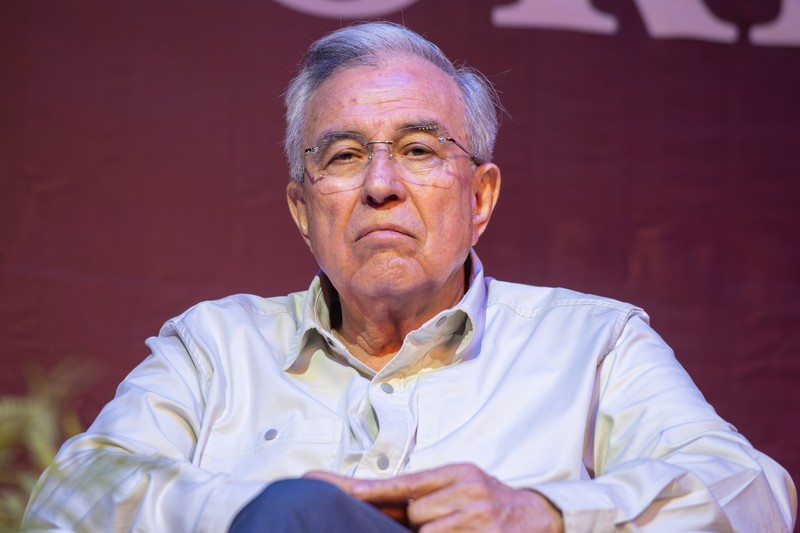
The governor of a Mexican state roughly the size of Portugal allegedly ran his territory as a cartel subsidiary while holding elected office. That, at least, is what the US Justice Department is now asserting in a Manhattan federal court.
On April 29, prosecutors unsealed an indictment against Rubén Rocha Moya, the 76-year-old governor of Sinaloa, along with nine other current and former government and law enforcement officials. The charges read like a narco-state primer: narcotics importation conspiracy, possession of machine guns and destructive devices, and an additional conspiracy count. If convicted, Rocha Moya faces a mandatory minimum of 40 years — or life in federal prison.
According to the indictment, the governor was elected in 2021 with the active assistance of the Sinaloa cartel, which allegedly kidnapped and intimidated political rivals in exchange for protection of its operations once Rocha Moya took power. The defendants are accused of facilitating the shipment of fentanyl, heroin, cocaine, and methamphetamine into the United States.
A Governor Denies, a President Stays Silent
Rocha Moya responded swiftly. Writing on X, he said he “categorically and unequivocally reject[s]” the charges, calling them “completely untrue and without any basis.” He framed the indictment as “part of a perverse strategy to violate [Mexico’s] constitutional order, specifically on national sovereignty.”
President Claudia Sheinbaum had not publicly commented on the charges as of April 30, according to The Guardian. Her foreign relations secretariat issued a statement confirming receipt of extradition requests and said the attorney general’s office would evaluate whether sufficient evidence existed to detain those charged.
That silence is instructive. Several of the indicted officials are members of Morena, Mexico’s ruling party and the vehicle that carried Sheinbaum to the presidency. A sitting governor from her own political coalition, indicted by a foreign government for running drugs, is a political crisis with no clean resolution. Condemn him and she weakens her own coalition. Defend him and she risks validating Washington’s narrative that Mexican governance is penetrated by organized crime.
The Diplomatic Fault Line
US Ambassador to Mexico Ronald Johnson struck a measured tone, calling combating transnational crime a “shared priority” between the two countries and emphasizing pledges to “strengthen transparency, enforce anti-corruption laws, and uphold the rule of law.”
The diplomatic language papered over a more fraught reality. Washington unsealed these charges unilaterally — no joint press conference, no coordinated announcement with Mexican authorities. The decision to publicly indict a sitting state governor represents a significant escalation, effectively treating elements of Mexican state government as an extension of a criminal enterprise.
The Sinaloa cartel is among eight Latin American crime groups designated as terrorist organizations by the US government. That designation, combined with the Trump administration’s threats of tariffs and unilateral military action against Mexico, has pushed Sheinbaum’s government into aggressive enforcement posture. Mexico has transferred roughly 100 high-level cartel operatives to US prisons in recent months, according to The Guardian. The Mexican military killed Nemesio Oseguera Cervantes — “El Mencho,” the leader of the Jalisco New Generation cartel — and arrested his suspected successor Audias Flores within the last two months.
These are real results. They also create a dynamic in which Mexico’s security policy is increasingly shaped by the threat of American coercion rather than sovereign prioritization. The Sinaloa indictment sharpens that tension considerably.
What Everyone Already Suspected
The specific allegations are extraordinary. The broader pattern is not.
The idea that cartels and state power are entangled in parts of Mexico has been documented for decades — by journalists, by prosecutors, by the bodies buried in culverts. What is new here is the prosecutorial ambition: charging a sitting governor, by name, in a foreign court, and demanding he be handed over.
Whether this changes anything on the ground remains an open question. Rocha Moya remains the governor of Sinaloa as of April 30. He has vowed to fight the charges. Mexico’s attorney general must now decide whether to cooperate with a US extradition request for officials who, until recently, were colleagues in the machinery of governance.
The hemisphere has seen this dynamic before — in Colombia, in Honduras, in Guatemala. State officials credibly accused of narco-trafficking. The slow unraveling of institutional credibility. The cycle of indictment and impunity. Mexico’s version of this story has been playing out for decades. The Sinaloa indictment simply adds a new name, a particularly blunt chapter, and an uncomfortable question: what happens when the evidence becomes too public to ignore but too politically costly to act on?
Discussion (8)