 lop News
Cole Tomas Allen sat in federal court in Washington, handcuffed, shackled, dressed in an orange jail uniform, and said nothing. His attorney entered the plea on his behalf: not guilty on all four counts.
It was the kind of brief, procedural hearing that federal courthouses process by the dozen every day. The contrast with the events of sixteen days earlier was difficult to ignore.
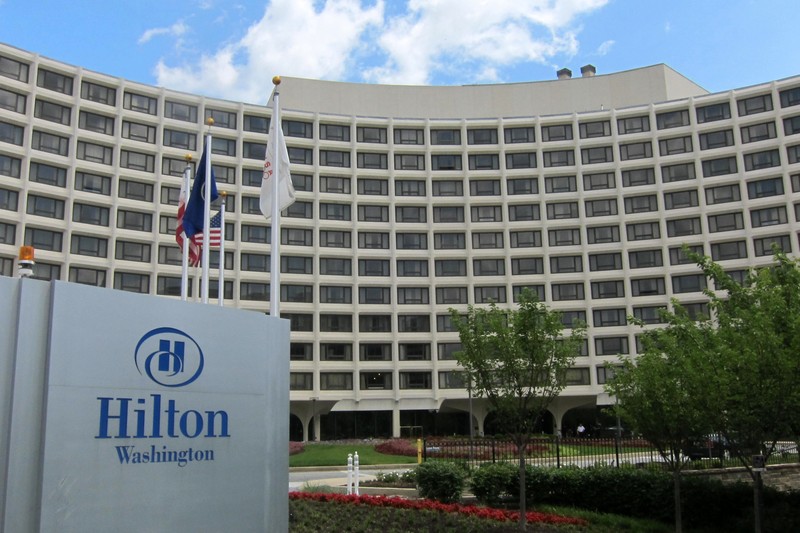
On April 25, Allen allegedly ran through a security checkpoint at the Washington Hilton armed with a 12-gauge pump-action shotgun, a .38 caliber pistol, and a sheathed knife. He fired once, striking a US Secret Service officer in the chest. The officer, protected by a ballistic vest, returned fire — five shots, none of which hit Allen, who fell and was arrested with minor injuries. President Trump, Vice President JD Vance, and a ballroom full of journalists and officials were rushed from the venue.
The White House Correspondents’ Association Dinner — one of the most prominent annual events in the American political calendar — was over.
Allen now faces charges of attempting to assassinate the president, assaulting a federal officer with a deadly weapon, and two firearms counts. The assassination charge alone carries a maximum sentence of life in prison.
A Prosecution Complicated by Its Audience
Almost immediately, the case has collided with an unusual conflict. Allen’s defense attorney, Eugene Ohm, has moved to disqualify acting Attorney General Todd Blanche and US Attorney Jeanine Pirro from any role in prosecuting the case. Both were attending the dinner when Allen allegedly stormed the checkpoint. Both have spoken publicly about the experience — Pirro described being “in that combat zone” during a CNN interview, according to CBS News.
Ohm argued in court that it would be “wholly inappropriate” for potential victims and witnesses to direct the prosecution of the man accused of targeting them. The defense has signaled it may seek to disqualify Pirro’s entire office and floated the possibility of a special prosecutor.
Judge Trevor McFadden, a Trump appointee, did not rule from the bench. He gave prosecutors until May 22 to respond in writing and asked the government to clarify whether it considers Blanche and Pirro to be victims under the law. “That might add some clarity here,” McFadden said, according to the Associated Press.
Weeks of Planning, Minutes of Execution
According to court documents, Allen’s alleged plan was methodical. He reserved a room at the Washington Hilton on April 6 — nineteen days before the dinner. He traveled by train from California to Chicago, then on to Washington, arriving April 24. He checked into the hotel carrying the same two firearms — a shotgun purchased in August 2025 and a pistol bought in October 2023, both from California dealers — that investigators later recovered at the scene.
Minutes before the attack, Allen photographed himself in his hotel room, outfitted with an ammunition bag, shoulder holster, and knife. He sent an email to family members and a former employer on a timed delay. “I wish I could have said anything earlier, but doing so would have made none of this possible,” he wrote, signing off as Cole “coldForce” “Friendly Federal Assassin” Allen. Authorities say the message alluded obliquely to grievances with the Trump administration, though specific motivations remain unclear.
After his arrest, Allen invoked his right to remain silent. He told FBI agents he did not expect to survive the attack, prosecutors said. He was placed on suicide watch; his attorneys have since complained he was confined to a padded room under constant lighting, repeatedly strip-searched, and placed in restraints — treatment they argue was excessive.
A Pattern Draws Global Attention
The case has drawn sustained international coverage. Deutsche Welle reported on Monday’s arraignment — a measure of how closely the world watches American political violence. Deutsche Welle noted that this is the third alleged assassination attempt against Trump in less than two years, a striking frequency for any democracy’s head of state.
The security apparatus held on April 25. Allen never reached the ballroom. But the fact that a lone individual with a pump-action shotgun came close enough to fire at a checkpoint within earshot of the president has renewed questions about the balance between public access and protection at high-profile events.
President Trump addressed the nation from the White House two hours after the attack, still wearing his tuxedo. “When you’re impactful, they go after you,” he said. “When you’re not impactful, they leave you alone.”
Allen is scheduled to return to court on June 29. The recusal dispute will take weeks. The trial itself, months. The machinery of federal justice grinds forward — slowly, methodically, and in near-total silence from the defendant at its center.
Sources
- Suspect in White House Correspondents’ Dinner Shooting Charged with Attempt to Assassinate the President — US Department of Justice
- Man charged in White House correspondents’ dinner attack pleads not guilty — Politico (AP)
- White House Correspondents’ Dinner shooting suspect Cole Allen pleads not guilty to all charges — CBS News
Discussion (10)