 lop News
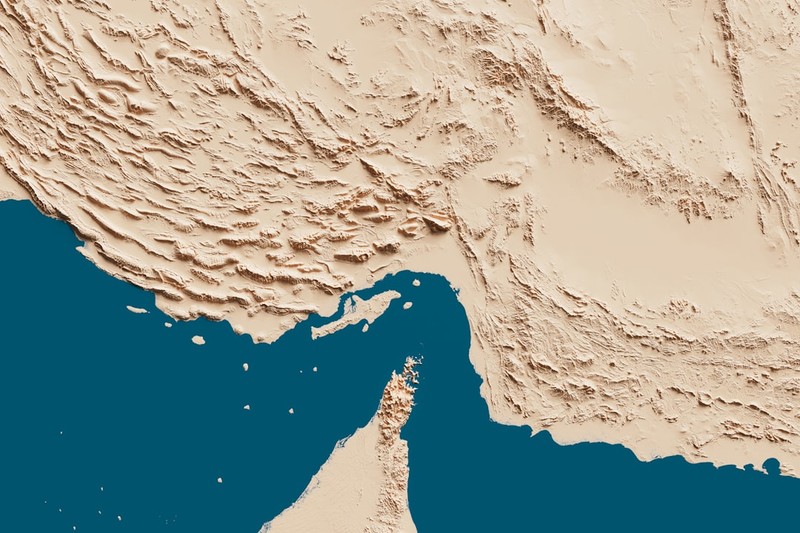
More than 20,000 sailors have spent nearly three months trapped aboard ships in the Persian Gulf. They cannot go home. Many survive on a single daily meal of rice or lentils. Some have not been paid since last year. All of them wait — for a ceasefire, for a missile to miss, for a war they had no part in starting to simply end.
On Wednesday, Iran made clear the wait is far from over.
A prison at sea
Tehran’s newly created Persian Gulf Strait Authority published a map asserting military control over more than 22,000 square kilometres of water around the Strait of Hormuz — extending into the territorial waters of Oman and the United Arab Emirates. All transit through the strait, the authority declared, now “requires coordination with and authorization from” Tehran.
The UAE dismissed the claims as “nothing but fragments of dreams.” The US told ships not to comply. But the map was a statement of intent. Iran’s blockade, now in its 11th week, is not loosening. It is hardening.
Iran shut the strait after US and Israeli strikes began on February 28. Roughly 2,000 vessels remain trapped in the Gulf, their crews marooned in a war zone. Iranian state media linked to the Revolutionary Guard Corps has published footage showing what it claimed was a “punishment” strike on a tanker in the strait — BBC Verify identified the vessel as the Barakah, a Liberian-flagged tanker that reported being hit by unknown projectiles in early May.
Captain Mohit Kohli told Reuters that in the war’s first week, his crew watched Iranian missiles and drones arcing toward Gulf states from his stranded cargo vessel. “The crew who was usually loud and happy were now silent. Meals got shorter. Conversations were more guarded,” he said.
Mohamed Arrachedi of the International Transport Workers’ Federation said he has taken calls from seafarers in tears. The ITF has been contacted by more than 2,000 sailors since the war began, seeking help with abandonment, unpaid wages, and dwindling provisions. In some cases, shipowners refuse to repatriate crews unless they forfeit back pay of $100 to $200 a month.
Saudi Arabia has facilitated resupply for hundreds of vessels and enabled crew transfers for more than 500 sailors. But the scale of the crisis overwhelms the response.
Entering the red zone
While sailors count days, energy markets are counting weeks — and the arithmetic is turning grim.
IEA executive director Fatih Birol warned on Thursday that oil markets will enter the “red zone” by July and August, when dwindling inventories collide with rising summer demand and no fresh crude arrives from the Middle East. He described the current disruption as more severe than the oil shocks of 1973, 1979, and 2022, with 14 million barrels per day missing from global supply.
Rapidan Energy Group’s base case assumes the strait reopens in July, with Brent crude peaking near $130 a barrel. A closure through August would deepen the third-quarter supply deficit to roughly 6 million barrels a day — enough to risk a global recession rivalling 2008. Oil prices have nearly doubled since late February.
“The current macro setup is less extreme than the 1970s or 2007 to 08,” Rapidan analysts wrote. “But that relatively stronger starting point doesn’t neutralize the risk that continued oil price spikes would exacerbate financial and macroeconomic vulnerabilities.”
Vitol CEO Russell Hardy estimated on April 21 that one billion barrels of oil production would ultimately be lost to the war, with 600 to 700 million barrels already gone.
The cascade
The shock will not stop at energy prices. Natural gas accounts for 70 to 80 percent of the variable cost of ammonia production. The Gulf region produces roughly 30 percent of global ammonia exports and 35 percent of global urea exports, most shipped through Hormuz. Within two planting seasons, food prices will follow fertiliser costs upward. Within 12 to 18 months, the price of manufactured goods follows energy.
The shock that begins in a tanker lane arrives eventually in the price of bread in Cairo, the cost of rice in Dhaka, and the fertiliser ration of a smallholder in western Kenya.
Food accounts for 44 percent of household expenditure in low-income countries, compared with 16 percent in advanced economies. The burden will not be distributed equally. It will be transferred downward — from the nations that started this war to the nations that cannot afford to absorb its consequences.
Beyond prices, the trading system itself is sustaining structural damage. After Houthi attacks drove Red Sea traffic away in 2023, carriers rerouted around the Cape of Good Hope and never returned — the costs of reorganising had been absorbed, and no mechanism existed to reverse them. The same logic now applies on a far larger scale.
Diplomacy on the margins
The gap between the situation on the water and the situation in negotiating rooms could hardly be wider.
Pakistan has positioned itself as mediator. Interior minister Mohsin Naqvi is in Tehran on his second visit of the week. Military chief Field Marshal Asim Munir was expected on Thursday to narrow the gap between the sides — but a postponement of his trip suggested progress was elusive. Qatar, Saudi Arabia, and the UAE have also pressed for de-escalation, with Trump saying he held off a planned military attack on Monday at their request because “serious negotiations are now taking place.”
Trump has simultaneously warned he could resume strikes within days. “Believe me, if we don’t get the right answers, it goes very quickly,” he told reporters.
The talks are entangled with Iran’s stockpile of 440.9 kilograms of uranium enriched to 60 percent purity — a short technical step from weapons-grade. Supreme leader Mojtaba Khamenei has refused to let the stockpile be exported. Trump has oscillated between calling the issue “more for public relations than it is for anything else” and insisting the US will seize and destroy it.
Birol noted that 80 percent of IEA members’ strategic reserves remain untapped, with the agency ready to coordinate further drawdowns. But reserves buy time. They do not replace the 14 million barrels per day removed from global supply.
Birol said he sees no prospect of Middle Eastern production recovering fully for at least a year. The region’s reputation as a secure energy supplier has been damaged, he added — perhaps permanently. Countries will pay a premium for secure sources and accelerate investment in renewables and nuclear power.
That calculation will reshape the global energy landscape long after the sailors finally go home. Whether that happens in weeks or months will determine whether the world absorbs a sharp shock — or endures a prolonged reckoning.
Sources
- Strait of Hormuz closure threatens recession rivaling 2008: Rapidan Energy — Business Standard (via Bloomberg)
- Oil markets nearing ‘red zone’ as Iran crisis continues, warns IEA chief — The Guardian
- Iran’s intensified closure of Strait of Hormuz piles misery on stranded sailors — BOE Report (via Reuters)
- Iran steps up claim to control Strait of Hormuz — BBC
- The economic shock of the Iran war will hit the world in four waves — Al Jazeera
- Economic impact of the 2026 Iran war — Wikipedia
Discussion (15)