 lop News
Ships turned back, oil sliding, markets rallying. The math of war is doing something strange in the Gulf.
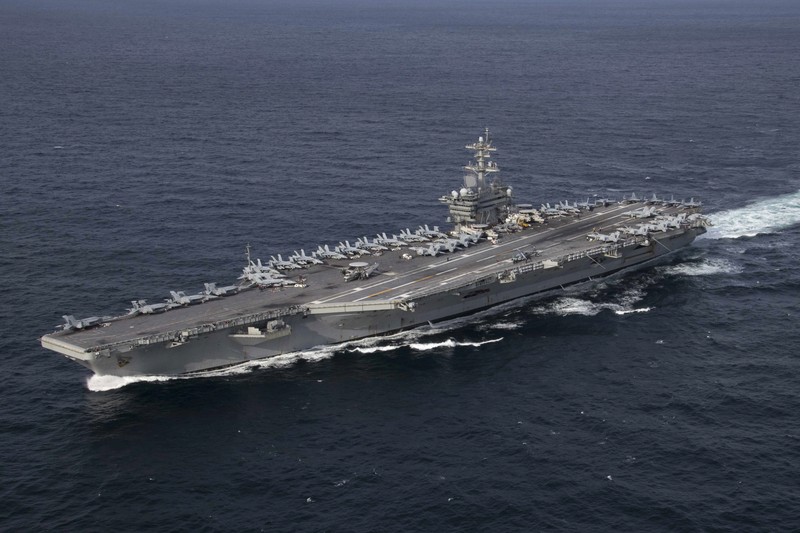
US Central Command says six merchant vessels were ordered to turn around in the first 24 hours of the American naval blockade. More than a dozen warships, over 100 aircraft, and roughly 10,000 personnel are deployed to choke off Iran’s maritime trade. Satellite imagery analyzed by BBC Verify shows the USS Abraham Lincoln carrier strike group positioned roughly 200 kilometers south of the Iranian coast — the closest to the Gulf BBC Verify has observed the warship since the war began. And yet crude dipped below $100 a barrel on Tuesday.
A blockade is an act of economic war. The markets are treating it as a prelude to peace.
President Donald Trump said Tuesday that talks with Iran could resume “over the next two days,” suggesting a return to Islamabad, where 21 hours of negotiations over the weekend ended without agreement. UN Secretary General António Guterres called a resumption “highly probable.” A Pakistani official put it more succinctly: “The game is on.”
From Weekend Collapse to Midweek Optimism
The first round of talks, mediated by Pakistan’s army chief Field Marshal Asim Munir, broke down early Sunday. Vice President JD Vance walked out, saying Iran had failed to make an “affirmative commitment that they will not seek a nuclear weapon.” Iran’s Foreign Minister Abbas Araghchi countered that the two sides were “inches away” before encountering “maximalism, shifting goalposts, and blockade.”
Trump responded by announcing the naval blockade — designed to cut off Iran’s oil revenue and the tolls Tehran has collected from ships transiting the Strait of Hormuz since it militarized the waterway after US-Israeli strikes began on February 28.
Iran calls the blockade piracy. China, which buys an estimated 90 percent of Iran’s oil exports, describes it as “dangerous and irresponsible.” The UK has refused to participate. India’s Narendra Modi, who spoke with Trump by phone on Tuesday, stressed that keeping Hormuz open is “essential for the whole world.” The International Maritime Organization says no country has the legal right to block international straits — though scholars note that warring parties may impose blockades under the law of naval warfare.
The Nuclear Sticking Point
The core disagreement is narrow but consequential. The US proposed a 20-year suspension of all Iranian uranium enrichment, according to a US official who spoke to CBS News. Iran countered with a five-year suspension. The US also wants Tehran to hand over more than 400 kilograms of highly enriched uranium — close to weapons-grade purity — believed to be buried in deep underground shafts after surviving American bombing.
Russia has renewed an offer to take custody of Iran’s enriched uranium stockpile, according to Russian state media. Iran has previously offered to dilute the material rather than surrender it.
Tehran’s rhetoric leaves little room for ambiguity. “Iran did not surrender at the battlefield, neither will it surrender behind the table,” one Iranian official said. A Pakistani official said Tehran also insists that Vance personally negotiate with the Iranian delegation in any future talks, as Tehran regards Trump’s special envoy Steve Witkoff and the president’s son-in-law Jared Kushner as unreliable interlocutors.
What a Deal Would Require
Both sides need something they can call victory. For the US, that means a fully reopened Strait of Hormuz — Vance called it a “red line” — and enough constraints on Iran’s nuclear program to plausibly claim Tehran has been denied a weapon. For Iran, it means preserving enrichment capability and potentially extracting war reparations.
Pakistan’s Prime Minister Shehbaz Sharif is due to depart Wednesday on a tour of Saudi Arabia, Turkey, and Qatar to build support for proposals on reopening the strait and addressing Iran’s demands. Senior officials from Saudi Arabia, Egypt, and Turkey were already in Islamabad for consultations on Tuesday. Sharif’s tour may be cut short if talks restart quickly.
The Global Economy Is Making the Bet
The IMF warned Tuesday that continued war and elevated energy prices could push the global economy into recession. Treasury Secretary Scott Bessent told the BBC that “a small bit of economic pain” is worthwhile for long-term security — a statement that lands differently in the countries already rationing fuel.
The Hormuz disruption, through which a fifth of the world’s oil and gas once flowed, has created fuel crises across Asia. Governments have ordered employees to work from home, shortened work weeks, and closed universities. The UN’s food agency has warned that fertilizer supply bottlenecks could trigger a global food catastrophe.
Markets are pricing in resolution. Oil below $100 suggests investors see the blockade as leverage, not permanent escalation. They may be right. But the gap between a market bet and a signed agreement is where wars restart.
Israel and Lebanon held their first direct talks since 1993 in Washington on Tuesday — described as “productive” by the Lebanese ambassador and a “new era of peace” by the Israeli ambassador. Hezbollah said it would not abide by any agreement. The US insists the two diplomatic tracks are unconnected.
The two-week ceasefire expires April 22. Both sides say they want to talk. Neither side has moved its ships.
Sources
- Trump hints Iran talks could resume this week as US maritime blockade continues — BBC News
- US-Iran peace talks could resume in next two days, Trump says — The Guardian
- Officials Considering Second Round of U.S.-Iran Talks — TIME
- Why and how is US blockading Iranian ports in Strait of Hormuz? — BBC News
- India’s Modi has ‘useful’ talks with Trump on Mideast war — Channel News Asia
Discussion (10)