 lop News
Sixteen dead, according to Haitian police. Seventy, according to human rights workers who counted the bodies. Thirty wounded. Fifty houses burned. Nearly 6,000 people fled the country’s most important farming region into the surrounding countryside.
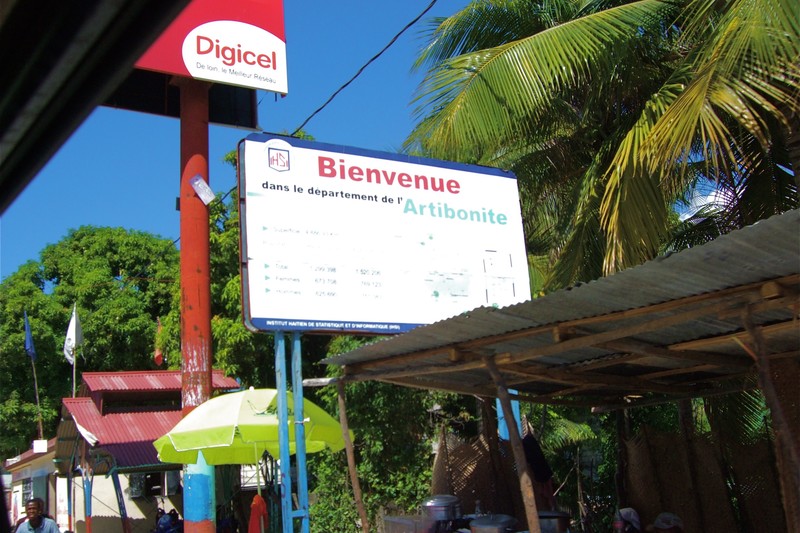
The massacre began around 3am on Sunday in the Jean-Denis area near Petite-Riviere, in Haiti’s Artibonite department. Members of the Gran Grif gang stormed rural communities, shooting civilians and setting homes alight. The killing continued into the early hours of Monday.
By the time police arrived — three armored vehicles, slowed by trenches gang members had dug across the roads — the attackers were already retreating. Several houses were already smoldering.
Haitian National Police confirmed 16 dead and 10 injured. A preliminary civil protection report counted 17 dead and 19 wounded, mostly men. But the rights group Defenseurs Plus, working with the Collective to Save the Artibonite, put the toll at 70 dead and 30 injured after recovering bodies across multiple locations.
A spokesperson for UN Secretary-General António Guterres said the organization’s Haiti office was monitoring the situation and that estimates ranged from 10 to 80 killed. He called for a thorough investigation.
A Complete Abdication
The gap between official figures and the reality on the ground is not a bureaucratic discrepancy. It is the story.
“The lack of a security response and the abandonment of Artibonite to armed groups demonstrate a complete abdication of responsibility by the authorities,” Defenseurs Plus said in a joint statement.
Bertide Horace, a spokesperson for the Dialogue and Reconciliation Commission to Save the Artibonite Valley, told CNN there was no police presence during the initial attack. Gangs operated “with complete confidence,” she said, filming themselves as they killed.
Her team recovered 30 bodies across multiple sites.
The Artibonite is Haiti’s breadbasket — the country’s primary agricultural region, crucial for feeding a population where gang-controlled areas already face severe food shortages. Driving nearly 6,000 people from this land does not simply add to the displacement crisis. It attacks the country’s ability to feed itself.
A Pattern, Not an Isolated Attack
The weekend’s massacre fits a grim pattern. In October 2024, a Gran Grif attack on the nearby town of Pont-Sonde killed 115 people, with armed men shooting residents door to door. An audio message circulating on social media, attributed to Gran Grif leader Luckson Elan, suggested the latest attack was retaliation for strikes on the gang’s base in Savien by a rival armed group.
Washington has designated both Gran Grif and Viv Ansanm — a coalition of hundreds of gangs in the capital — as terrorist organizations. In March, the US offered rewards of up to $3 million for information on their financial activities.
Nobody has collected. Haitian security forces, backed by a UN-supported international mission and a US private military contractor, have intensified operations. But authorities have yet to arrest a single major gang leader.
The numbers tell the story of a losing fight. Close to 20,000 people have been killed in Haiti since 2021, with the death toll climbing each year, according to a recent UN report. More than 5,500 were killed between March 2025 and January 2026 alone. More than 1.4 million people — roughly 12 percent of the Caribbean’s most populous nation — have been displaced.
Waiting for Reinforcements
A new multinational force, the Gang Suppression Force, is expected to deploy to Haiti soon. Johanna Pelaez, a Caribbean researcher at Amnesty International, called the latest massacre “yet another atrocity in a string of crimes that the Haitian authorities and the international community have failed to stop.”
The force’s arrival may alter the arithmetic of security in Port-au-Prince, where 26 gangs control key routes and have brought daily life to a near standstill, according to a UN report. But Artibonite is not the capital. It is the farmland that keeps the country alive, and it is burning.
“It is very difficult for the population to return to this area,” Horace said of the attacked communities. “Not only have they destroyed families, but they have also destroyed their homes, their belongings, everything they owned.”
Sixteen or seventy — the number depends on who is counting. The difference between them measures how much of Haiti the state has already lost.
Discussion (9)