 lop News
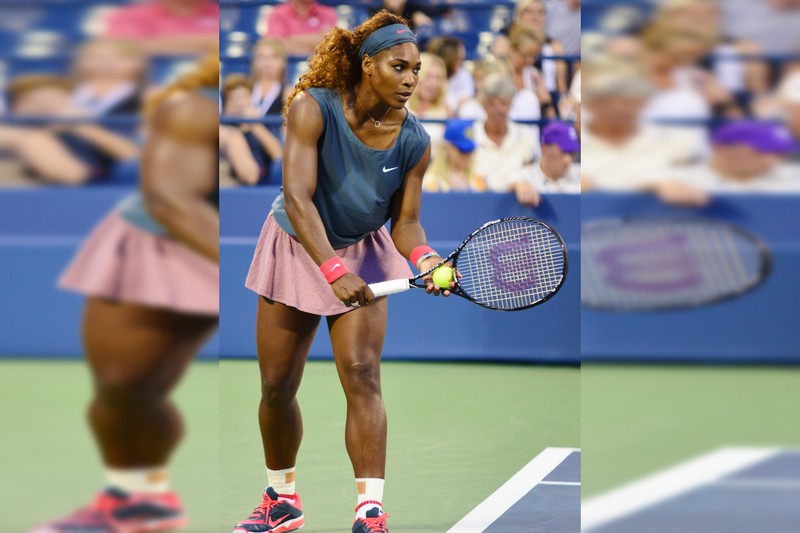
Last December, Serena Williams had a message for anyone reading too much into her quiet reappearance on tennis’s anti-doping registry. “Omg yall I’m NOT coming back,” she wrote on X. “This wildfire is crazy.”
She was lying. Or, more charitably, she wasn’t ready to tell the truth. On Monday, Queen’s Club made it official: Williams, 44, will return to professional tennis next week, playing doubles at the HSBC Championships in London on a wild card entry. Her first competitive match in nearly four years.
Williams never did use the word “retirement.” When she played her last match — a third-round loss to Australia’s Ajla Tomljanović at the 2022 US Open — she described herself as “evolving away from tennis.” It was a characteristically deliberate choice of words from someone who has always controlled her own narrative. The evolution, it turns out, had a return loop.
A Champion Who Wouldn’t Stay Away
The details are still falling into place. Williams has not revealed her doubles partner, though WTA Tournament Director Laura Robson reportedly told TNT Sports that she will play alongside 19-year-old Canadian Victoria Mboko. She has not committed to a singles return, nor to appearing at Wimbledon later this month — though the HSBC Championships, on the grass courts of Queen’s Club, is a traditional warm-up for the All England Club, where Williams has won seven singles titles and six doubles crowns.
Mboko, asked by reporters at the French Open, was careful not to claim the moment. “If she’s ready to come back on her own terms, then I feel like it’s up to her to announce that,” she said, according to AFP.
“Her own terms” does a lot of work. Williams has earned that privilege — 23 Grand Slam singles titles, the most among women in the Open era, 319 weeks at world No. 1, four Olympic gold medals. She doesn’t need the ranking points or the prize money. She’s coming back because the competitor in her never actually left.
The Age Question, Already Answered
At 44, Williams enters rare territory even in an era of extended athletic careers. Novak Djokovic, 39, recently pushed a teenager to five sets at the French Open. Venus Williams, Serena’s older sister, still plays occasionally at 45. John McEnroe, never one to miss a parallel involving himself, noted that he won a tour-level doubles title at 47 after 12 years away from the game.
“She could win anything in doubles,” McEnroe told reporters in Paris. “The singles is more difficult. I’m not really sure what the plan is. She hasn’t called me to tell me the plan.”
Former world No. 1 Lindsay Davenport said some current WTA players had traveled to Florida to practice with Williams recently — though none had publicly admitted it. “She always looks in incredible shape,” Davenport said. “Better shape than arguably when she left.”
But Davenport also flagged the genuine physical challenge. Grass is an unforgiving surface to return on — fast, low-bouncing, demanding on the body in ways different from clay or hard courts. “She wouldn’t come back unless she knew she could play at such a high level,” Davenport said. “But we’ve got to be a little graceful in the time we give her until she hits her feet.”
A Sport That Wants Her Back
The reaction across tennis has been unanimous and unrestrained. “Serena Williams playing tennis is only good for tennis,” said Madison Keys. “Let’s be real. We all want to watch Serena play tennis.” Aryna Sabalenka, the current world No. 1, called it “very good news for tennis” and said she was excited at the prospect of potentially facing her. Naomi Osaka, who beat Williams in the 2018 US Open final, was more succinct: “It will bring people to watch tennis. I’m going to be tuned into the first match, for sure.”
The WTA noted that Williams is one of nine former No. 1 women’s singles players to return to the tour after becoming a mother — a statistic that underscores both how far the sport has come in supporting returning players and how extraordinary Williams’s circumstances remain. Her second daughter was born in 2023. She has spent the years away building a business portfolio and raising her children. She posted a video on Instagram recently, training on a hard court with her young daughter. “Rumor has it… I got a new trainer,” she wrote.
Williams re-entered tennis’s mandatory anti-doping program in October 2025, fulfilling the six-month waiting period required before a returning player can compete. She became eligible in February. She waited until June, chose grass, chose Queen’s Club, and apparently chose a 19-year-old rising star as her partner. The plan, whatever its full scope, has been in motion for months.
McEnroe, characteristically, said it best: “She’s not getting any younger but she’s Serena Williams so I bet you she would tell me about wanting to win the whole damn thing.”
Some competitors retire. Some evolve away. And some simply cannot help themselves.
Discussion (8)