 lop News
“A whole civilization will die tonight.” Those were the words President Donald Trump posted publicly on Tuesday, giving Tehran until nightfall to reopen the Strait of Hormuz or face devastating strikes on civilian infrastructure. Less than two hours before the deadline, he accepted a two-week ceasefire.
Now the Senate wants a word.
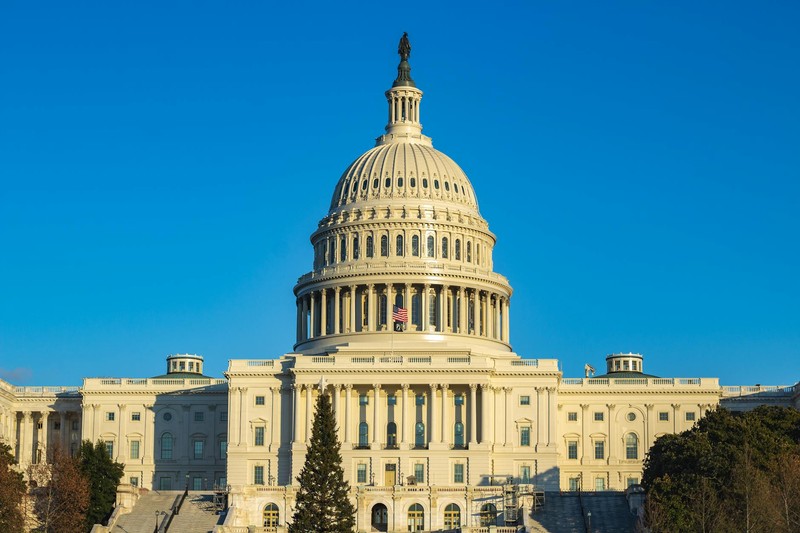
Senate Democratic Leader Chuck Schumer announced Wednesday that lawmakers will force a vote next week on a war powers resolution requiring Trump to obtain congressional approval before further military operations against Iran. The vote comes as the conflict enters its sixth week, with a fragile ceasefire holding and the waterway through which a fifth of the world’s oil once flowed still effectively blocked.
A Power the Legislature Surrendered
The US Constitution is unambiguous: Congress, not the president, has the authority to declare war. That distinction has eroded for decades — through Korea, Vietnam, Kosovo, and a post-9/11 authorization stretched to cover operations against groups that did not exist when it was passed.
Trump’s Iran campaign is the latest test. Since the war began on February 28, the administration has conducted strikes without a congressional vote, arguing the operations are limited and within the president’s commander-in-chief authority.
The Senate already rejected one attempt. On March 4, Republicans voted 53-47 to block a bipartisan resolution. The current effort faces the same arithmetic — slim Republican majorities in both chambers, near-uniform backing for the president, and a two-thirds supermajority required to override Trump’s expected veto. The mathematics are brutal.
The Candidate Who Promised Peace
The irony is not subtle. Trump built his brand on opposition to “forever wars,” wielding the phrase against rivals in both parties. His first term featured troop drawdowns and a stated aversion to new entanglements.
His second term is a different story. American forces are fighting in Iran, firing on vessels in the Caribbean and eastern Pacific, and in January, Trump sent troops into Venezuela to seize President Nicolás Maduro. The military footprint has expanded across three fronts in months.
Senator Tim Kaine of Virginia, a lead sponsor of the resolution, addressed the administration during the March floor debate: “Your escalating pattern of military action without seeking our approval convinces me that you believe you never need to come to Congress, to wage war against anyone anywhere.”
Global Stakes
The effects extend far beyond Washington. Global fuel prices have risen. Ship traffic through the Strait of Hormuz — normally 100 to 120 commercial vessels daily according to Kpler data — has plunged roughly 90 percent below normal, according to Lloyd’s List. Shipping companies report no clear instructions from Iranian authorities about safe passage.
The ceasefire has not resolved this. Iran reportedly plans to charge tolls in cryptocurrency for passage and inspect vessels for weapons, according to the Financial Times. The White House insists the waterway must open “without limitation, including tolls.” That gap is where a wider conflict could reignite.
A Reuters/Ipsos poll found only one in four Americans supports the strikes, and roughly half believe Trump is too willing to use military force. With midterm elections in November, a prolonged war could haunt the Republicans who have locked arms behind the president.
House Democrats plan to seek a unanimous consent vote during Thursday’s pro forma session — a single objection would block it. Minority Leader Hakeem Jeffries has demanded Speaker Mike Johnson reconvene the chamber, calling for “a permanent end to Donald Trump’s reckless war of choice.” More than 70 Democrats have gone further, calling for the 25th Amendment to be invoked over Trump’s threats against civilian populations, which multiple lawmakers said would constitute war crimes under the Geneva Conventions.
The constitutional question predates this president. But next week’s vote forces an immediate version into the open: should one person control whether the United States widens a regional war? The Senate has ducked that question for decades. Next week it will answer it — or confirm that the power to start wars has moved permanently to the executive.
Sources
- US Senate to vote on resolution to curb Trump’s Iran war powers — Reuters
- Democrats renew push to curb Trump’s Iran war as calls to use 25th amendment mount — The Guardian
- US Senate backs Trump on Iran strikes, blocks bid to limit his war powers — Reuters
- Trump Iran ceasefire updates: Strait of Hormuz toll confusion remains — CNBC
Discussion (9)