 lop News
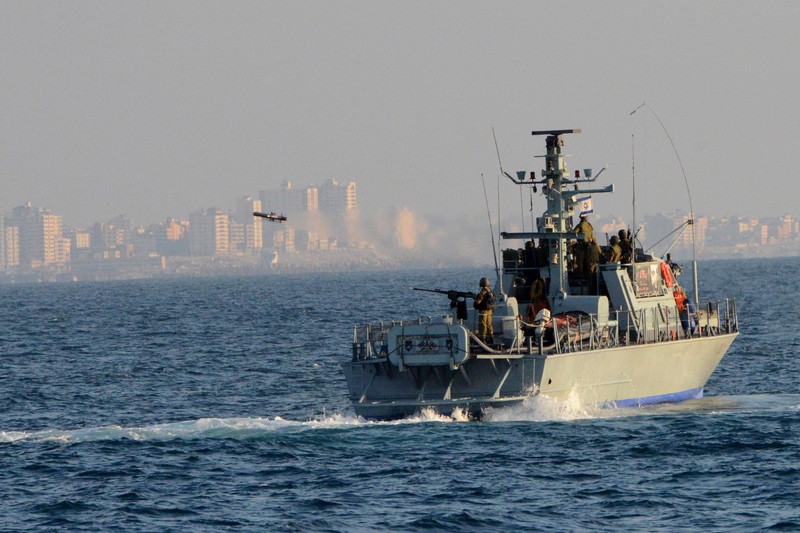
Six hundred nautical miles from Gaza, in the shipping lanes west of Crete, Israeli naval forces boarded civilian vessels carrying humanitarian activists in the early hours of Thursday. The distance matters.
Israel maintains its maritime blockade of Gaza on security grounds — preventing Hamas from importing weapons. The blockade zone extends 12 nautical miles from Gaza’s shore. The flotilla was intercepted more than 50 times that distance away, in international waters west of Crete.
Israeli military speedboats surrounded the vessels, with soldiers pointing lasers and semi-automatic weapons at crew members and ordering them onto their hands and knees, according to the flotilla’s organizers. Communications were jammed. Drones circled overhead. Israel’s Foreign Ministry confirmed that approximately 175 activists from more than 20 boats had been detained and were being transported to Israeli ports.
The Largest Flotilla Yet
The Global Sumud Flotilla set sail from Barcelona in early April, with additional vessels joining from Italy on Sunday. Organizers described it as the largest attempted breach of the Gaza blockade: more than 70 boats, over 1,000 participants from around the world.
According to the flotilla’s tracking map, 22 of 58 vessels had been intercepted by mid-morning Thursday, with 36 still sailing. The group says it lost contact with several others after Israeli forces jammed communications.
Israel has characterized the flotilla as a political provocation. UN Ambassador Danny Danon called participants “delusional attention-seeking agitators” and said soldiers acted “with professionalism and determination.” An Israeli military source told Israel’s media the aim was to surprise the flotilla “by striking so far from Gaza,” according to Al Jazeera. The previous furthest interception of an aid flotilla was 72 nautical miles from Palestinian waters.
Stranded at Sea
The flotilla’s organizers allege that Israeli forces systematically disabled engines and navigation equipment on multiple vessels before withdrawing from some of the boats. They warn that hundreds of activists remain stranded on powerless ships in the path of an approaching Mediterranean storm.
“After smashing engines and destroying navigation arrays, the military retreated — intentionally leaving hundreds of civilians stranded on powerless, broken vessels directly in the path of a massive approaching storm,” the group said in a statement. The claim has not been independently verified, but the safety implications are immediate: any activists remaining on immobilized vessels face genuine danger in open water.
A Legal Threshold Crossed
Under international maritime law, boarding foreign-flagged civilian vessels in international waters is prohibited absent exceptions such as self-defense, piracy, or flag-state authorization. None appear to apply here.
Turkey’s foreign ministry condemned the seizure as “an act of piracy.” Turkish Foreign Minister Hakan Fidan discussed the raid with his Spanish counterpart. Activists in Greece planned a protest outside the Greek foreign ministry in Athens, noting the interception occurred within Greece’s maritime search-and-rescue zone — and that the Greek coast guard did not intervene.
Beyond Ankara, government responses have been notably sparse.
A Pattern Expanding
This is the second consecutive year Israel has intercepted a Sumud Flotilla. In October 2025, Israeli forces detained more than 450 activists — including Greta Thunberg and European Parliament member Rima Hassan — near Gazan waters. All were released and deported. Participants alleged abuse in custody. Israel denied the claims.
This year’s operation is different in scale. An interception that once unfolded at the edges of a declared blockade zone now extends across the Mediterranean. The security rationale — preventing weapons from reaching Hamas — is difficult to square with boarding civilian vessels sailing hundreds of miles from Israeli waters.
The Wider Context
A fragile six-month ceasefire in Gaza has halted the most intense fighting. Despite it, Israeli attacks have killed more than 790 Palestinians, according to Gaza’s Health Ministry, whose casualty figures are regarded as generally reliable by UN agencies and independent experts. Since the war began with Hamas’s October 7, 2023 attack that killed approximately 1,200 people, the ministry says 72,300 Palestinians have been killed.
Two million Gaza residents remain in ruins with severe shortages of food and medicine. Flotilla organizers say they hope to draw attention to conditions in the territory as global focus shifts to the US-Israeli confrontation with Iran.
Israel has demonstrated it can project naval force across the Mediterranean to seize civilian vessels. What it has not done is explain how boarding boats west of Crete protects its blockade — or why no government with citizens aboard those boats seems prepared to ask.
Sources
- Activists say Israel has intercepted their Gaza aid flotilla near Crete, detaining crews — Associated Press
- Israeli forces raid Global Sumud Flotilla boats in international waters — Al Jazeera
- Israel seizes Gaza aid flotilla in international waters as Trump urges Iran to ‘give up’ — The New Arab
- Israeli forces intercept Global Sumud Flotilla in international waters near Greece — Euronews
Discussion (9)