 lop News
One week after a gunman charged a security checkpoint at the White House Correspondents’ Association Dinner, the most basic question about the shooting remains unanswered in court: who shot the Secret Service officer?
President Trump was the first to announce what had happened. At a press conference the night of April 25, he told reporters a Secret Service agent “was shot from very close distance with a very powerful gun.” The acting attorney general, Todd Blanche, echoed that account the following day on CBS News. “That’s what we understand as of now,” he said when asked whether the suspect had fired the shot.
By Monday, Blanche had retreated. Asked again who shot the officer, he told reporters: “We wanna get that right, so we’re still looking at that.” The ballistics, he said, were still being analyzed.
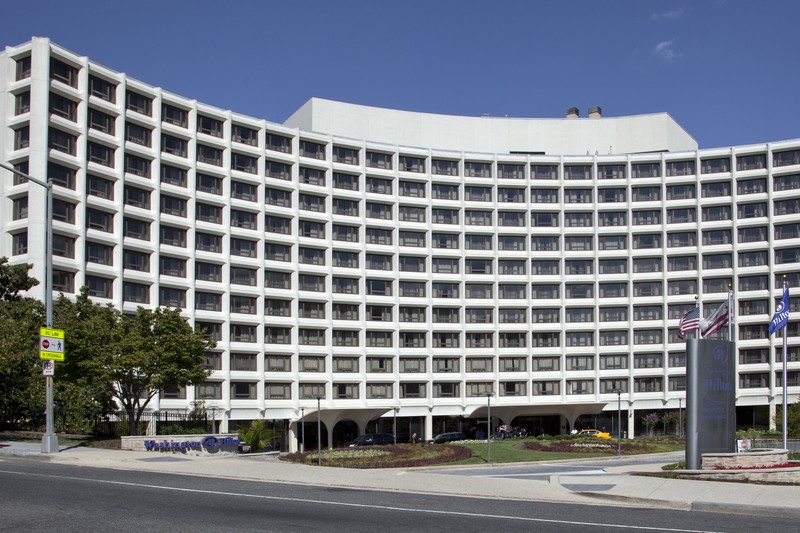
That same day, the Justice Department unveiled its criminal complaint against Cole Tomas Allen, a 31-year-old from Torrance, California. The complaint describes Allen approaching the security checkpoint at the Washington Hilton holding a long gun and running through the magnetometer. “US Secret Service personnel assigned to the checkpoint heard a loud gunshot,” it states. “US Secret Service Officer V.G. was shot once in the chest.”
Notably absent from that language: any direct assertion that Allen pulled the trigger.
What the Court Papers Don’t Say
The omission is striking in a document that otherwise details Allen’s cross-country journey by train, his weapons purchases dating back to 2023, and a pre-scheduled email in which he signed off as “Cole ‘coldForce’ ‘Friendly Federal Assassin’ Allen.” Prosecutors charged him with attempting to assassinate the president, transporting firearms in interstate commerce, and discharging a firearm during a crime of violence. They did not charge him with assaulting a federal officer.
The government’s detention filing, released Wednesday, describes a Secret Service officer who “observed the defendant fire the shotgun in the direction of the stairs leading down to the ballroom.” But it does not say whether Allen’s shot struck anyone. Allen’s public defenders seized on the gap, writing that the government “has apparently retreated from the theory” of their client shooting the officer by omitting any mention of him in the detention memorandum.
The Friendly-Fire Question
The reason the gap matters is that five other shots were fired that night — all of them by the Secret Service. The officer who was struck in the chest returned fire, discharging his weapon five times. None of those rounds hit Allen. According to Secret Service Director Sean Curran, Allen was not stopped by gunfire at all — he tripped over a box used to transport a magnetometer.
On Thursday, US Attorney Jeanine Pirro posted security footage of the incident on social media, writing: “There is no evidence the shooting was the result of friendly fire.” The video, slowed and annotated but without audio, shows muzzle flashes from the officer’s weapon. Whether it shows Allen firing his shotgun is considerably less clear. A Washington Post video analysis, cited by The Guardian, documented only four shots in the footage — all from the Secret Service agent’s gun.
CBS News, citing senior law enforcement officials, reported that investigators had determined Allen fired his shotgun and that the round likely struck a cellphone tucked inside the officer’s vest pocket. Preliminary ballistics recovered a spent cartridge case in the shotgun’s chamber and at least one fragment consistent with a buckshot pellet, according to a letter from prosecutors to Allen’s defense team.
A Case Built on More Than One Shot
Mark Lesko, a former US Attorney for the Eastern District of New York, told the BBC the shifting statements were understandable under pressure but could give defense attorneys an opening. Whether Allen fired the shot that struck the officer may not matter much for prosecutors. “They have enough charges here to put Allen away for a very long time,” Lesko said, if a jury convicts.
Allen agreed on Thursday to remain in federal custody. He has not entered a plea. His lawyers have complained that they have struggled to meet with him at the Washington, DC, jail, where he is being held under lockdown conditions and physically restrained, according to CNN. A judge has since granted unrestricted legal visits.
The Secret Service and the US Attorney’s office have declined to comment. The BBC has contacted the Justice Department for comment. Such reviews typically take weeks, if not months. Until then, the gap between what officials say happened and what they will put in a court filing remains exactly that — a gap.
Sources
- Who shot a Secret Service officer at the Trump press dinner? — BBC News
- Suspect in White House Correspondents’ Dinner Shooting Charged with Attempt to Assassinate the President — US Department of Justice
- Prosecutors detail timeline and suspect’s extensive arsenal in Correspondents’ Dinner shooting — CNN
- Video shows moment shooter tried to storm White House dinner, officials say — The Guardian
- Secret Service officer shot at White House Correspondents’ Dinner was not hit by friendly fire, sources say — CBS News
Discussion (10)