 lop News
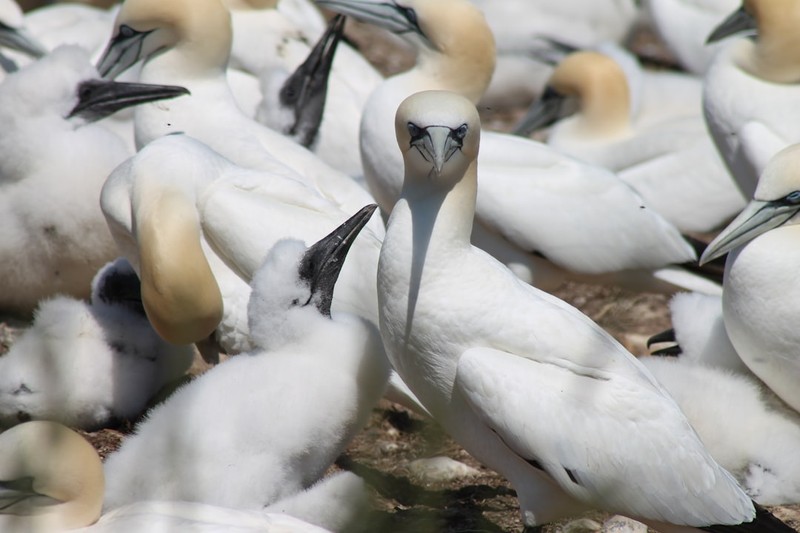
Northern gannets have been keeping records no one asked them to keep. For 55 years, their eggs on Bonaventure Island — home to North America’s largest gannet colony — have absorbed whatever the St Lawrence River carried past, including a class of industrial chemicals designed to never break down.
Those records now show something remarkable. PFOS, once the most common and toxic PFAS compound, fell from a peak of 100 parts per billion in the eggs to 26 ppb by 2024 — a 74% decline. PFHxS, another persistent compound, dropped roughly 72%. The findings were published in the Journal of Applied Toxicology.
The trajectory tells a story. PFAS levels climbed from the 1960s through the late 1990s, when the chemicals were being used in everything from firefighting foam to stain guards with virtually no regulatory oversight. Then came the clampdown. PFOS was listed under the Stockholm Convention in 2009. Chemical giant 3M began moving away from the compound. By 2015, major manufacturers reached an agreement with the US EPA to phase out PFOS and PFOA.
“The regulations are having a good effect,” said Raphael Lavoie, an ecotoxicologist with Environment and Climate Change Canada and a co-author of the study. Concentrations rose above toxicological thresholds for the birds, then declined “in a nice way.”
It is not a clean win. PFOA fell only about 40% and has ticked back up in recent years. Its environmental half-life is 51 years — the chemical persists in ecosystems for decades regardless of what regulators do today. Egg contamination levels remained above the threshold for severe reproductive effects from the 1980s until 2010. And manufacturers have shifted to shorter-chain PFAS compounds that present their own risks and are harder to detect in wildlife.
Still, the gannet eggs carry a clear signal: when governments restricted production, the chemicals began leaving living tissue. Slowly, imperfectly — but measurably.
Sources
- Sharp drop in ‘forever chemicals’ in seabird eggs hailed as win for regulation — The Guardian
- Declining PFAS levels in seabird eggs reflect impact of regulatory action — Environmental Health News
Discussion (6)