 lop News
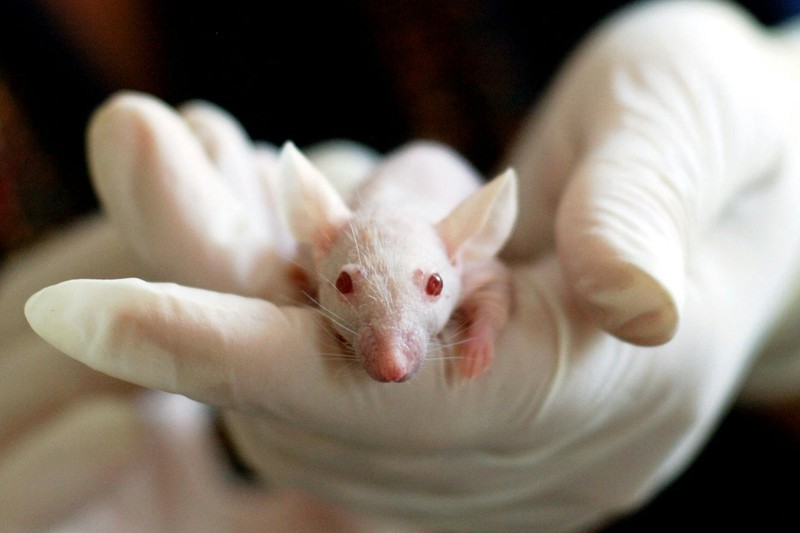
The whole thing started at a supermarket called FairPrice in Singapore. A bionanotechnologist named Kuoran Xing walked in, bought some leafy greens, and went back to the lab to see if he could give mice the ability to photosynthesize.
It worked.
On May 15, a team at the National University of Singapore (NUS) published a study in Cell demonstrating that photosynthetic machinery harvested from spinach can be transplanted into mammalian eyes — and into human tear samples — where it converts ambient light into molecules that fight inflammation. They call the technology LEAF, which stands for Light-reaction Enriched thylAkoid NADPH-Foundry. The acronym is doing a lot of work, so let’s unpack the science.
Stealing 3 Billion Years of R&D
Plants have been perfecting photosynthesis for roughly 3 billion years. The process happens inside chloroplasts — tiny organelles containing stacks of membrane compartments called thylakoid grana. Picture stacks of microscopic pancakes. These absorb light and use it to produce energy-carrying molecules, including one called NADPH, which plants then feed into a second phase to make sugar.
The NUS team, led by Associate Professor David Tai Leong, wanted only the first half of that process. They stripped away the sugar-making machinery and kept the light-harvesting thylakoids, packaging them into nanoparticles roughly 400 nanometres across — small enough for mammalian cells to absorb.
“We are stealing the entire technology that has evolved over millions of years in plants and are able to transplant it into the animal system,” Leong told Nature.
The idea came from the sacoglossan sea slug — the only known animal capable of photosynthesis. It steals chloroplasts from algae and stores them in its intestinal cells, living off the nutrients when food is scarce. Xing and his colleagues wanted to know whether mammalian cells could pull off something similar.
Why the Eye
The eye was a natural target. It is one of the few organs that regularly absorbs visible light — the same light that powers photosynthesis in plants. And it is the site of a massive unmet medical need.
Dry eye disease affects more than 1.5 billion people worldwide, causing corneal scarring, chronic pain, blurred vision, and light sensitivity. Studies have linked it to depression, anxiety, and reduced workplace productivity, with an economic burden estimated at US$3.84 billion annually in the US alone.
At the cellular level, the disease is a vicious cycle. Inflammation generates reactive oxygen species (ROS) — chemically aggressive molecules that damage cells. Healthy eyes neutralise ROS through antioxidant production driven by NADPH. When ROS levels overwhelm those natural defences, they generate even more ROS, creating a self-reinforcing spiral of damage.
Current treatments like Restasis and Xiidra target inflammation through specific molecular pathways, but high costs and side effects such as eye irritation and burning limit long-term use. The NUS team saw a different path: what if the eye could produce its own NADPH, powered by the same ambient light already passing through the cornea?
From Petri Dish to Eye Drops
Spinach — specifically Spinacia oleraceae — yielded more photosynthetic machinery than the other greens the team tested, including red spinach, water spinach, and lettuce.
In the lab, mammalian cells quickly absorbed the LEAF particles. Once inside, the nanoparticles produced ATP and NADPH for several hours under light exposure. Leong calls this “a limited form of photosynthesis” — limited because LEAF skips the phase where plants turn those molecules into carbohydrates. But light still goes in and chemical energy still comes out.
The results in living tissue were striking. In inflamed cells, LEAF restored NADPH levels within 30 minutes of light exposure, suppressed reactive oxygen species, and shifted corneal immune cells from a pro-inflammatory to an anti-inflammatory state. In tear samples from 20 dry eye disease patients at Zhejiang University Eye Hospital in China, LEAF increased NADPH levels roughly 20-fold and reduced hydrogen peroxide — a key cell-damaging oxidant — by more than 95%, according to the NUS press release.
In preclinical rodent trials, LEAF administered as eye drops under ambient indoor lighting reversed corneal damage to near-healthy levels within five days, outperforming Restasis. Safety assessments over two months showed no adverse effects at doses low enough not to interfere with colour perception.
A Party Trick Worth Watching
The team plans clinical trials next. But the implications stretch beyond dry eyes. Oxidative stress underpins a wide range of inflammatory conditions, and the researchers see potential for LEAF-based therapies wherever the body’s antioxidant defences are overwhelmed — particularly tissues naturally exposed to light, such as the retina, skin, and skeletal muscles. They are also developing strategies to produce therapeutically useful photosynthesised molecules in internal organs without visible light penetration.
Corey Allard, a cell biologist at Harvard University, put it well. “Any effort to do this is necessarily going to look like a party trick at first,” he told Nature. But only by pushing these techniques and finding their limitations can researchers figure out what they are actually good for.
A party trick that reverses corneal damage in five days is a party trick worth taking seriously.
Sources
- Mouse eyes photosynthesize after plant-to-animal transplant — Nature News
- Eyes that photosynthesise: NUS scientists plant a cure for dry eye disease — National University of Singapore
- NUS study finds photosynthesis could treat dry eye disease — The Straits Times
Discussion (10)