 lop News
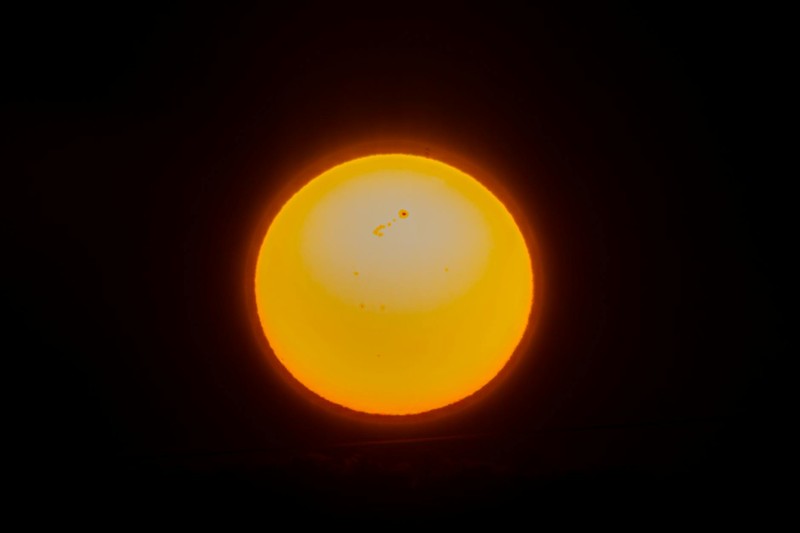
The Sun has been humming a tune we’ve only now learned to hear.
Researchers at NYU Abu Dhabi have detected previously unknown waves rippling through the deep interior of the Sun, driven by magnetic fields hidden far below its surface. The discovery, published in Nature Astronomy in February 2026, cracks open a part of the solar interior that has essentially been a black box.
The team, led by Shravan Hanasoge at NYU Abu Dhabi’s Center for Astrophysics and Space Science, analyzed more than 14 years of data from NASA’s Solar Dynamics Observatory — specifically, the Sun’s own natural vibrations, captured by the Helioseismic and Magnetic Imager between April 2010 and November 2024. Buried in that data were global-scale waves consistent with magnetically modified Rossby waves: slow, planet-spanning oscillations shaped by the Sun’s rotation and, crucially, its internal magnetism.
“These waves give us a unique look at the Sun’s hidden magnetic system,” Hanasoge said.
That matters because the Sun’s magnetic field drives the entire solar cycle — sunspots, solar flares, coronal mass ejections. When those eruptions reach Earth, they can scramble satellite communications, stress power grids, and endanger astronauts. Forecasting them has always been limited by the fact that we can only see the Sun’s surface, not the churning interior where its magnetism is born.
By measuring how these newly detected waves move, scientists can infer the strength and structure of magnetic fields deep inside the Sun — potentially around 5,000 gauss at the base of the convection zone, consistent with helioseismic and other estimates but now observed through an entirely new mechanism.
Think of it as learning to read seismic tremors to map an earthquake fault, except the fault is 150 million kilometers away and made of superheated plasma. The technique could sharpen space-weather forecasts and give physicists a richer picture of how stars generate magnetic fields in the first place.
Not bad for listening carefully to 14 years of vibrations.
Sources
- Evidence for global-scale magnetically modified Rossby waves in the Sun — Nature Astronomy
- Scientists at NYU Abu Dhabi detect magnetic waves deep within the sun, helping predict solar activity — EurekAlert! / NYU Abu Dhabi
Discussion (5)