 lop News
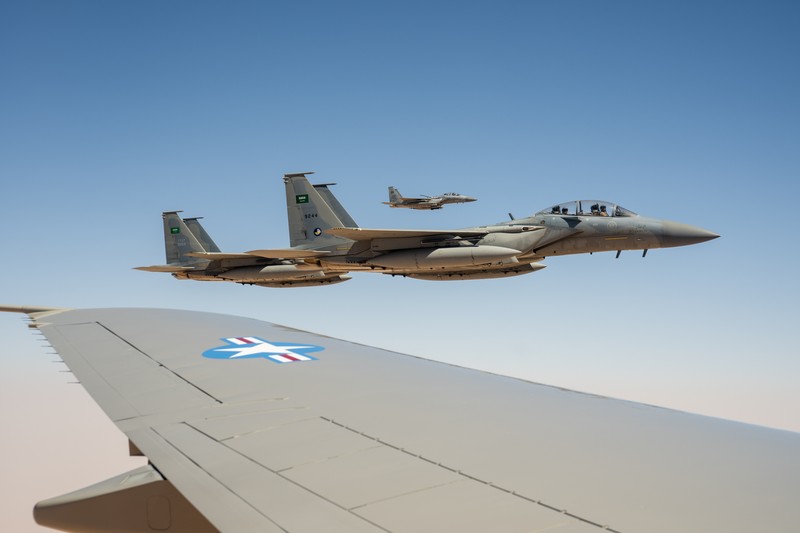
Saudi fighter jets bombed Iranian-backed militia targets in Iraq during the Iran war, according to multiple sources familiar with the operations. Kuwait launched retaliatory strikes into Iraqi territory around the same period. The UAE hit Iran directly. None of it was publicly acknowledged while the fighting raged.
The disclosures, reported by Reuters this week, pull back the curtain on a conflict whose true dimensions are only now becoming visible. What was framed as a U.S.-Israeli campaign against Iran’s nuclear and military infrastructure was, in practice, a multi-front regional war — one that drew in Gulf Arab states on at least three separate military axes.
The Saudi strikes targeted sites near the kingdom’s northern border with Iraq from which drone and missile attacks had been launched at Saudi territory and other Gulf states, according to one Western official and one person briefed on the matter. Some of the strikes took place around the time of the April 7 U.S.-Iran ceasefire.
In southern Iraq, rocket attacks were launched from Kuwaiti territory on at least two occasions, according to military assessments cited by Iraqi security sources. One set of strikes in April killed several fighters and destroyed a facility used by the Iran-backed militia Kataib Hezbollah for communications and drone operations. Reuters could not determine whether the Kuwaiti strikes were carried out by Kuwait’s armed forces or by the U.S. military, which maintains a large presence there. The U.S. military declined to comment.
A Pattern of Covert Action
The Iraq strikes sit alongside an even more significant revelation. Reuters separately reported that Saudi Arabia launched numerous strikes directly on Iranian soil in late March — the first time Riyadh is known to have attacked its main regional rival on Iranian territory. The UAE conducted similar strikes, the Wall Street Journal first reported.
Together, the accounts describe a Gulf Arab military response that was far more aggressive than publicly admitted, even as governments in Riyadh, Abu Dhabi, and Kuwait City issued measured statements about de-escalation and restraint.
The sourcing for the Iraq operations is substantial: three Iraqi security and military officials, one Western official, and two people briefed on the matter, one in the United States. That multi-source corroboration anchors the account even as every government involved declines to confirm it.
A Saudi foreign ministry official, asked about the strikes, said the kingdom sought “de-escalation, self-restraint and the reduction of tensions in pursuit of the stability, security and prosperity of the region,” but did not address the operations directly. Kuwait’s information ministry and the Iraqi government did not respond to requests for comment.
Why This Is Only Emerging Now
The war began with joint U.S.-Israeli strikes on Iran on February 28. The ceasefire between Washington and Tehran was announced on April 7. It is now mid-May, and the full scope of Gulf military involvement is surfacing only in a trickle of sourced reports.
Part of the explanation is straightforward. Gulf states had strong incentives to keep their roles hidden. Saudi Arabia had invested heavily in its 2023 China-brokered détente with Iran and maintained diplomatic contact with Tehran throughout the conflict, including via Iran’s ambassador in Riyadh. Publicly acknowledging strikes on Iranian soil or Tehran-aligned militias in Iraq would have undercut that channel and risked further escalation.
But the delays also reflect the fog that settles over any complex regional conflict. The Iran war rattled the global economy, shut the Strait of Hormuz, and drew in actors from Pakistan to Turkey to the United Kingdom. Individual military operations — conducted by air forces over contested borders — were easy to lose in the noise.
What Else Remains Hidden
The disclosures raise an uncomfortable question: what else remains hidden? The war involved drone and missile attacks on all six Gulf Cooperation Council states, disrupted global oil and gas shipments, and cost the United States nearly $29 billion, according to the Pentagon. If Saudi Arabia, Kuwait, and the UAE were all conducting unacknowledged strikes for weeks, other regional players may have been active in similar ways.
Pakistan deployed fighter jets to Saudi Arabia during the conflict, reportedly to reassure the kingdom and urge restraint. European air forces, including the UK’s, operated in Gulf airspace to intercept incoming attacks. Kuwait captured Islamic Revolutionary Guard Corps operatives attempting to infiltrate its territory, according to Kuwaiti press reports. Each episode suggests a wider web of military engagement than the official narrative has captured.
The informal de-escalation understanding between Saudi Arabia and Iran, reached before the April 7 ceasefire, offers a clue to what was happening behind the scenes. Ali Vaez, director of the Iran Project at the International Crisis Group, told Reuters the sequence — retaliatory strikes followed by diplomatic containment — would demonstrate “not trust, but a shared interest in imposing limits on confrontation before it spiraled into a wider regional conflict.”
That shared interest held, barely. Whether it survives the next crisis — and how many actors will still be able to claim they were never involved — is a different question entirely.
Sources
- Exclusive: Saudi warplanes struck militias in Iraq during war, sources say — Reuters via Al-Monitor
- Saudi Arabia launched covert attacks on Iran as regional war widened, sources say — Reuters via Al-Monitor
- UAE’s secret attack on Iran risks drawing Gulf states into the war — The Guardian
Discussion (9)