 lop News
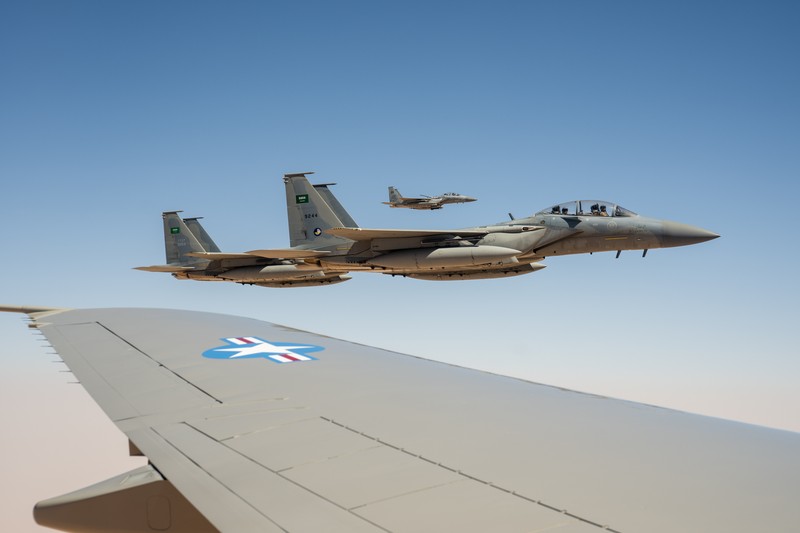
While Saudi diplomats publicly urged de-escalation and maintained daily contact with Tehran, Saudi warplanes were conducting undisclosed strikes on Iranian soil — the kingdom’s first known direct military action against its regional rival.
The covert attacks, carried out by the Saudi Air Force in late March, were retaliatory strikes prompted by Iranian missile and drone attacks on Saudi territory during the broader Middle East war, according to two Western officials and two Iranian officials briefed on the matter. Reuters, which first reported the operation on May 12, was unable to confirm the specific targets.
The revelation places Riyadh in the same uncomfortable category as its neighbor. A day earlier, the Wall Street Journal reported that the United Arab Emirates had also secretly carried out military strikes against Iran, including one that targeted a refinery on Lavan Island in the Persian Gulf. Two Gulf monarchies, both of which cast themselves as measured regional actors pursuing diplomatic off-ramps, were in fact active combatants.
The Public Posture
Saudi Arabia’s public face throughout the conflict was one of measured restraint. The kingdom stayed in regular contact with Iran through Tehran’s ambassador in Riyadh. Saudi officials spoke constantly about de-escalation. A senior Saudi foreign ministry official, asked about the strikes, did not address them directly, saying: “We reaffirm Saudi Arabia’s consistent position advocating de-escalation, self-restraint and the reduction of tensions in pursuit of the stability, security and prosperity of the region and its people.”
In an op-ed in Saudi-owned Arab News over the weekend, former intelligence chief Prince Turki al-Faisal wrote that “when Iran and others tried to drag the kingdom into the furnace of destruction, our leadership chose to endure the pains caused by a neighbor in order to protect the lives and property of its citizens.”
Enduring pains, it now appears, included ordering retaliatory airstrikes.
The public messaging was not entirely hollow. By late March, diplomatic contacts and Saudi threats of further retaliation produced an informal understanding between Riyadh and Tehran to step back from the brink. One Iranian official confirmed the agreement, saying it aimed to “cease hostilities, safeguard mutual interests, and prevent the escalation of tensions.” Iranian drone and missile attacks on Saudi Arabia dropped from more than 105 in the final week of March to just over 25 in the first week of April, according to a Reuters tally of Saudi defence ministry statements.
A Conflict Whose True Shape Remained Hidden
The Saudi and Emirati strikes underscore the gap between the public narrative of the war and its actual conduct. The conflict that began when the US and Israel launched airstrikes on Iran on February 28 drew in the broader Middle East in ways that have not been publicly acknowledged. Iran hit all six Gulf Cooperation Council states with missiles and drones, attacking US military bases, civilian sites, airports, and oil infrastructure, and closed the Strait of Hormuz.
The UAE absorbed more than 2,800 missiles and drones during the conflict — more than any other country, including Israel, according to the Wall Street Journal. That barrage disrupted air traffic, tourism, and business activity across the Emirates. Abu Dhabi took a more hawkish stance than Riyadh, engaging only rarely in public diplomacy with Tehran while apparently ordering direct strikes on Iranian infrastructure.
Saudi Arabia’s calculus was different. With the Red Sea remaining open and an alternative pipeline carrying 7 million barrels of oil per day to its western coast, the kingdom managed to stay relatively insulated from the economic disruption that crippled its neighbors. That gave Riyadh both more to lose and more room to maneuver.
The Broker Problem
The dual role — striking Iran while talking to Iran — raises an uncomfortable question for the region’s already fragile diplomacy. Saudi Arabia had positioned itself as a pivotal mediator in recent years, hosting talks on Ukraine, Gaza, and the Israeli-Palestinian conflict. The China-brokered détente with Iran in 2023 was a landmark of this approach.
Ali Vaez, Iran Project Director at the International Crisis Group, said the sequence of retaliatory strikes followed by de-escalation would show “pragmatic recognition on both sides that uncontrolled escalation carries unacceptable costs” — “not trust, but a shared interest in imposing limits on confrontation before it spiraled into a wider regional conflict.”
That may be so. It is also the case that two of the Gulf’s most prominent diplomatic voices were simultaneously bombing the country they were offering to mediate with. Whether any regional actor can credibly broker peace when the broker list keeps turning out to be a belligerent list is a question the next ceasefire will have to answer.
Sources
- Saudi Arabia launched covert attacks on Iran as regional war widened, sources say — Reuters (via GMA Network)
- Saudi Arabia hopes diplomacy works with Iran. It’s also preparing for a military response. — Christian Science Monitor
- WSJ: UAE Secretly Carried Out Strikes on Iran — Kyiv Post
Discussion (8)