 lop News
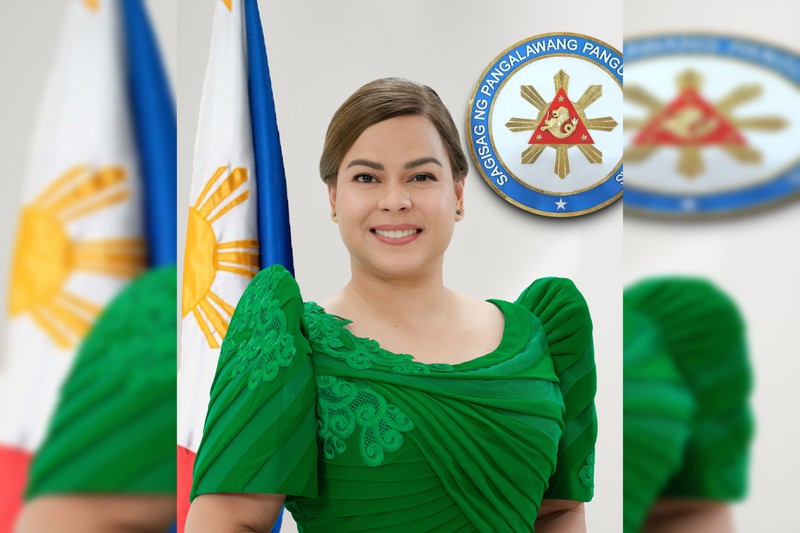
Two hundred and fifty-five votes to 26. In Philippine politics — where loyalty is the currency and party ideology is an afterthought — a margin that wide is not a rebuke. It is a demolition.
The Philippine House of Representatives impeached Vice President Sara Duterte on Monday, advancing four articles of impeachment to the Senate on charges that include misappropriation of more than ₱612 million in confidential public funds, accumulation of unexplained wealth, bribery, and an alleged assassination contract against President Ferdinand Marcos Jr. Nine lawmakers abstained.
The vote — 255 of the 290 members in attendance, drawn from a 318-member chamber — far surpassed the one-third constitutional threshold. It is the second time in fifteen months that the House has impeached Duterte. The Supreme Court voided the first attempt, in February 2025, on a technicality before the Senate could convene. This time the process was methodical: a justice committee held months of hearings, issued subpoenas, and voted unanimously — 53 to 0 — on probable cause before Monday’s floor vote.
The charges are sprawling. The Anti-Money Laundering Council flagged 630 covered transactions and 33 suspicious transactions totalling ₱6.77 billion linked to Duterte and her relatives, according to testimony cited by the Philippine Daily Inquirer. Duterte is also accused of publicly threatening to have Marcos, the first lady, and the former House speaker killed — a threat delivered during a late-night online press conference that she later said was misinterpreted.
Duterte has dismissed the case as politically motivated. In a written response to the committee, she called it “nothing more than a scrap of paper.” She declined to appear at any of the hearings. Her defence counsel said in a statement after the vote that “the burden now rests on the accusers to substantiate their claims.”
A United Front That Wasn’t
The impeachment is the climactic blow in a feud that has defined Philippine governance since 2022, when Duterte and Marcos ran together on a “UniTeam” ticket — marrying the Duterte dynasty’s southern stronghold to the Marcos family’s northern base. They won in a landslide.
The alliance fractured almost immediately. Duterte was reportedly denied the defence portfolio she wanted and was appointed education secretary instead. Marcos’s congressional allies, led by his cousin then-House Speaker Martin Romualdez, opened investigations into Duterte’s office spending. The rift escalated into open warfare: Duterte’s televised death threat against Marcos, and then, in March 2025, Marcos’s decision to allow the International Criminal Court to arrest her father, former president Rodrigo Duterte, and transfer him to The Hague. The elder Duterte remains in custody awaiting trial on charges of crimes against humanity connected to his drug war.
A Senate That May Acquit
Conviction in the Senate requires a two-thirds supermajority — 16 of 24 senators — and the odds there are far less favourable to the prosecution. Duterte-aligned candidates outperformed expectations in the 2025 mid-term elections, winning five of twelve open Senate seats.
On Monday, even as the House voted, Duterte ally Senator Alan Cayetano — who served as foreign secretary under Rodrigo Duterte — was elected Senate president in a surprise vote, replacing Vicente Sotto. Sotto told ABS-CBN News he believed his removal was connected to the impeachment. Cayetano denied the claim and said the trial would be conducted on its merits. “The impeachment will be much, much more than dismissing a complaint because of political affiliation,” he said.
Political scientist Cleve Arguelles told Al Jazeera that the lopsided House vote could still increase pressure on senators by “reinforcing the perception that the evidence has become politically difficult to ignore.” But Dennis Coronacion, a political scientist at the University of Santo Tomas, told AFP that acquittal was “highly possible” — and that the trial itself would nonetheless damage Duterte’s standing. “Filipinos really hate corruption,” he said.
What It Means for 2028
Duterte declared her candidacy for the 2028 presidential race in February, months ahead of schedule. A March survey by Manila pollster WR Numero gave her a 17-point lead over her nearest rival. A Senate conviction would bar her from public office for life.
Whether she is convicted or acquitted, the impeachment marks a turning point in the broader pattern of dynastic accountability in Southeast Asian democracies. When accountability arrives — as it did for Rodrigo Duterte at The Hague, and now potentially for Sara Duterte in the Philippine Senate — it tends to come not from independent institutions acting alone, but from rival dynasties wielding those institutions as weapons. The Marcos family, itself returned from decades of exile, has turned the machinery of the state against the family that helped restore it to power.
The question for the Philippines is whether that counts as accountability. The question for Duterte is whether she survives it.
Discussion (10)