 lop News
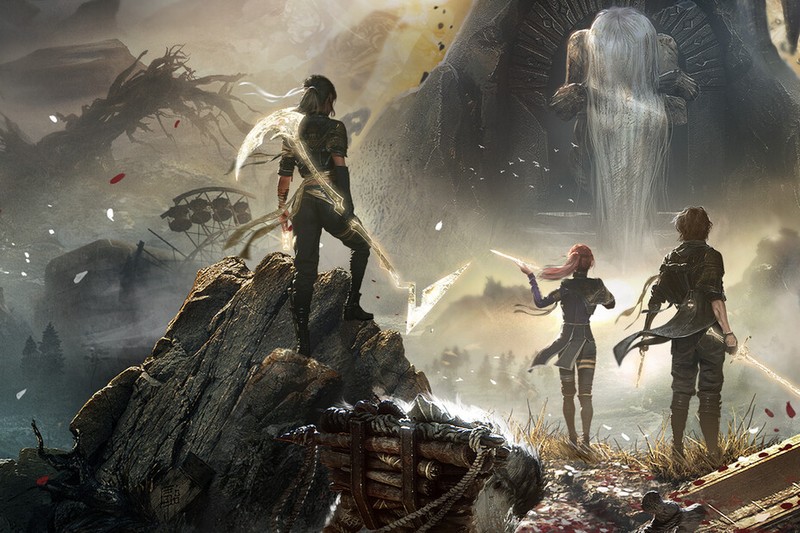
Thirty developers. One studio. Zero prior releases. Nine Game Awards wins, including Game of the Year.
Sandfall Interactive’s Clair Obscur: Expedition 33 is not supposed to exist — at least not according to the usual rules of AAA game development. The Montpellier-based studio’s debut title currently sits at 97% positive from nearly 130,000 Steam reviews, holds a 91 on Metacritic (with a record-breaking 9.7 user score), and is still parked at #10 on Steam’s Top Sellers chart at $39.99 with a 20% discount. Nearly eleven months after its April 2025 launch, it’s moving units like a game that came out last week.
So what happened?
From Ubisoft Cubicle to Game of the Year
The studio traces back to 2019, when Guillaume Broche — then an employee at Ubisoft — started tinkering with Unreal Engine on a personal project he called “Sandfall.” That prototype, titled “We Lost,” already contained the bones of what would become Expedition 33: character names, real-time turn-based combat mechanics, the seeds of a world.
Broche teamed up with programmer Tom Guillermin, a longtime friend, and François Meurisse soon followed. Sandfall Interactive was formally founded in 2020, during the pandemic. According to the French National Centre for Cinema (CNC), the core team stayed at around 30 people through development — split between Montpellier for core production and Paris for cinematics. That’s a fraction of the headcount at the studios they were competing against.
The CNC’s Video Game Support Fund backed them with pre-production funding in late 2021, which helped the team build a vertical slice to pitch to publishers. Kepler Interactive signed on, and development continued with what Benjamin Dimanche, a team member, described as a workforce “far below what you’d find in a typical AAA production.”
The Numbers Don’t Lie
The stats are almost comically dominant. By October 2025, Expedition 33 had sold over 5 million copies, according to reports at the time. Its Steam peak concurrent player count hit 145,063 — rare air for any game, let alone a debut from an unknown studio. At The Game Awards 2025, it took home nine trophies from thirteen nominations, the most wins in the ceremony’s history. It also racked up 436 Game of the Year awards across the industry, breaking the record previously held by Elden Ring.
The developers themselves weren’t expecting this. According to The Gamer, the team had been making internal bets on their Metacritic score during development. Their mock reviews projected around 80; their stretch goal was 85. The final 91 “exceeded by far the best we could have expected,” the studio said.
What Players Love — and What They Don’t
The positive reviews tell a consistent story: combat that hits different. Game Informer’s 9/10 review compared the turn-based system favorably to Mario RPGs, praising the dodge-and-counter mechanics that reward precise timing with explosive damage numbers. Shacknews, which named it Best RPG of 2025, highlighted the Picto passive ability system and weapon upgrades as sources of deep strategic satisfaction. The soundtrack by Lorien Tesard and Alice Duport-Percier draws near-universal praise.
The 3% of negative Steam reviews cluster around one complaint: the story. Players call it “melodramatic,” with characters described as “overly dramatic” and dialogue that some find “repetitive” in its emotional intensity. One recurring criticism flags a tonal shift in the game’s second half — what some reviewers see as a narrative left turn that loses the thread of the opening acts. The lead writer told GamesRadar+ that a conventional happy ending was “never even considered,” which explains the divisiveness but doesn’t resolve it for the players who bounced off.
That said, 97% positive from 130,000 reviews is a mandate. The melodrama complaints read less like a structural flaw and more like a matter of taste — the game swings big emotionally, and a small minority finds it overwrought.
The Bigger Picture
Expedition 33 arrived in a year stacked with quality RPGs, and it didn’t just compete — it dominated. The question worth asking is what Sandfall got right that so many larger, better-funded studios routinely get wrong.
The answer seems to be scope discipline. Thirty people, no departmental silos, staff working across multiple aspects of the game. No live-service bloat, no microtransactions, no early access hedging. A $49.99 price point for a complete, polished experience. The studio bet on craft over scale, and 5 million players agreed.
Whether Sandfall can repeat the trick remains genuinely uncertain — the studio has been, per OpenCritic, “secretive about the franchise’s future.” But for now, Clair Obscur: Expedition 33 stands as proof that a small team with a clear vision can beat the entire industry at its own game. Literally.
Sources
- The story behind Clair Obscur: Expedition 33 — CNC (Centre National du Cinéma)
- Shacknews Best RPG of 2025 — Clair Obscur: Expedition 33 — Shacknews
- Clair Obscur: Expedition 33 Review — Melancholy RPG Eminence — Game Informer
- Clair Obscur: Expedition 33 devs made bets on the game’s Metacritic score — The Gamer
- Clair Obscur: Expedition 33’s lead writer never considered a happy ending — GamesRadar+
- Sandfall Interactive remains secretive about franchise’s future — OpenCritic
- Steam store page — Clair Obscur: Expedition 33 — Steam