 lop News
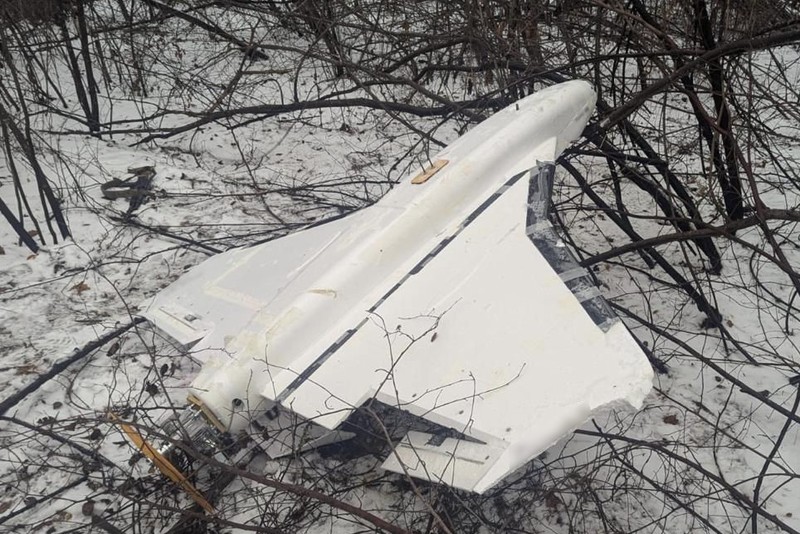
Two people were hospitalized after a Russian drone crashed through the roof of an apartment building in eastern Romania overnight, igniting a fire and forcing dozens of residents into the street. The port city of Galati sits on the Danube, just kilometers from the Ukrainian border — close enough that the consequences of one country’s war routinely spill into another.
By morning, the diplomatic machinery had cranked into familiar motion. NATO Secretary-General Mark Rutte phoned Romanian President Nicusor Dan to pledge “absolute solidarity.” European Commission President Ursula von der Leyen declared that Russia’s “war of aggression has crossed yet another line.” Bucharest summoned the Russian ambassador. The US envoy to NATO condemned a “reckless incursion” — without naming Russia as the perpetrator.
The words were forceful. The pattern they fit into tells a different story.
Not an isolated incident
Romania has detected dozens of drone incursions since Russia’s full-scale invasion of Ukraine began in 2022, but this was the first to strike a residential building, according to Romania’s Defense Ministry. The drone was tracked by radar before impact. Two F-16 fighter jets and a helicopter were scrambled, authorized to engage. They weren’t fast enough.
And this is not an anomaly. Roughly 20 Russian drones crossed deep into Poland earlier this month, several shot down by NATO aircraft in what the Associated Press described as the first direct military engagement between the alliance and Russia since the invasion began. Russian fighter jets penetrated Estonian airspace for 12 minutes last week in what Tallinn called an “unprecedently brazen” violation. Latvia’s government collapsed this month after scrutiny of its defense preparedness following a stray Ukrainian drone incursion.
Each incident draws condemnation. None has triggered a military response from NATO beyond scrambling aircraft and issuing statements.
The strategy behind the spillover
Analysts see deliberate calculation. Mark Galeotti, a Russia specialist at Mayak Intelligence, described the incursions as “coercive signaling” — Moscow’s way of telling NATO that the risks of supporting Ukraine will keep growing. “This is Moscow trying to say, ‘Just look how dangerous things already are and how dangerous they could get,’” Galeotti said on a podcast.
Edward Lucas, a senior fellow at the Center for European Policy Analysis, framed it more bluntly: “Russia does not need to defeat NATO militarily if it can defeat it politically.” The aim, he argued, is to plant a “corrosive question” in allies’ minds — whether they would really go to war over a drone in the Baltics.
Estonian Defense Minister Hanno Pevkur offered a simpler theory: Moscow wants to force NATO states to divert air defense resources from Ukraine to their own borders. “Russia is trying to tear us out from Ukraine,” he said.
A deterrence threshold in motion
The calibrated responses raise an uncomfortable question: what, exactly, would trigger NATO’s Article 5 collective defense clause? Polish Prime Minister Donald Tusk has said Warsaw would shoot down any object entering its airspace “without discussion.” But Rutte has indicated that engagement decisions would depend on intelligence assessments — a more cautious posture.
President Donald Trump has hinted the US might not honor Article 5 in all cases. Asked this week whether NATO should shoot down intruding Russian aircraft, Trump said yes — but demurred when pressed on whether the US would participate.
Max Bergmann, who heads the Europe, Russia, and Eurasia program at the Center for Strategic and International Studies, called the US response to recent incursions “quite underwhelming.” The United States under President Trump does not “feel responsible for European security,” he told the AP, and that “will be quite enlightening to the Russians. They may escalate even more.”
What happens now
Romania’s outgoing Prime Minister Ilie Bolojan said Bucharest would sign a contract within hours for anti-drone defenses under the EU’s SAFE programme. Von der Leyen confirmed the EU is actively drafting its 21st sanctions package against Russia.
Romanian Foreign Minister Oana Toiu said Bucharest would communicate “the consequences that this lack of responsibility on the part of the Russian Federation will have for the diplomatic relations between our countries, as well as the next steps at the European level regarding sanctions packages.”
Ukrainian President Volodymyr Zelensky, pressing the US for more Patriot air defense missiles, warned that deliveries are falling short as the Iran war diverts American stockpiles. Ukraine’s foreign minister, Andrii Sybiha, linked Romania’s vulnerability directly to the state of Ukrainian air defenses, calling strengthened Ukrainian defenses a “strategic task” to protect not only Ukraine but its neighbors.
The consequences of the Galati strike, so far, are diplomatic. The consequences of the next one may not be.
Sources
- NATO states slam Russia after drone crashes in Romania — Al Jazeera
- Russian drone launched against Ukraine hits apartment building in Romania — France 24
- Russian drone hits apartment building in Romania — Le Monde
- Russian forays into NATO airspace are causing alarm. Here’s why they might be happening — Associated Press
- Europe has a Russian drone problem. Here are ways it could be solved — Associated Press
Discussion (8)