 lop News
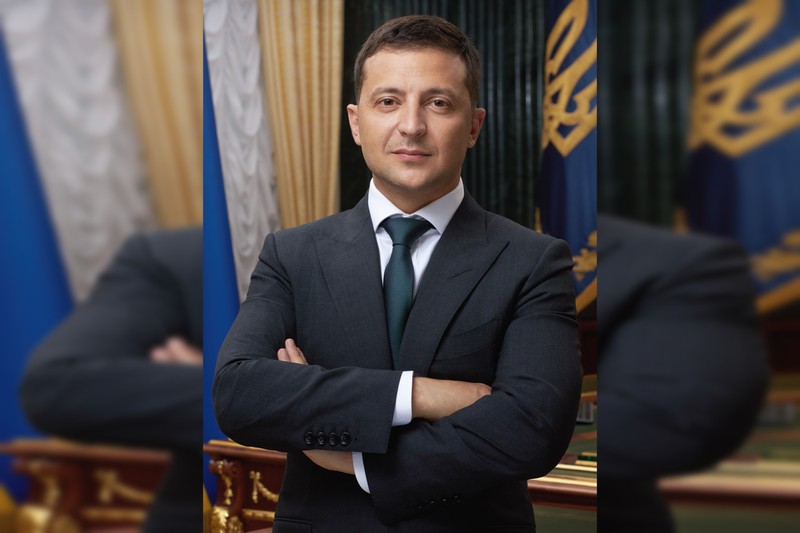
Hours after both sides accused each other of tearing up a Victory Day ceasefire — with drones over Moscow and hundreds of strikes along the front lines — Russia and Ukraine have agreed to try again. This time, at Washington’s urging.
President Donald Trump announced Friday that both countries had accepted his personal request for a three-day ceasefire running May 9 through 11, accompanied by an exchange of 1,000 prisoners of war from each side. Ukrainian President Volodymyr Zelensky confirmed the deal within hours, as did Russian state media.
The confirmed terms are straightforward: a suspension of all military operations for 72 hours and one of the largest single prisoner swaps of the war. Beyond that, nothing else is guaranteed.
The Ceasefire That Came Before
The agreement follows the collapse of two separate, unilateral truces that overlapped but never aligned. Putin declared a ceasefire for May 8–9 to coincide with Russia’s Victory Day commemorations. Kyiv had earlier proposed an indefinite ceasefire starting May 6. Neither held.
Within the first hours of Russia’s declared pause, Moscow Mayor Sergey Sobyanin said some 20 drones had been shot down near the capital. Zelensky reported more than 140 attacks on Ukrainian positions and over 850 drone strikes, adding that Ukraine would “act in kind.” Russian officials accused Ukraine of striking targets in the Kursk, Belgorod, Perm, Yaroslavl, and Rostov regions, as well as Grozny. Thirteen airports in southern Russia suspended operations.
Russia’s defense ministry threatened a “retaliatory, massive missile strike” on central Kyiv if Moscow was hit, and warned foreign diplomats to leave the Ukrainian capital. Saturday’s Victory Day parade in Red Square will, for the first time in nearly two decades, feature no military hardware — a telling concession to the reality that the capital is within drone range.
What Trump Gets
Trump has made ending the war in Ukraine a signature promise since his 2024 campaign, when he boasted he could resolve it within 24 hours of taking office. More than a year later, the conflict grinds on. The three-day ceasefire gives him something concrete to announce — a diplomatic win, however modest, that he can frame as progress.
“Hopefully, it is the beginning of the end,” Trump wrote, adding that talks are continuing and “we are getting closer and closer every day.”
His secretary of state struck a notably different tone. Speaking in Rome on Friday, Marco Rubio told reporters that US mediation had not produced a “fruitful outcome” and that efforts had “stagnated.” The gap between the president’s social media optimism and his top diplomat’s public assessment is wide enough to drive a convoy through.
Zelensky’s Calculated Move
Zelensky’s acceptance came with careful political staging. He framed Ukraine’s participation as driven by the prospect of bringing prisoners home, writing on Telegram: “Red Square matters less to us than the lives of Ukrainian prisoners of war who can be brought home.”
He then issued a formal presidential decree “authorizing” Russia to hold the Victory Day parade and declaring Red Square off-limits for Ukrainian strikes during the event — a move that simultaneously demonstrated restraint and implicitly reminded Moscow that Kyiv holds effective targeting reach over the Russian capital.
Zelensky also made clear that Ukraine expects Washington to enforce the deal. “We are counting on the United States to ensure that Russia fulfills its commitments,” he said.
A Footnote or a Foundation?
The prisoner swap is real and significant. Each exchange brings families back together and removes some of the human cost from the calculus of continued fighting. But 72 hours of quiet does not alter the fundamental dynamics of a war that has lasted more than four years.
The core sticking point remains the eastern Donetsk region, roughly three-quarters of which is controlled by Russian forces, according to Al Jazeera. Moscow has demanded that Kyiv withdraw from the remaining quarter — territory Russian troops have failed to capture. Ukraine has refused to cede ground it still holds. Neither position has shifted.
European Council President António Costa told the Financial Times on Thursday that he saw “potential” for the EU to negotiate with Russia on ending the war, with Zelensky’s backing. Kremlin spokesman Dmitry Peskov responded that Russia was “ready for dialogue” but would not initiate contacts itself — a familiar formulation that keeps the door nominally open without committing to anything.
Meanwhile, Ukrainian negotiator Rustem Umerov arrived in Miami on Thursday for meetings with US representatives, according to officials. Whether those talks produce movement beyond a three-day pause remains an open question.
For now, the war’s trajectory is unchanged. The guns will fall silent for a long weekend. Then the calendar turns to Tuesday.
Discussion (10)