 lop News
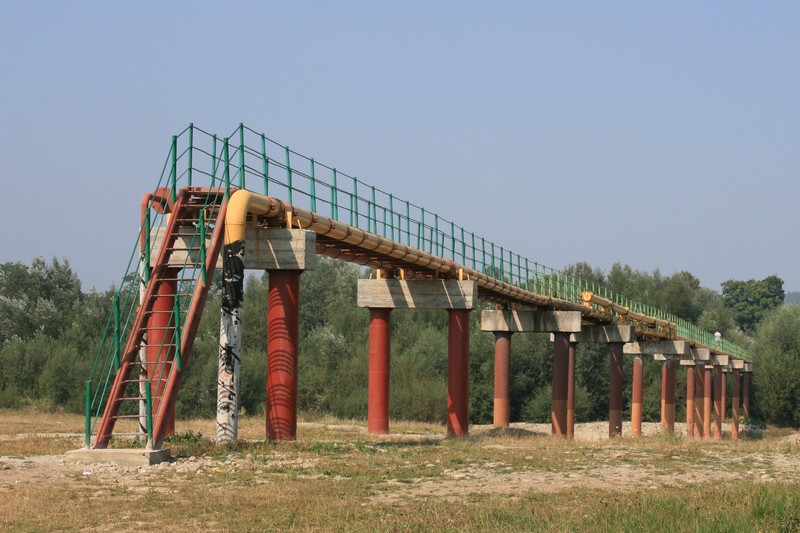
Russia has sent a revised export schedule to Kazakhstan and Germany: as of May 1, Kazakh crude will no longer flow through the Druzhba pipeline. The oil belongs to Astana. The pipeline belongs to Moscow. That, apparently, is all that matters.
Three industry sources told Reuters of the planned halt, which would sever a supply line that carried 2.146 million metric tons of Kazakh crude to Germany in 2025 — roughly 43,000 barrels per day, and a 44 percent increase over 2024. Kremlin spokesman Dmitry Peskov said he was not aware of any such move and told reporters, “We will try to check it.”
The Druzhba pipeline — Russian for “friendship” — was built in the 1960s to pump Soviet oil to Warsaw Pact allies. It has survived the end of the Cold War, the dissolution of the Soviet Union, and Germany’s 2023 ban on direct Russian oil imports. It may not survive the logic of a conflict in which energy infrastructure is treated as just another weapon.
A Refinery on the Edge
The immediate casualty is the PCK refinery in Schwedt, one of Germany’s largest, near the Polish border. The plant employs roughly 1,200 people and has been operating at around 80 percent capacity since Berlin halted direct Russian oil deliveries through Druzhba in early 2023. Kazakh crude, piped through the pipeline’s northern spur via Belarus and Poland, was the lifeline that kept it running.
It was never a reliable lifeline. Ukrainian drone strikes on the pipeline’s Russian sections have repeatedly interrupted flows. The refinery has made up some of the gap with crude piped from Rostock and small volumes through the Polish port of Gdansk. Works council head Danny Ruthenburg described the plant as firmly “in the red.”
Local politicians have seized on the crisis. Hans-Joachim Hoeppner, leader of Schwedt’s city council, told AFP that many in the town saw a return to piped oil as both conceivable and desirable. Brandenburg’s Social Democratic state premier Dietmar Woidke said he would “be pleased if we could return to normal economic relations with Russia.” Peggy Lindemann, a works council member and AfD councillor, was blunter: “Lift the sanctions, because they only hurt us more than the Russians.”
Berlin has shown no appetite for such a reversal.
The refinery’s ownership adds further complexity. PCK is majority-owned by Rosneft Deutschland, a subsidiary of the Russian state oil giant, and has been under German government trusteeship since 2022. Berlin extended the arrangement in March with a renewed promise that Rosneft would divest. Finding a buyer for a refinery at 80 percent capacity with an uncertain supply chain is another matter.
A Global Pattern
Russia’s move against the Kazakh route did not come out of nowhere. The southern branch of Druzhba, carrying roughly 300,000 barrels per day to Hungary, Slovakia, and the Czech Republic, has been halted since December after what was described as a technical issue at a pumping station near Belarus. A Russian strike on an energy facility in Brody further disrupted operations in January.
The pattern extends beyond Druzhba. The Strait of Hormuz, through which roughly a fifth of global oil passes, remains a recurring flashpoint. The Caspian Pipeline Consortium’s terminal at Novorossiysk has been struck by drone attacks. What connects these episodes is the growing treatment of energy infrastructure — a Soviet pipeline, a shipping strait, a Black Sea terminal — as leverage in disputes that have nothing to do with the oil itself.
What Comes Next
Kazakhstan is not without alternatives. The country has been rerouting exports through the Baku-Tbilisi-Ceyhan pipeline to the Mediterranean and maintaining stable shipments to China. Its Caspian Pipeline Consortium terminal at Novorossiysk remains operational, though drone attacks and storm damage have caused significant disruptions and an estimated $1.6 billion in potential losses, according to Kazakhstan’s Energy Minister Erlan Akkenzhanov.
Astana had been projecting an increase in deliveries to Germany to 2.5 million metric tons in 2026, part of a broader strategic partnership with Berlin encompassing industrial modernization and renewable energy projects. That plan now looks uncertain. Kazakhstan’s energy ministry has not publicly commented on the Druzhba halt.
For Germany, the options are the same inadequate ones it has been working with since 2023: more oil from Rostock, more from Gdansk, and the slow pursuit of a buyer for a stranded Russian-owned refinery. A pivot to hydrogen, promised when Russian oil was first cut off, has stalled.
The Druzhba pipeline has weathered cut-offs before. Whether the Schwedt refinery weathers this one depends on how fast Kazakhstan can reroute — and whether Moscow decides to let it.
Sources
- Russia to halt Kazakhstan’s oil flows to Germany via Druzhba, sources say — Reuters (via Straits Times)
- German refinery’s plight prompts calls for return of Russian oil — AFP (via France 24)
- Kazakhstan’s Oil Pivot to Germany Deepens Dependency Amid Supply Chain Fragility and Rerouting Costs — AINVEST
- Druzhba Oil Pipeline Halt Raises Regional Concerns — Mezha.net
Discussion (9)