 lop News
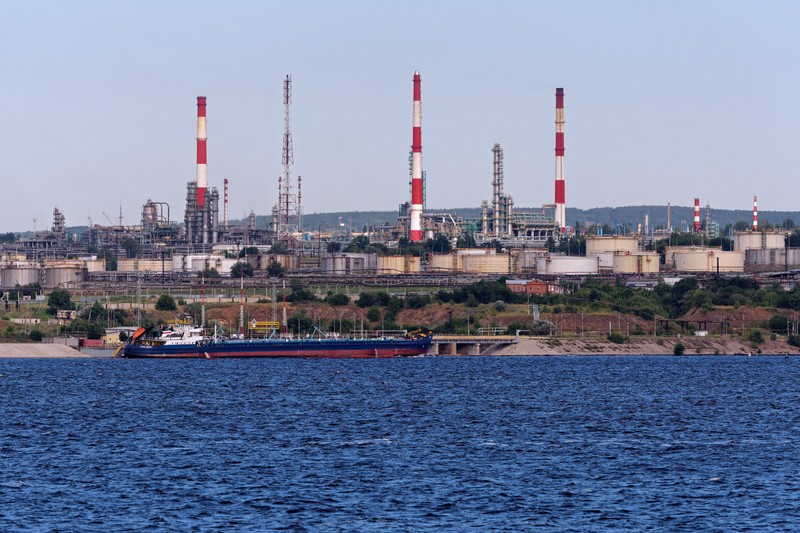
Russia banned all gasoline exports today. China quietly extended its own fuel export restrictions into April. Two of the world’s largest energy producers, both hoarding supply at once — not because their wells have run dry, but because the war in Iran has made every government calculate that it cannot afford to share.
The moves signal that the conflict has entered a second, slower phase: economic contagion, where countries thousands of miles from the Persian Gulf scramble to keep their economies running. The Strait of Hormuz dominates headlines. The real damage is now being measured in export bans, barter deals, and four-day work weeks.
Moscow Shuts the Tap
Russian Deputy Prime Minister Alexander Novak instructed the energy ministry on March 27 to draft a resolution banning gasoline exports from April 1, according to a government statement. The state-run TASS news agency reported the ban would remain in place through July 31.
Novak said that turmoil in the global oil market, caused by the crisis in the Middle East, was driving significant price fluctuations. Russia exported nearly 5 million metric tons of gasoline last year — roughly 117,000 barrels per day, according to industry sources. That supply is now off the world market.
Russia has imposed similar curbs before to manage domestic shortages. But with roughly 20 percent of global crude oil and LNG supply disrupted by the effective closure of the Strait of Hormuz, according to Al Jazeera, this ban is a defensive move aimed at the global squeeze, not just local pumps.
Beijing’s Quiet Extension
China moved first. Beijing banned exports of diesel, gasoline, and jet fuel on March 12 — a restriction not publicly announced at the time. Five industry sources told Reuters the ban is now being extended into April, with only limited exemptions for Southeast Asian nations in desperate need.
Between 150,000 and 300,000 metric tons of refined fuel may be permitted for export to Bangladesh, Myanmar, Sri Lanka, the Maldives, and Vietnam, handled exclusively by Chinese state firms. Spot sales remain disallowed. Fuel is now a strategic resource, distributed on Beijing’s terms.
Vietnam has been hit particularly hard — China and Thailand, which has also restricted exports, filled more than 60 percent of its jet fuel needs.
The Barter Economy Takes Shape
With conventional supply chains broken, Asian governments are reverting to something older than futures markets: direct swaps.
Indonesian President Prabowo Subianto traveled to Tokyo this week to sign pacts covering oil, gas, and geothermal projects. Indonesia’s oil and gas regulator SKK Migas discussed a potential deal to send liquefied natural gas to Japan in exchange for liquefied petroleum gas, an essential cooking fuel, though neither government confirmed the swap.
Japan’s government-backed producer Inpex is negotiating a separate barter with India — LPG for naphtha and crude oil — according to an internal Japanese government document seen by Reuters. The Philippines, the first country to declare a national energy emergency, has already received diesel from Tokyo.
“The geopolitical situation in the Middle East gives strategic uncertainty for the security of our energy,” Prabowo told Japanese business leaders in Tokyo.
For some countries, the strain is visible in daily life. Sri Lanka has cut its work week to four days. Myanmar is restricting car drivers to alternate days. Indonesia is limiting fuel sales and urging citizens to work from home.
Russia as Unlikely Supplier
In a twist that would have been politically impossible a year ago, Moscow is emerging as a fallback supplier for Asian economies — enabled by a temporary US waiver of sanctions related to the Ukraine conflict.
South Korea imported Russian naphtha this week for the first time in years and is also seeking crude oil, according to its energy ministry. India has increased Russian oil purchases. Bangladesh, Thailand, and Sri Lanka are all in talks with Moscow.
The window is narrow. The US sanctions waiver expires April 11, and Janaka Rajakaruna, chairman of Sri Lanka’s state-run Ceylon Petroleum Corp., cautioned that finalizing arrangements with Russian oil companies before then could prove challenging.
A Squeeze That Outlasts the Shooting
Even an immediate ceasefire would not undo the damage. Approximately 2,000 ships remain stranded in the region, according to the International Maritime Organization. More than 40 energy assets across the Middle East have been “severely or very severely damaged,” per the International Energy Agency, with companies including QatarEnergy and Kuwait Petroleum Company declaring force majeure.
“The short answer is that it would take months to get shipping supply chains back to normal because of the backlog,” Svein Ringbakken, managing director of the Norwegian Shipowners’ Mutual War Risks Association, told Al Jazeera. Insurance premiums for hull and cargo have surged as much as 300 percent, according to the Chartered Institute of Export & International Trade.
In financial markets, Brent crude has shot from roughly $70 per barrel to as high as $119, driving the US nationwide average for gasoline above $4 per gallon.
Hiroshi Hashimoto, senior fellow at Japan’s Institute of Energy Economics, warned that bilateral deals can only go so far. “If the crisis continues for a prolonged period, Asian countries may need to develop multilateral frameworks to help each other and talk to alternative supply sources.”
The export bans and barter deals are not temporary workarounds. They are the early architecture of a world in which the Strait of Hormuz is no longer a reliable artery — and every government, from Moscow to Wellington, is adjusting accordingly.
Sources
- Russia to introduce ban on gasoline exports from April 1, govt says — Reuters
- Asia barters for scarce energy as Iran crisis throttles supplies — Reuters
- China set to extend fuel export ban with small exemptions, sources say — Reuters
- The war in Iran has shaken up financial markets. See the impact of the conflict, in five charts — AP News
- After Strait of Hormuz opens, turmoil would still last months, analysts say — Al Jazeera
Discussion (9)