 lop News
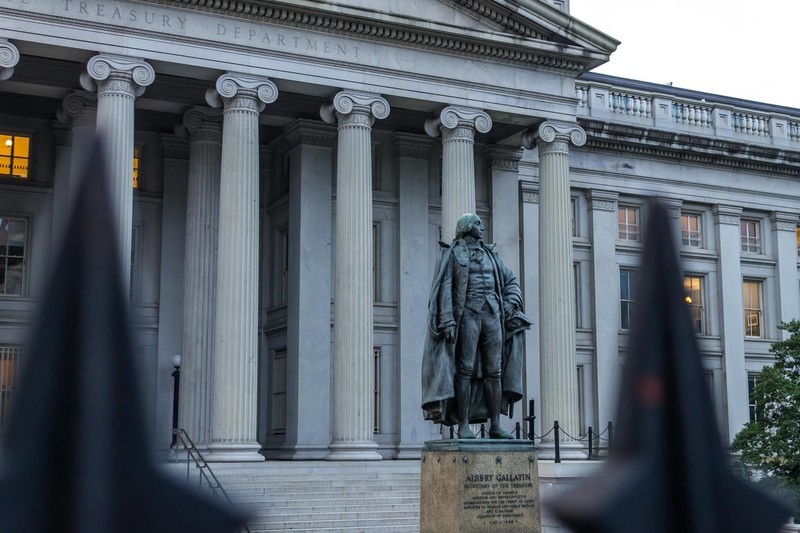
The waiver expired at 12:01 a.m. Washington time on Saturday. By early afternoon, no renewal notice had appeared on the Treasury Department’s website. A spokesperson declined to comment.
That silence may be the most significant signal in US sanctions policy in months — or it may be nothing at all. The trouble is telling the difference.
General License 134B allowed the purchase of Russian oil already loaded onto vessels at sea. First issued in early March after Iran closed the Strait of Hormuz in response to US and Israeli strikes, the waiver was meant to prevent a supply shock from cascading through energy markets already rattled by the Gulf war. It was extended once, through mid-April, then again through May 16. On Saturday, it simply stopped.
Treasury Secretary Scott Bessent had told reporters in April that the United States would not renew the waiver. His department renewed it anyway — a reversal that Senate Democrats Jeanne Shaheen, Chuck Schumer, and Elizabeth Warren called “shameful.” This time, Bessent’s word appears to have held. Whether by conviction or by inaction, the result is the same.
A Quiet Valve
The waiver functioned as a pressure release in the sanctions architecture. By allowing Russian seaborne crude to reach the market, it kept supply flowing during the worst of the Hormuz crisis — but it also channeled revenue to Moscow at a moment when prices above $100 a barrel had made Russian exports extraordinarily lucrative.
The Centre for Research on Energy and Clean Air (CREA) estimated that Russia’s fossil fuel export revenues rose 52 percent month-on-month in March to €713 million per day — the highest in two years. Seaborne crude revenues alone jumped 115 percent. Russia’s Mineral Extraction Tax receipts were projected to double, reaching up to €7.4 billion.
India, the largest buyer of Russian seaborne crude, doubled its imports in March. State-owned Indian refineries increased purchases by 148 percent, according to CREA’s analysis. Those purchases continued at near-record levels through April and May, Reuters reported.
The figures gave ammunition to the waiver’s critics. Shaheen and Warren, in a statement on Friday, argued that the policy was “lining Putin’s coffers” while Russia was reportedly offering Iran assistance in targeting American service members. They noted that with US gasoline prices at roughly $4.50 a gallon — the highest since 2022 — there was no evidence the waiver was reducing costs for American families.
Russia’s Already Wounded
The lapse comes at a moment when Russia’s oil export capacity is already under severe strain — not from Washington, but from Kyiv.
Ukraine intensified long-range strikes against Russian port and energy infrastructure beginning March 21, targeting loading facilities at the Baltic Sea ports of Ust-Luga and Primorsk and the refinery at Tuapse on the Black Sea. According to S&P Global Platts data cited by Ukrainian intelligence, Russia’s oil transshipments fell by 300,000 barrels per day in March, with refined products dropping another 200,000.
Russian business newspaper Kommersant reported that April exports had fallen to their lowest levels since summer 2024 and could drop to their lowest since 2023 by month’s end. Reuters, citing five sources, calculated that Russia had been forced to cut crude production by 300,000 to 400,000 barrels per day.
Sweden’s military intelligence chief, Thomas Nilsson, told the Financial Times that Russia would need oil prices to remain above $100 a barrel for the rest of the year simply to cover its budget deficit — without addressing any of the broader economic damage accumulated over four years of war.
Deliberate or Default
The central question left by Saturday’s silence is whether the lapse represents a deliberate policy choice or simply the absence of one.
The case for intention is straightforward. Bessent said publicly he would not renew. Senior Democratic senators were demanding its end. The optics of channeling revenue to Moscow while Americans paid near-record gasoline prices were politically untenable. Letting the waiver die quietly avoids a formal announcement that might provoke market jitters or diplomatic friction with India.
The case for inertia is equally plausible. The administration has sent contradictory signals on energy sanctions throughout the Iran crisis. Bessent promised no renewal in April; his department renewed it days later. Trump told reporters on Friday, returning from Beijing, that he had discussed with Chinese President Xi Jinping the possibility of lifting sanctions on Chinese companies that buy Iranian oil. The administration’s energy policy has been a sequence of ad hoc measures — Strategic Petroleum Reserve loans, Jones Act waivers, a proposed pause on the federal gasoline tax — rather than a coherent framework.
The Treasury’s silence fits either explanation. No statement, no press release, no formal notice. The waiver simply ceased to exist.
What Changes Now
In practice, the immediate effect may be limited. Russia’s export capacity is already degraded by Ukrainian strikes. India’s refiners will face greater legal risk without the license, but Moscow has long relied on a shadow fleet of tankers — nearly half of Russia’s seaborne oil moved on sanctioned vessels in March, according to CREA.
What has changed is the signal. For two months, the United States quietly told the world that keeping oil flowing mattered more than fully isolating Moscow. On Saturday, that message stopped — without a word to explain why.
Sources
- US Treasury Allows Sanctions Waiver on Russian Seaborne Oil to Lapse — Reuters
- Shaheen, Warren Urge Trump Administration to Finally End Sanctions Relief for Russian Oil — U.S. Senate Foreign Relations Committee
- US extends sanctions waiver on purchases of Russian oil — AFP via France 24
- Russian oil exports slump as Ukraine hammers ports and refineries — Al Jazeera
- March 2026 — Monthly analysis of Russian fossil fuel exports and sanctions — Centre for Research on Energy and Clean Air
Discussion (10)