 lop News
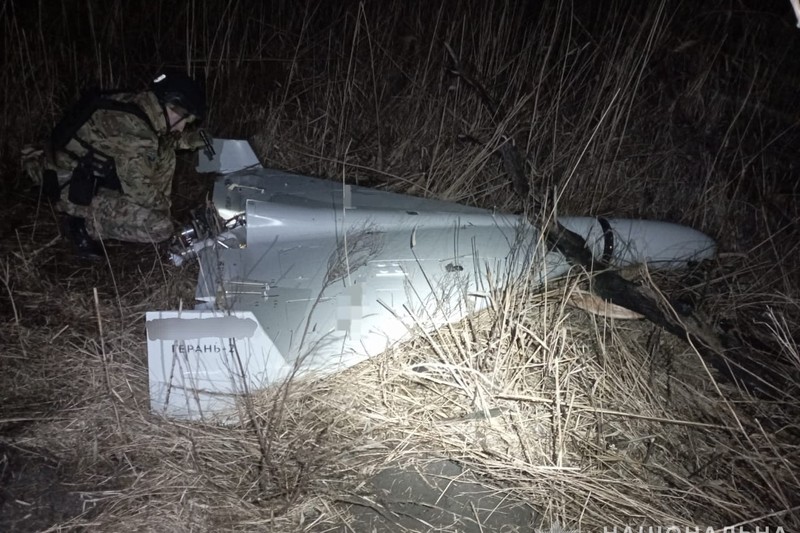
Seven hundred drones in a single day. Volodymyr Zelenskyy had proposed an Easter ceasefire. Russia’s response came in waves of Iranian-designed Shahed aircraft, striking deep into western Ukraine in a rare daylight assault that killed at least five civilians and crippled energy infrastructure near the borders of NATO member states.
Between 8 a.m. and 6 p.m. on April 1, Russia launched more than 360 drones at Ukraine, according to the Ukrainian air force — on top of the 339 fired overnight. Air defences shot down 345 of the daytime wave. It was the second such barrage in eight days; a March 24 attack deployed more than 900 drones in 24 hours. The war is in its fifth year, and the tempo is accelerating, not slowing.
Four people were killed in the central Cherkasy region while outside during an air raid alert, regional governor Ihor Taburets said. A woman died in a drone strike on a car in the frontline Kherson region. A 37-year-old man was killed in Sumy. Thirty-three more were injured across at least eight regions, according to local authorities compiled by the Kyiv Independent.
The strikes reached Ukraine’s westernmost corners. In Zakarpattia, governor Myroslav Biletskyi said Russian drones hit critical infrastructure in the Khust and Uzhhorod districts, near the borders of Slovakia and Hungary. In Ivano-Frankivsk, roughly 11,000 customers lost electricity. A Nova Poshta postal terminal in the western city of Lutsk was destroyed, its warehouse photographed in flames with thick smoke pouring from the roof.
A Ceasefire Offer, Rebuffed
The barrage came days after Zelenskyy publicly proposed a temporary Easter ceasefire — an opportunity, he said, to signal that diplomacy could succeed. “A silence over Easter could be exactly the signal that tells everyone that diplomacy can be successful,” the Ukrainian president said on April 1.
Moscow was unmoved. Kremlin spokesperson Dmitry Peskov said Russia had not seen a clearly formulated initiative and that Moscow was interested in a comprehensive peace agreement, not a temporary pause. Russia’s foreign ministry called the proposal a “PR stunt.”
The rejection was consistent with Moscow’s posture throughout the negotiating process. Russia insists that Ukraine cede the parts of the eastern Donbas region that Russian forces have been unable to conquer in four years of war. Zelenskyy has refused. Kyiv maintains that freezing the current front line represents the most realistic basis for a ceasefire. The gap has not narrowed.
The Luhansk Claim
Hours after the drone barrage, Russia’s defence ministry claimed its forces had taken full control of the Luhansk region — one of the two oblasts that comprise the Donbas. “Units have completed the liberation of the Luhansk people’s republic,” the ministry said in a statement.
Kyiv denied the claim. Viktor Tregubov, a spokesperson for Ukrainian forces, told the Associated Press that while Ukraine holds only small patches of Luhansk, “those positions have been held by 3rd brigade for a long time.” Russian claims of advances have frequently proved inaccurate; the Moscow-appointed head of Luhansk announced its full capture last June.
Ukrainian officials have said Moscow makes such declarations to persuade US negotiators that a Russian victory is inevitable. According to Reuters, Russia told the US it could conquer the remainder of Donbas in two months, pressing for a deal before the US Congressional mid-term elections later this year. Zelenskyy’s response was blunt: “I’m surprised anyone can believe this.”
Washington’s Attention Elsewhere
The fourth round of trilateral peace talks — involving Ukraine, Russia, and the US — was scheduled for March. It was postponed after Washington launched military strikes on Iran in late February, alongside Israel. The Iran war has consumed American diplomatic bandwidth and shifted the geopolitical centre of gravity away from Eastern Europe.
Zelenskyy held a remote call on April 1 with US special envoy Steve Witkoff, Jared Kushner, and Senator Lindsey Graham, with NATO Secretary-General Mark Rutte also joining, according to media reports. Zelenskyy described the talks as “positive” and said the teams had agreed to strengthen a document outlining US security guarantees for any future peace deal. But no date has been set for the next round of negotiations with Russia.
The distraction has consequences beyond scheduling. With global energy prices surging due to the Iran conflict, some of Ukraine’s allies have sent “signals” about scaling back Ukrainian strikes on Russian oil infrastructure, Zelenskyy acknowledged on March 31. Ukrainian attacks on Baltic Sea ports and other oil infrastructure have halted at least 40 percent of Russia’s oil export capacity, according to Reuters calculations based on market data. The pressure on Kyiv to ease those strikes — even as Russian drones pound Ukrainian cities — illustrates the competing priorities now shaping Western policy.
Zelenskyy noted the interconnected nature of the conflicts, writing on X that Russia was “sharing its intelligence with the Iranian regime” and “openly investing in fueling war in the Middle East and the Gulf.” Moscow and Tehran are not separate problems. They are, increasingly, the same one.
The Calculus of Escalation
Russia’s behaviour follows a clear pattern: when diplomatic pressure eases, military pressure increases. The Iran war has given Moscow both a reprieve from sustained American engagement and an incentive to demonstrate battlefield momentum before Washington’s attention returns.
The drone numbers tell the story. According to Ukrainian air force data, Russia launched its heaviest 24-hour drone attack on March 24 — more than 900 — and followed it eight days later with another 700. These are not retaliatory strikes in response to specific Ukrainian actions. They are systematic efforts to degrade Ukraine’s air defences, energy grid, and industrial capacity while the diplomatic track remains frozen.
Ukraine believes it can defend its remaining positions in Donbas for years, citing the slow pace of Russian frontline advances since 2023. But slow is not static, and the drones keep coming.
For Kyiv, the immediate calculation is grim: hold the line, absorb the strikes, and wait for Washington to finish its business with Tehran. For Moscow, the calculation is equally clear: press now, while the world is looking elsewhere.
Sources
- Russia launches rare daytime drone attack on Ukraine, killing four, Ukrainian officials say — Reuters
- Ukraine war briefing: Russia responds to Zelenskyy’s Easter truce offer with drone attack — The Guardian
- Russia rejects Ukraine’s Easter ceasefire proposal — Kyiv Independent
- Zelenskiy says he will ask US to relay Easter energy truce offer to Russia — Reuters
- As Kremlin rejects Easter ceasefire, at least 3 civilians killed, 33 injured in Russian attacks on Ukraine over past day — Kyiv Independent
Discussion (10)