 lop News
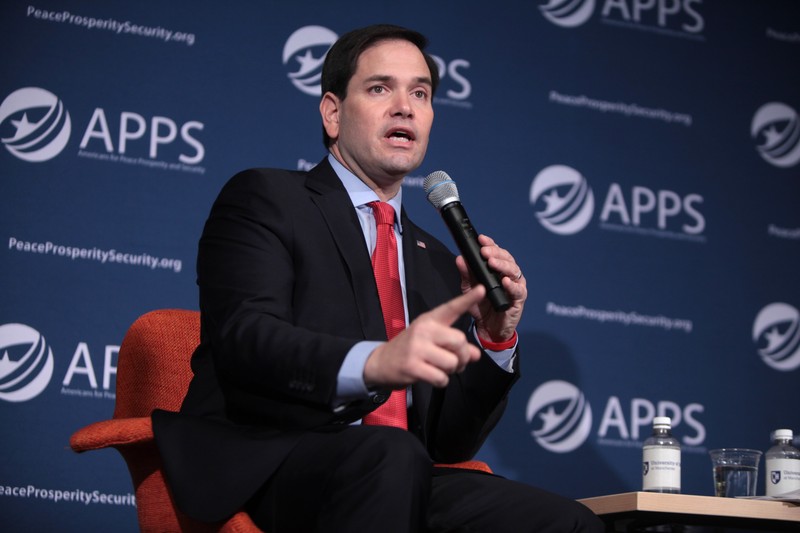
Marco Rubio captured 35% of the CPAC straw poll for the 2028 Republican nomination last weekend. Last year, he got 3%. That 32-point surge — and Vice President JD Vance’s corresponding slip to 53%, down from a dominant position — is the sharpest quantitative signal yet that the Iran war is reshaping the Republican coalition from within.
Five weeks into the US-Israeli military campaign against Iran, the operation has produced something that tariffs, impeachment proceedings, and two assassination attempts could not: a genuine crack in the Republican base. The fissures were visible everywhere at the Conservative Political Action Conference near Dallas, where the annual gathering became a Rorschach test for a party at odds with itself.
The Vance-Rubio Proxy War
Vance and Rubio have become stand-ins for the party’s dueling instincts. Vance, 41, a former Marine who served in Iraq, has long been skeptical of foreign entanglements. His public comments on Iran have been “limited and calibrated,” according to Reuters, and Trump has acknowledged “philosophical differences” between them.
Rubio, 54, who serves as both secretary of state and national security adviser, has given full-throated support for the military campaign. “He’s not going to leave a danger like this in place,” Rubio said at a televised Cabinet meeting last week.
Trump has been polling allies on the succession question, asking “JD or Marco?” according to two people familiar with his thinking. A Republican with close White House ties said the president appears to lean toward Rubio — though in Trump’s orbit, today’s preference is not tomorrow’s guarantee.
The political calculus is straightforward. A swift resolution that favors the US vindicates Rubio’s hawkishness and makes him the natural heir. A prolonged conflict hands Vance the argument that he alone reflected the anti-war instincts of Trump’s base — without ever openly breaking with the president.
The Numbers Trump Can’t Spin
The president insists the war is “winding down.” The evidence on the ground tells a different story. Two Marine amphibious units are deploying to the Gulf. Elements of a US paratrooper division are reportedly en route. The Pentagon is weighing a $200 billion war funding request. Erik Prince, the Blackwater founder, told CPAC attendees that Iran “doesn’t have an independence day because they have not been conquered since the days of Alexander the Great.”
Trump’s approval has fallen to 36%, its lowest since he returned to the White House, a Reuters/Ipsos poll completed last week found — driven by surging fuel prices and broad public disapproval of the war.
The Republican coalition is holding, but not comfortably. Pew Research found that 79% of Republicans approve of Trump’s handling of the war, but only 49% strongly approve. Among those who merely “lean” Republican, strong approval drops to 22%. The age gap compounds the problem: 84% of Republicans broadly support the president’s conduct, but only 49% of those aged 18 to 29 say the same.
The Manosphere Walks Away
The discontent extends well beyond convention halls. Influential podcasters who amplified Trump’s 2024 message are turning against him with the same informality and reach that made them effective surrogates.
Andrew Schulz, whose Flagrant podcast helped normalize Trump for a generation of young male voters, told his audience that war hawks “found a guy stupid enough to do it.” Joe Rogan called the Iran campaign “so insane, based on what he ran on.” Former Navy SEAL Shawn Ryan, who had endorsed Trump, read the administration’s own anti-war campaign promises back to camera: “Every single one of these things is a complete fucking lie.”
Pollster Dan Cassino, who studies masculinity and politics, told The Atlantic that “don’t know” responses in approval surveys have “gone through the roof” — suggesting voters aren’t turning against Trump so much as losing faith that he is different from the politicians he promised to replace.
The Midterm Bill Comes Due
These voters don’t need to switch parties to cost Republicans. They just need to stay home. “Staying home is the most likely result,” said Charlie Sabgir, director of the Young Men Research Project.
Early returns are already worrying for the GOP. Democrats have flipped 30 state legislative seats since the war began, with candidates outperforming Kamala Harris’s 2024 showing by an average of nearly 13 points, according to The Atlantic.
At CPAC, the appeals for unity were plentiful — and telling. Mercedes Schlapp of the CPAC Foundation pleaded with attendees not to “divide from within.” Former RNC chair Michael Whatley, now running for Senate in North Carolina, told the crowd: “We need you.”
The question is whether “need” will be enough. Trump won in 2024 by assembling a coalition that included anti-interventionist libertarians, disaffected young men, and veteran Republicans who trusted his judgment. The war in Iran is testing all three groups at once. As right-wing commentator Mike Cernovich wrote on X: “A generational coalition, squandered.”
Sources
- ‘JD or Marco?’: Iran war raises 2028 stakes as Trump weighs Vance vs. Rubio — Reuters
- ‘He’s lied about everything’: Iran war puts Trump on shaky ground with young MAGA men — Politico
- Iran war splits older and younger conservatives — as pressure builds for Trump to find exit ramp — BBC
- The Manosphere Turns on Trump — The Atlantic
- At CPAC, a generational divide over Republican support for Israel — Reuters
Discussion (9)