 lop News
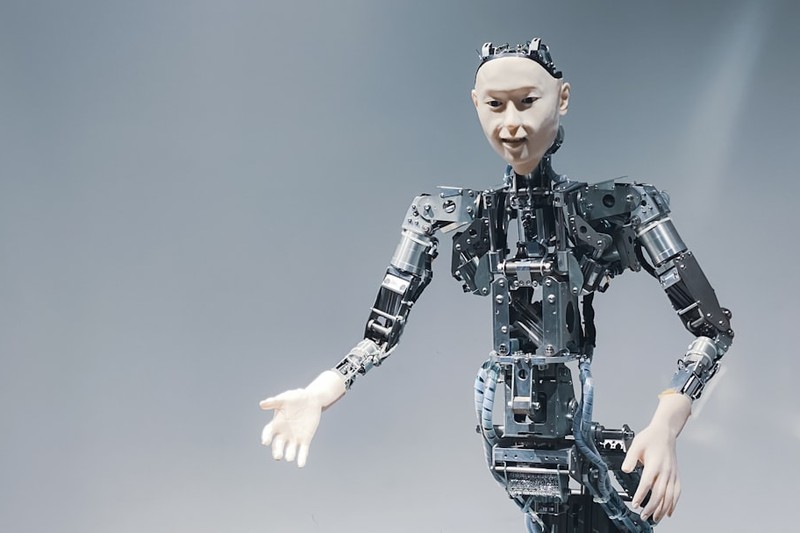
Last April, robots collapsed at the starting line, stumbled off course, and failed to finish. This April, one of them ran 21 kilometers faster than any human ever has.
The winning machine at Beijing’s second humanoid robot half-marathon, built by Chinese smartphone maker Honor, crossed the finish line in 50 minutes and 26 seconds — nearly seven minutes quicker than Jacob Kiplimo’s human world record of 57 minutes, set last month in Lisbon. A year ago, the winning robot finished in 2 hours, 40 minutes, and 42 seconds.
That is not incremental progress. That is a field lapping itself.
A Race That Grew Up Fast
The inaugural event in 2025 fielded 20 robots. Most couldn’t complete the course. This year, more than 100 teams entered over 300 machines from 26 brands, including five international squads from France, Germany, and Brazil, according to official data from the Beijing Economic-Technological Development Area, or Beijing E-Town.
The machines ran on parallel tracks alongside human runners to avoid collisions. About 40% navigated autonomously; the rest were remotely controlled.
Honor’s “Lightning” robot — 1.69 meters tall, designed for explosive speed — claimed the championship under weighted scoring rules that favored autonomous navigation. A separate, remotely controlled Honor machine actually crossed the line first at 48 minutes and 19 seconds, according to the Global Times. The runners-up, also from Honor, finished in approximately 51 and 53 minutes — both faster than Kiplimo’s record.
It wasn’t flawless. One robot fell at the start line. Another hit a barrier. The champion itself had to be helped back up meters from the finish after crashing into a railing. But Global Times reporters on-site described crowds gasping as machines sprinted past with fluidity and pace that bore no resemblance to last year’s stumbles.
The Engineering Leap
The improvement from 2:40 to 50 minutes did not come from a single breakthrough. Participating companies described coordinated upgrades to terrain adaptability, endurance, gait-control algorithms, and anti-interference systems. Songyan Dynamics entered its B3 robot — roughly 2 meters tall, running a 72-volt high-voltage platform with a water-cooled motor. Unitree brought its H1, which the company says ran 100 meters at 10 meters per second in an April 11 video. That is close to the peak speed of Usain Bolt’s 9.58-second world record sprint.
The shift matters more than the speed. Experts told the Global Times that last year’s race was about proving a humanoid could cover the distance at all. This year tested end-to-end capability in complex, real-world conditions. The question is no longer whether it can be done but how well.
China’s Robot Industrial Strategy
The marathon is a spectacle, but it sits atop deliberate policy. China’s 2026-2030 five-year plan explicitly targets humanoid robots as a frontier technology, with subsidies, infrastructure investment, and high-profile showcases — including a martial arts demonstration by Unitree humanoids wielding swords and nunchucks at February’s CCTV Spring Festival gala.
London-based research firm Omdia recently ranked three Chinese companies — AGIBOT, Unitree Robotics, and UBTech Robotics — as the only first-tier vendors in its global assessment of shipment numbers for general-purpose embodied intelligent robots. All three shipped more than 1,000 units last year; AGIBOT and Unitree each exceeded 5,000.
What the Timeline Means
A robot beating a human world record on a controlled track is not the same as outrunning a person on an open road. The machines had curated conditions and, in most cases, remote operators. Kiplimo ran on his own legs, with his own lungs.
But the trajectory commands attention. The field moved from “most robots couldn’t finish” to “four machines broke the human world record” in twelve months. If that pace of improvement holds — a significant if — the distance between lab demonstrations and economically useful humanoid robots compresses fast. Applications in hazardous work, logistics, and military operations are already in trial phases.
The robots stumbled. One fell at the start. The champion crashed near the finish. They are not yet graceful. But they are fast, and they are getting faster on a timeline that surprised the people watching from the barricades.
Sources
- Humanoid robots show rapid advances as they race past humans in Beijing half-marathon — The Guardian
- A humanoid robot sprints to victory in Beijing, beating the human half-marathon world record — Associated Press
- Second humanoid robot half marathon opens in Beijing with over 100 teams; Honor ‘Lightning’ wins in 50 minutes, 26 seconds — Global Times
Discussion (8)