 lop News
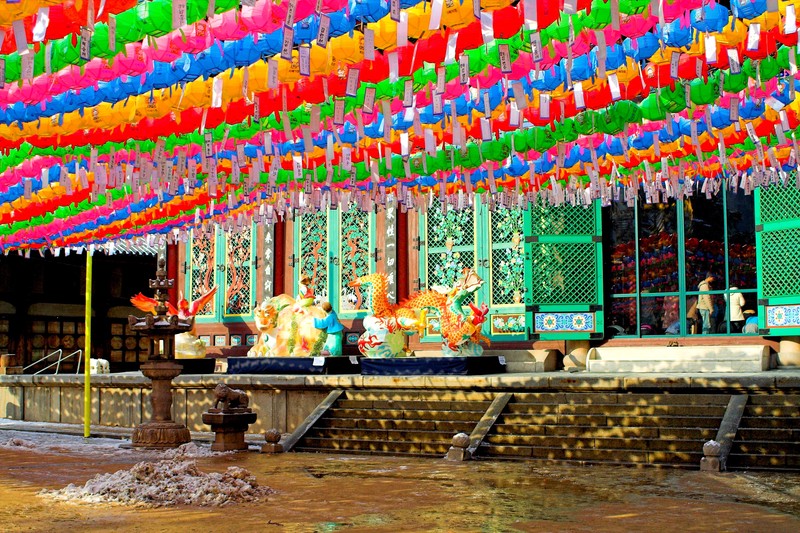
The ceremony looked ordinary enough. Monks processed through rows of hanging lanterns at Seoul’s Jogyesa temple, initiates bowed toward the altar, prayer beads were draped around a neck. But the certificate listed a date where a birth date should be: March 3, 2026 — the day Gabi was manufactured.
Gabi is a four-foot humanoid robot built by Unitree Robotics, and last week it became the first machine to complete a Buddhist initiation at the Jogye order, South Korea’s largest Buddhist denomination. Monks wrapped it in saffron robes, stuck a lotus lantern festival sticker to its arm in place of the traditional incense burn, and presented five precepts rewritten for a being with no inner life: respect life, don’t damage other robots, don’t deceive, don’t disrespect people, don’t overcharge.
What’s striking isn’t the technology. It’s how unbothered everyone seems.
“At first we discussed it casually,” said Venerable Sungwon, the order’s cultural affairs director, in an interview with The Guardian. “It began almost as a joke. But the more we thought about it, the more serious it became.”
The context is sobering. Just 16 percent of South Koreans now identify as Buddhist, down from 23 percent in 2005. Among people in their twenties, the figure is 8 percent. Last year the Jogye order ordained 99 monks — fewer than half the number from a decade earlier.
Gabi is one front in what observers call the order’s “hip Buddhism” campaign to lure younger Koreans through temple doors. “The important thing is that young people visit temples once,” Ven Sungwon said. “Then when they’re older and start thinking about life, they’ll naturally return.”
Whether a machine with no consciousness can be a monk is a question the temple doesn’t seem interested in asking. In a tradition where practice often outweighs belief, Gabi’s place in this month’s Lotus Lantern parade answers something simpler: what counts as participation when the only requirement is showing up.
Discussion (5)