 lop News
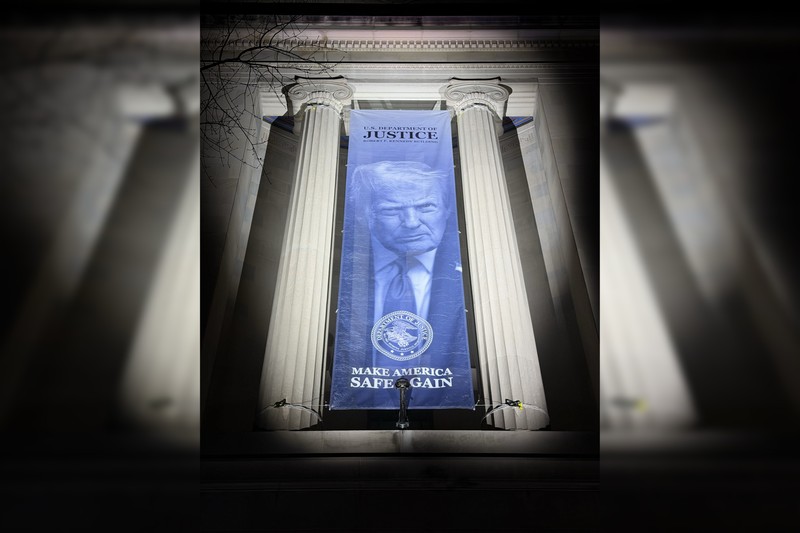
Roughly a quarter of the attorneys at the United States Department of Justice have left the department, the Financial Times reported — an exodus that has hollowed out the world’s most powerful federal prosecutor’s office at precisely the moment it is accelerating away from legal norms.
Acting Attorney General Todd Blanche, installed after President Donald Trump pushed out Pam Bondi last month over her failure to deliver enough legal victories against his adversaries, has presided over a flurry of aggressive new prosecutions and legally dubious court filings. The pattern points to a department shaped increasingly by presidential whim rather than prosecutorial merit.
This is not merely an American domestic concern. The DOJ anchors the US federal justice system, handling everything from international extradition requests to anti-corruption enforcement and cross-border criminal investigations. When the department’s credibility erodes, the consequences extend well beyond Washington.
The SPLC Indictment
The new era was heralded by the indictment of the Southern Poverty Law Center, the left-leaning antiextremism organization long despised by the American right. Standing beside FBI Director Kash Patel and flanked by posters tallying funds the SPLC allegedly spent on informants within extremist groups, Blanche alleged the group had been “manufacturing the extremism it purports to oppose by paying sources to stoke racial hatred.”
The problem, as The Atlantic reports, is that nothing described in the indictment appears to be clearly illegal. Paying informants is not a crime. The wire-fraud charge rests on the claim that SPLC donors were deceived about the practice, but the government has provided no evidence of such deception. A second charge invokes a statute prohibiting lies to influence a bank — without specifying what the supposed lies were or what the SPLC was trying to persuade the bank to do.
Kyle Boynton, a former prosecutor in DOJ’s Civil Rights Division, told The Atlantic the case represents “a new front in the prosecutorial misconduct this department is willing to engage in to get an indictment returned.”
Court filings by the SPLC further undermine the prosecution. The organization states it used its informant program to gather intelligence on the risk of violence at the 2017 Charlottesville rally and shared findings with the FBI in advance. The group also says it may have helped avert a white-supremacist terrorist attack in Las Vegas. None of these details appear in the indictment.
Seashells and Threat Law
Days later, Blanche and Patel unveiled a new indictment against former FBI Director James Comey — the second attempt after a judge tossed the first case in November. The charge stems from a 2025 Instagram post showing seashells arranged to spell “86 47,” which Trump allies interpreted as a threat against the 47th president. The term “86” more commonly refers to removing an item or turning away a customer.
Comey said in 2025 that he had no idea “86” could be meant as a threat, and quickly apologized and deleted the post. Under Supreme Court precedent, prosecuting threats requires showing the defendant knew the language would be understood as threatening or recklessly disregarded that possibility. Courts have previously found constitutional protection for statements far more explicitly violent than seashells on a beach.
A Filing in the President’s Voice
The same week, DOJ submitted a motion in the litigation over Trump’s proposed White House ballroom — a project currently blocked by injunction — that reads less like a legal document than a social media post. The plaintiffs, DOJ lawyers wrote, “are very bad for our Country” and “suffer from Trump Derangement Syndrome.” The ballroom, they assured the court, will be built “FREE OF CHARGE AS A GIFT TO THE COUNTRY!”
Federal court filings have traditionally been drafted in what DOJ insiders call “government gray” — professional, careful, emotionally neutral prose. The filing abandons that convention entirely. Presumably the attorneys involved understand that Judge Richard Leon, who has already ruled against the government, will not be persuaded. The goal appears to be satisfying the president in the short term.
The Global Cost
“A Justice Department that is willing to stretch both the facts and the law to mislead a grand jury into returning an indictment could literally charge any American with a crime,” Boynton told The Atlantic.
When the chief law enforcement agency of the world’s most powerful democracy treats legal standards as optional, the damage does not stop at the border. International courts, foreign governments, and treaty partners depend on the DOJ’s credibility. Extradition requests require trust in the requesting authority’s good faith. An institution that files presidential-voice motions and brings legally indefensible cases erodes that trust with every filing.
The cases against the SPLC and Comey will likely be dismissed. The short-term headlines, however, have already been delivered.
Sources
- DOJ Enters a New, Even More Aggressive Phase — The Atlantic
- US Department of Justice loses a quarter of its lawyers — Financial Times
Discussion (9)