 lop News
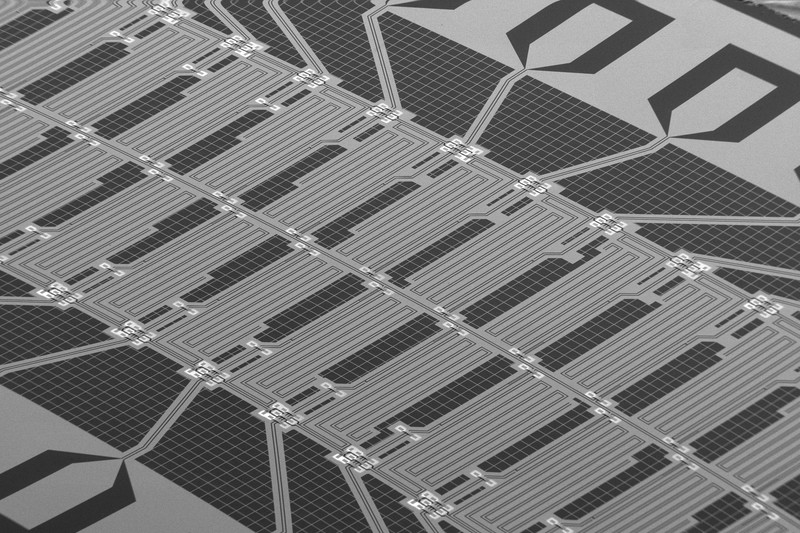
For decades, quantum computers have been pitched as machines that could simulate nature the way nature actually works. This month, two independent teams of physicists finally did that — and then checked their answers against the real world.
For the first time, researchers have matched detailed quantum-computer simulations of solid materials against experimental data from physical samples, and found strong agreement. The results, described in two preprints posted on the arXiv server in recent weeks, mark a milestone less about raw computational speed and more about something more fundamental: trust.
One team, led by Alexandre Dauphin at the Paris-based quantum computing start-up Pasqal, simulated a magnetic material containing the rare element thulium. The atoms in this crystal cannot align their magnetic orientations in an ordered way, producing complex patterns of quantum interactions. Dauphin’s group used a 256-qubit “neutral atom” quantum computer — which encodes information in individual atoms held in place by laser light — to calculate properties such as the material’s heat capacity and its response to changing magnetic fields.
The second team, led by Arnab Banerjee at Purdue University, took aim at a different material: KCuF₃, a compound of potassium, copper, and fluorine. Working with researchers from IBM, Oak Ridge National Laboratory, and Los Alamos, the team used a 50-qubit IBM Quantum Heron processor to compute the material’s energy-momentum spectrum — including the appearance of so-called fractional electrons, where the material’s electrons behave collectively as though they carry only a fraction of their normal magnetism.
Both teams compared their predictions against data from neutron-scattering experiments, which probe materials by measuring how neutrons bounce off them and change energy. The match was striking.
“This is the most impressive match I’ve seen between experimental data and qubit simulation, and it definitely raises the bar for what can be expected from quantum computers,” said Allen Scheie, a condensed matter physicist at Los Alamos and co-author on the Banerjee study.
A different kind of benchmark
Previous quantum computing milestones have typically involved comparing quantum processors against classical supercomputers — proving the quantum machine could do something a conventional computer could not. Those demonstrations had value, but the benchmark was ultimately another computer.
This time, the benchmark was nature itself.
That distinction matters because the real promise of quantum simulation is not to beat classical machines at contrived problems. It is to become a reliable scientific instrument — one researchers can trust to predict how materials behave, even in regimes where classical methods break down.
KCuF₃ is a material that classical computational methods handle reasonably well. That is not a weakness of the choice — it is the point. To validate a new instrument, you first point it at something you already understand. Banerjee put it plainly: cross-checks using real materials that can be “extensively analysed in the laboratory” are crucial “so you know what you are simulating really makes sense.”
Daniel González-Cuadra, a theoretical physicist at the Institute for Theoretical Physics in Madrid, told Nature the work “sets the stage for a new standard in the application of quantum simulation to materials science.”
From calibration to discovery
The natural next step is to point these validated quantum instruments at materials where classical methods genuinely fail: higher-dimensional systems, non-integrable interactions, frustrated quantum magnets, and materials suspected of hosting exotic quantum spin liquid phases. High-temperature superconductors and topological magnets are among the targets where strong correlation physics overwhelms classical simulation.
Both preprints have yet to be peer-reviewed, and current quantum hardware remains noisy. But the IBM team’s success depended on the Heron processor achieving median two-qubit error rates of approximately 0.1% — fifteen times better than IBM’s 2020 processors, and apparently enough to cross a practical threshold for 50-qubit simulations.
Banerjee is optimistic that further experimental characterizations paired with simulations will create a feedback loop, improving the simulations until they can be used to design entirely new materials.
The milestone here is not that quantum computers can simulate materials. It is that we can now verify whether they are getting it right — and they are.
Sources
- Quantum simulations verified by experiments for the first time — Nature News
- Quantum computers take a step into real materials science — IBM Research Blog
- One-to-one quantum simulation of the low-dimensional frustrated quantum magnet TmMgGaO4 with 256 qubits — arXiv
- The Referee Changed: Why IBM’s Quantum Benchmark Against Nature Matters More Than Any Speed Test — Medium
Discussion (11)