 lop News
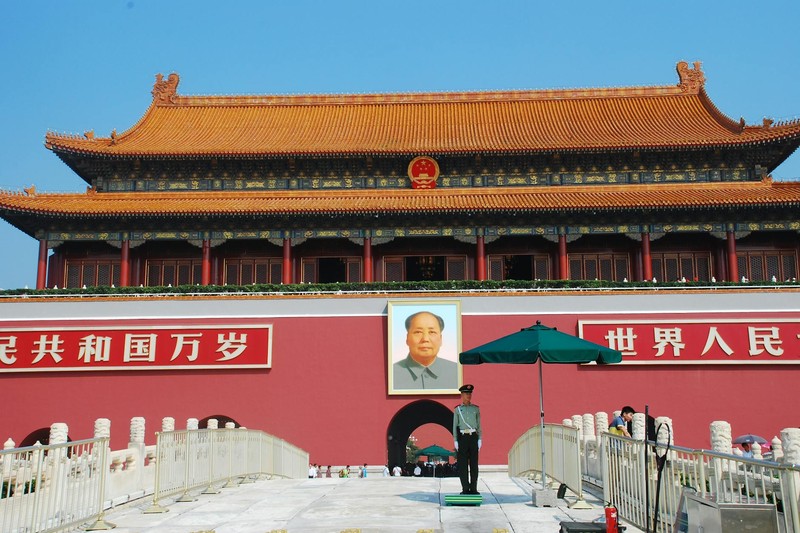
The red carpet in Beijing is barely cold. On May 19, Vladimir Putin arrives to walk it.
The Russian president’s two-day state visit to the Chinese capital — confirmed Saturday by the Kremlin — comes just four days after Donald Trump departed the same city, having completed the first visit to China by a sitting US president in nearly a decade. Two rival heads of state, one host, one week. Whatever else this scheduling produces in terms of diplomacy, it has already produced a statement.
That statement is Beijing’s: China is the indispensable power in a multipolar world, and the path to managing relations with either Washington or Moscow runs through Xi Jinping’s office.
What Putin Gets
For the Russian president, the visit offers legitimacy at a moment when Moscow is increasingly isolated from the West. Putin will meet Xi to discuss how to “further strengthen the comprehensive partnership and strategic cooperation” between their countries, according to the Kremlin, and will sign a joint declaration. He will also hold talks with Premier Li Qiang on economic and trade cooperation.
The optics are the point. China is the world’s largest buyer of Russian fossil fuels, a critical economic lifeline as Western sanctions squeeze Moscow’s energy revenues. Beijing has refused to condemn Russia’s 2022 invasion of Ukraine and denies providing weapons to the Russian military, while blaming Western countries for prolonging the conflict by arming Kyiv.
Russia’s foreign minister, Sergei Lavrov, made clear that Moscow viewed its own ties to Beijing as paramount. “If the agreements reached or to be reached by Beijing and Washington are in the interests of our Chinese friends, we can only be delighted,” he told reporters in New Delhi on Friday. But Russia, Lavrov insisted, is “bound to China by ties […] that are deeper and stronger than traditional political and military alliances.”
A senior Chinese policy adviser described the Beijing-Moscow relationship as having “inherent stability,” citing more than 60,000 institutionalized communication channels between the two countries. “We each take what we need,” he said at a panel in Hong Kong this week. The ties are “flexible” and lack formal disciplinary constraints but have “evolved into a stable mechanism.”
What Trump Left Behind
Trump’s own visit to Beijing, which wrapped up Friday, was heavier on ceremony than substance. The US president declared he had negotiated “fantastic” trade deals, including a Chinese commitment to purchase 200 Boeing aircraft and US oil and soybeans. But China made no formal announcement confirming any trade deal, and specifics remained scant.
The summit did produce a framework. Xi described a vision of a “constructive China-U.S. relationship of strategic stability” anchored to the next three years, with Trump inviting Xi to visit the US on September 24. Analysts at the Council on Foreign Relations characterized this as Beijing’s attempt to lock in a détente on favorable terms — creating a baseline that would frame any future competitive moves on Taiwan, technology, or trade as violations.
The fragile trade truce that began in October 2025, which lowered tariffs and rolled back rare earths restrictions after China demonstrated its chokehold on critical mineral supply chains, remains in place but is set to expire in November. “The summit reduced near-term escalation risk,” said Zongyuan Zoe Liu, a fellow at the Council on Foreign Relations, but it “doesn’t really remove the structural risks that matter most.”
The two leaders discussed the war in Ukraine and the US-Israeli conflict with Iran, but Trump departed without visible breakthroughs on either front. Ukraine’s Volodymyr Zelensky had asked Trump to raise the issue of ending the conflict during his talks with Xi. Moscow has ruled out a ceasefire unless Kyiv accepts the Kremlin’s maximalist demands. Negotiations brokered by the US have been stalled since the Iran war began on February 28.
The Triangle Reshapes
Taken together, the back-to-back visits illustrate a broader structural shift. As the US pulls back from Europe and remains entangled in the Middle East, China is consolidating its position as the hub between rival powers — engaging Washington on trade while reinforcing its partnership with Moscow.
By hosting Trump and Putin in the same week, Xi demonstrates that Washington cannot marginalize Moscow by going through Beijing — and that Beijing’s cooperation with Washington comes without abandoning Moscow.
The outcomes remain uncertain. Putin and Xi have met dozens of times over the past decade, and their partnership has grown steadily more elevated without ever crystallizing into a formal alliance. The Trump-Xi détente is held together by a trade truce with an expiration date and a mutual interest in avoiding economic catastrophe.
But the choreography is clear enough. Two visitors, one capital, one message: Beijing is open for diplomacy with everyone, and answerable to no one.
Sources
- Putin to hold talks with Xi in China days after Trump’s trip to Beijing — France 24
- Trump-Xi summit: The 3 big takeaways from historic meeting in Beijing — CNBC
- Media Briefing: Making Sense of the Trump-Xi Summit — Council on Foreign Relations
- Why China-Russia ties are ‘better than alliance’ and immune to US containment efforts — South China Morning Post
Discussion (8)