 lop News
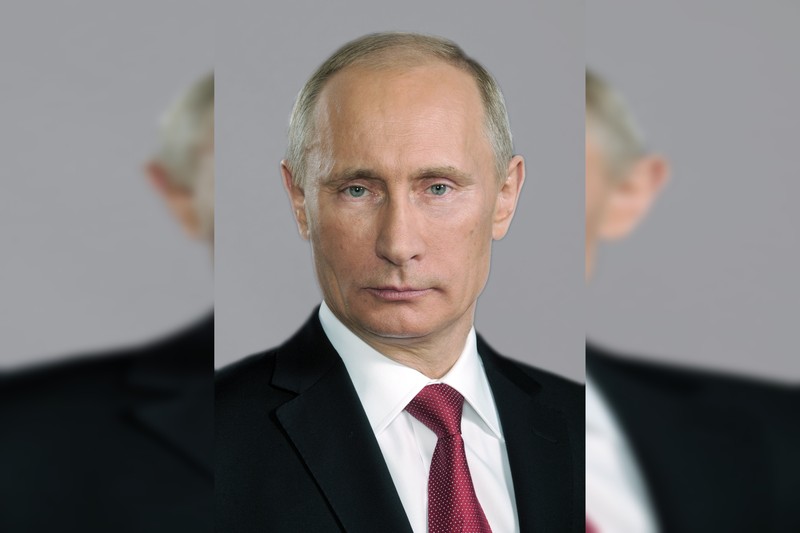
For the first time since Russia’s full-scale invasion of Ukraine, the officials charged with keeping the state solvent have told Vladimir Putin what his military commanders refuse to accept: the war is becoming unaffordable.
Senior figures in the Finance Ministry and central bank have warned the Kremlin that projected defense spending risks widening the budget deficit to dangerous levels, according to people familiar with the discussions and documents reviewed by Bloomberg News. Senior officials in the Finance Ministry and central bank have proposed cuts to military expenditure — a striking intervention in a system where the war’s prosecution has been treated as untouchable. Separately, Siluanov asked the government to suspend 2.9 trillion rubles in planned non-military spending to free up funds for the war.
The Defense Ministry’s response was to demand more money. Military officials have insisted on additional funding to cover a shortfall they say could reach 3 trillion rubles ($36 billion) this year, according to two people close to the Russian government.
Putin has asked Finance Ministry officials to find savings elsewhere first. No major budget decision is made without his approval — a constraint insiders describe as an iron rule of Russian governance.
The numbers behind the warning
The scale of the fiscal strain is not subtle. Russia’s budget deficit reached 5.9 trillion rubles in the first four months of 2026 — already 50% above the full-year target of 3.8 trillion, according to official figures. That shortfall, equal to 2.5% of GDP, is the largest since the invasion began.
In a February letter reviewed by the Financial Times, the Finance Ministry estimated war spending would exceed the 2026 budget by at least 2 trillion rubles ($28 billion), with a worst case putting the overrun at 4 trillion. The document forecast similar overruns in 2027 and 2028.
Russia has allocated 16.84 trillion rubles ($238 billion) — nearly 40% of this year’s federal budget — to military purposes. To cover the rising costs, Siluanov asked the government to suspend 2.9 trillion rubles in planned non-military spending for this year, and progressively larger sums through 2028.
A windfall that won’t bridge the gap
The US-Israeli military campaign in Iran has pushed oil prices above $100 a barrel, providing Moscow with a revenue boost. But officials close to the government say prices would need to remain at that level for at least a year to meaningfully improve the fiscal picture — and even then, the windfall would not resolve structural problems afflicting growth, inflation, and the banking sector.
Siluanov has been publicly blunt. “Reserves are not endless,” he told the newspaper Kommersant on May 27. “Weakness in finances cannot be tolerated in the context of such large-scale transformations in the world.”
Those reserves are already depleted. Russia’s National Wellbeing Fund sits roughly 60% below pre-invasion levels. Regional budgets are buckling too, with consolidated deficits expected to reach 1.9 trillion rubles ($25.3 billion) this year, Siluanov told legislators in April.
A wartime economy running out of runway
The broader picture is deteriorating across multiple fronts. The Economy Ministry cut its 2026 growth forecast to 0.4% in May, down from 1.3%. GDP contracted in the first quarter for the first time in three years. Government spending rose nearly 16% year-on-year through April, while state procurement costs jumped 41% — a measure of the military-industrial complex consuming an ever-larger share of national output.
War-related inflation has kept interest rates elevated, and labor shortages are squeezing businesses across the country. In April, Putin publicly ordered officials to explain the economy’s underperformance — an unusual admission of frustration with the wartime boom he once championed.
The Kremlin had hoped the war might wind down after Putin’s summit with US President Donald Trump in Alaska last August. When that did not materialize, the budget assumptions underpinning a gradual decline in defense spending collapsed with it.
What the fiscal crack means for the war
Whether financial strain translates into battlefield consequences remains the critical question. The fiscal pressure is mounting at the same time that dynamics on the ground are shifting against Moscow: Ukrainian drone attacks have hammered Russian oil infrastructure and disrupted supply lines, further eroding the revenues the Kremlin needs to fund the war. Russian casualties have soared above 30,000 a month, draining resources as bigger incentives must be offered to recruit replacements and pay death benefits.
The Defense Ministry’s argument — that cutting military spending would badly damage the economy because so many enterprises now depend on defense contracts — carries real weight. Dismantling the wartime industrial base carries its own economic risks.
But the Finance Ministry’s intervention amounts to an institutional admission that the current trajectory cannot hold. Russia is considering a windfall tax on commodity producers and banks to plug the gap. Moscow’s city government has announced cutbacks in employment and investment after revenue came in well below expectations. Last week, a senior State Duma lawmaker publicly denounced the fiscal deterioration, invoking the hyperinflation of the Soviet collapse.
“What are we going to do about it?” Valery Gartung asked. “Print money or what? Like in ‘92 when prices were rising 30% every week? We understand that’s not the solution.”
Putin’s finance officials have now posed essentially the same question to him. The answer, as with nearly everything in Russian governance, will be his alone.
Sources
- Russia finance officials tell Putin war spending is unaffordable — Bloomberg / The Spokesman-Review
- Russia warns war costs are ravaging its finances as Ukrainian ‘drone overmatch’ sends Putin’s forces reeling — Fortune
- Russia’s Regional Budget Deficit to Widen to $25.3Bln in 2026, Finance Minister Warns — The Moscow Times
- Russia’s 2026 war budget deficit grows to $28 billion — FT — New Voice of Ukraine
Discussion (9)