 lop News
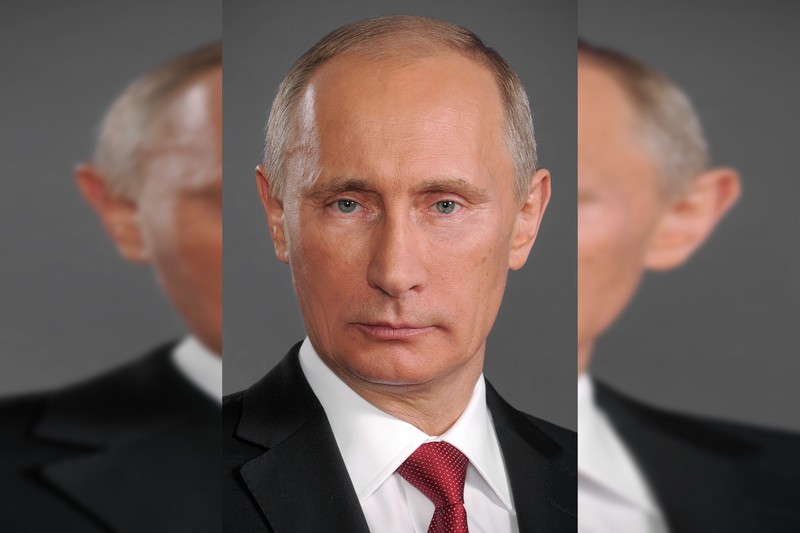
Vladimir Putin hosted Iran’s top diplomat in St. Petersburg on Monday, praising the Iranian people for fighting “courageously and heroically” against the United States. Roughly 5,000 kilometers away in Washington, Donald Trump’s national security team was weighing Tehran’s offer to reopen the Strait of Hormuz — and whether to accept terms that postpone any discussion of Iran’s nuclear program.
The split-screen captured the central diplomatic problem of this war. Russia is no longer positioning itself as a mediator. It has chosen its side.
Putin told Foreign Minister Abbas Araghchi that Russia would “do everything that serves your interests and the interests of all the peoples of the region to ensure that peace is achieved as quickly as possible,” according to Russian state media. He confirmed receiving a message from Supreme Leader Mojtaba Khamenei — whom the Trump administration says was injured in the Feb. 28 strikes that opened the US-Israeli campaign — and pledged to continue the two countries’ “strategic relationship.”
A partnership built to last
The backing was not merely rhetorical. Iran and Russia signed a 20-year strategic partnership agreement last year. Russia is building two new nuclear reactor units at Bushehr. Iran has supplied Shahed drones for Russia’s war in Ukraine. The two countries’ fates are entangled in ways that make Moscow’s self-described offer to “mediate” look increasingly like advocacy.
Araghchi told Russian state television that Washington had “achieved none of their goals” in the war. “That’s why they ask for negotiation,” he said. “We are now considering it.”
The proposal before Trump
Araghchi’s St. Petersburg stop capped a diplomatic shuttle that included two visits to Islamabad, a meeting with Oman’s sultan, and phone calls to the foreign ministers of Saudi Arabia, Qatar, and Egypt. The through-line: building leverage while testing ceasefire terms.
The proposal now before Trump would see Iran reopen the Strait of Hormuz in exchange for the US lifting its naval blockade on Iranian ports and ending the war, according to two regional officials who spoke to the Associated Press. Nuclear negotiations — Trump’s stated non-negotiable — would come later.
White House press secretary Karoline Leavitt confirmed the national security team discussed the proposal Monday but offered no detail on how it was received. “I wouldn’t say they’re considering it,” she said. “I would just say that there was a discussion this morning.”
Secretary of State Marco Rubio was blunter. He told Fox News the offer was a ploy to buy time and that preventing a nuclear-armed Iran “still remains the core issue.” He characterized Iran’s version of opening the strait as a shakedown: “As long as you coordinate with Iran, get our permission, or we’ll blow you up and you pay us.”
The odd geometry of mediation
The diplomacy has produced a striking inversion. Pakistan — not Russia, not a traditional power broker — has emerged as the most active go-between, even opening six transit routes to allow Iranian imports through its territory. Meanwhile, Russia, which once offered to store Iran’s enriched uranium as a de-escalation measure, has dropped any pretense of neutrality.
At the United Nations on Monday, the dividing lines were sharp. Dozens of countries led by Bahrain called for Iran to reopen the strait immediately. US Ambassador Mike Waltz declared the waterway “not Iran’s hostage” and “not Iran’s bargaining chip.” Russia’s ambassador blamed Western “lawless” actions. China pointed to US and Israeli military operations as the root cause.
France split the difference. Foreign Minister Jean-Noël Barrot said the crisis began with operations “conducted in a manner that flouts international law” — but added that Iran now bears responsibility for impeding the strait.
German Chancellor Friedrich Merz was more direct about Washington’s bind. “It’s not just about getting in; you also have to get out,” he told students, invoking Afghanistan and Iraq. He said “an entire nation is being humiliated” by Iran’s leadership, “especially by these so-called Revolutionary Guards.”
Running down the clock
UN Secretary-General António Guterres called the Hormuz closure “the worst supply chain disruption since COVID-19 and the war in Ukraine.” His prescription: “Let ships pass. No tolls. No discrimination.”
Iran, squeezed by the US blockade, is rerouting food imports through the Caspian Sea. Amena Bakr, head of Middle East energy at Kpler, told NPR that Iran has roughly 20 days of oil storage capacity left at current production — longer than Trump’s claim of three days, but not open-ended.
Both sides are feeling the strain. Neither appears ready to move first.
Sources
- Putin pledges support for Iran in talks with Araqchi in Russia, says he wants peace soon — Reuters via Al-Monitor
- Iran’s flurry of diplomacy continues in Russia, as Trump reviews Iran’s latest proposal — NPR
- The Latest: Iran wants Strait of Hormuz reopening tied to an end to the war, officials say — Associated Press via Local10
Discussion (9)