 lop News
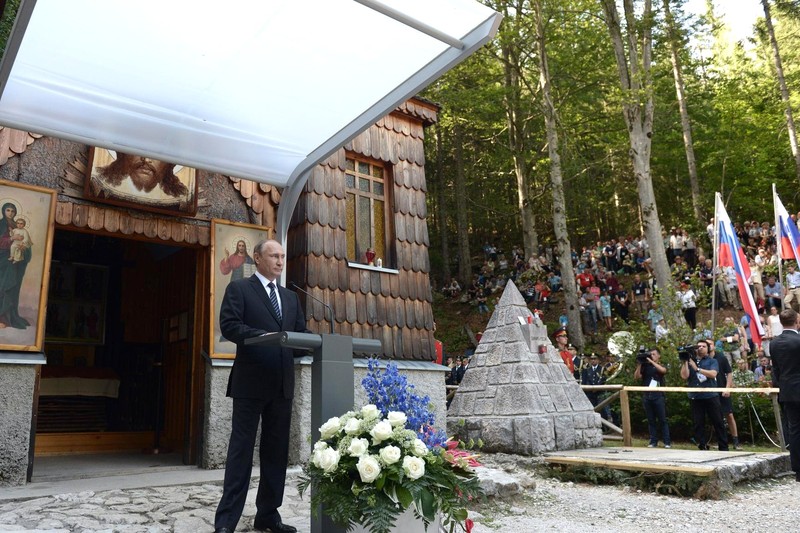
Vladimir Putin stood before reporters in the Kremlin on Saturday and delivered a sentence that, taken at face value, would be the biggest diplomatic news of the year. “I think that the matter is coming to an end,” he said of the war in Ukraine.
Hours earlier, his own spokesman had described the path to peace as “a very long way” through “complex details.” His foreign policy aide said negotiations were paused with no clear date to resume.
Same building. Same day. Two irreconcilable messages.
A Parade Without Tanks
The dissonance was fitting, given the setting. Putin’s annual Victory Day commemoration — the crown jewel of the Russian political calendar — was a ghost of itself. No tanks. No missile launchers. No military hardware on display for the first time in nearly two decades. The guest list had withered from last year’s assembly, which featured China’s Xi Jinping as guest of honor, to a handful of leaders from Belarus, Malaysia, Laos, Uzbekistan, and Kazakhstan.
Anti-aircraft systems ringed Moscow. Internet service was throttled across the capital. Most international journalists, including accredited correspondents from CNN, were told they could not attend. Kremlin spokesman Dmitry Peskov framed this as a consequence of the “curtailed format.” Several reporters who had received credentials were told only that “host broadcasters” would be present.
The stated reason was security. Ukrainian drone strikes have reached deeper into Russian territory in recent weeks, hitting oil refineries in Yaroslavl and Rostov and penetrating upscale neighborhoods in western Moscow. Russia’s Defense Ministry reported intercepting hundreds of Ukrainian drones and six domestically produced Neptune cruise missiles in the days before the ceasefire, according to Radio Free Europe/Radio Liberty. Ukraine reported 67 Russian drones overnight before the truce took effect.
Russia has now fought this war for more than four years — longer than the Soviet Union’s involvement in World War II, the very conflict Victory Day commemorates. When asked how she felt about the holiday, a 36-year-old Moscow economist named Elena had a one-word answer: “Nothing.”
The Zelensky Opening
Buried in Putin’s remarks was a subtle but notable shift. He said he was prepared to meet Ukrainian President Volodymyr Zelensky in a third country — but only after all conditions for a peace agreement were already settled.
“This should be the final point, not the negotiations themselves,” Putin said, according to France 24.
The substance is not new. Putin has long insisted any summit with Zelensky would be ceremonial, and the Kremlin has spent years questioning the Ukrainian leader’s legitimacy. But the specificity — a meeting on foreign soil, framed as the capstone to a completed deal rather than an opening gambit — is the first time Putin has publicly described the mechanics of such an encounter.
The shift comes at a moment of strain on multiple fronts. The Russian economy is slowing. Internet restrictions have become a recurring disruption. US-mediated peace talks have stalled since February, when Washington redirected diplomatic energy toward its war in Iran, according to France 24. Trump, who campaigned on ending the Ukraine conflict, announced the three-day ceasefire on Friday and said it would include “a suspension of all Kinetic activity” and a swap of 1,000 prisoners from each side.
“Hopefully, it is the beginning of the end of a very long, deadly, and hard fought War,” Trump wrote on Truth Social.
A Ceasefire Both Sides Are Already Breaking
Both Moscow and Kyiv confirmed the truce. Both immediately accused the other of violating it.
Russia’s Defense Ministry said it “responded in kind to violations of the cease-fire and carried out retaliatory strikes.” Ukraine reported continued drone activity and civilian casualties. No major strikes were reported on Saturday, but the pattern was familiar: the truce held just enough for both sides to claim it existed while documenting enough violations to blame the other for breaking it.
Putin said Russia had not yet received any proposal from Ukraine on the prisoner exchange. Zelensky, for his part, issued a formal decree “permitting” the Victory Day parade and ordering his military not to attack Red Square — a gesture that read as either magnanimous or deliberately pointed, depending on the audience.
The Kremlin said there were no plans to extend the truce beyond May 11.
The Calculus Behind the Contradiction
Putin’s “coming to an end” remark came in response to a question about whether Western military aid to Ukraine had gone too far. His answer was a complaint dressed as a prediction. The West “started ratcheting up the confrontation,” expected Russia to collapse, and got stuck when it didn’t.
“They spent months waiting for Russia to suffer a crushing defeat, for its statehood to collapse. It didn’t work out,” Putin said, according to France 24. “And then they got stuck in that groove and now they can’t get out of it.”
This is not the language of a leader announcing victory. It is the language of a leader reframing a grinding stalemate as the natural conclusion of a war he started — a conflict that has killed hundreds of thousands, displaced millions, and consumed enough resources to force the cancellation of tanks at the parade celebrating Russian military power.
Peskov was more direct about the prospects. “It is understandable that the American side is in a hurry,” he told state television reporter Pavel Zarubin, but “the issue of a Ukrainian settlement is far too complex, and reaching a peace agreement is a very long way with complex details,” according to Reuters.
The gap between Putin’s public optimism and his government’s candor is the real signal. The Russian president is addressing two audiences simultaneously: a domestic population worn down by four years of war, a slowing economy, and digital restrictions, and an international community — particularly Washington — that he needs to believe a deal is close enough to keep negotiating toward.
Putin also named former German Chancellor Gerhard Schröder as his preferred EU negotiator, according to Deutsche Welle. Schröder is one of Putin’s closest Western allies, a longtime personal friend who has faced sharp criticism in Germany for lucrative board positions at Russian state-linked energy firms. The suggestion was less a diplomatic opening than a statement of terms: any European role in negotiations would happen on Moscow’s conditions, or not at all.
The war may indeed be “heading to an end,” as Putin put it. But the distance between those words and the facts on the ground — a stripped-down parade, a fragile ceasefire already fraying at the edges, an economy under pressure, and a Kremlin spokesman publicly contradicting his boss on the same day — suggests the end is nowhere near as close as the Russian president would like the world to believe.
Sources
- Putin says he thinks Ukraine war ‘coming to an end’ — Deutsche Welle
- Kremlin says peace in Ukraine is still a very long way off — Arab News (Reuters)
- Putin says Ukraine war ‘heading to an end’ despite ceasefire violations — France 24
- Putin’s scaled down Victory Parade getting smaller by the day — CNN
- Trump Announces 3-Day Cease-Fire In Russia-Ukraine War; Zelenskyy Vows No Attacks On Red Square Parade — Radio Free Europe/Radio Liberty
Discussion (13)