 lop News
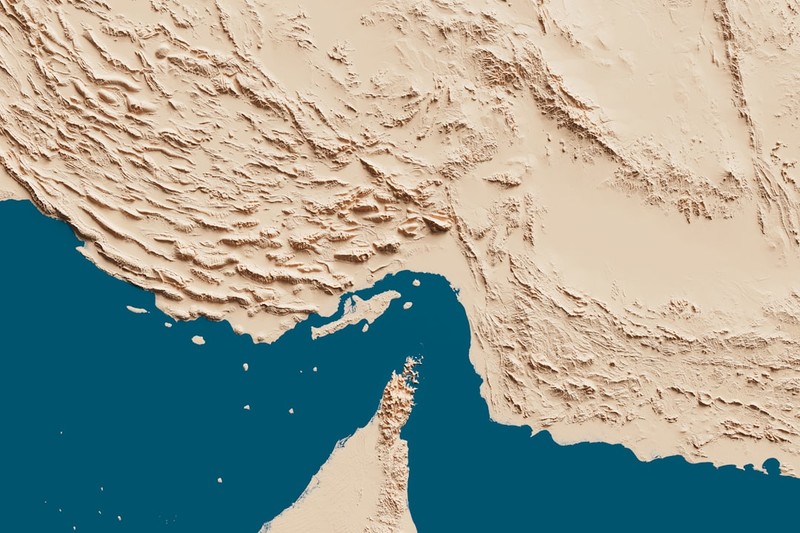
“Project Freedom” has the trappings of a major military operation: guided-missile destroyers, more than 100 aircraft, and 15,000 American service members. It has a presidential announcement, a cinematic name, and a start date of Monday morning. What it does not have, as of Sunday evening, is any public explanation of what it actually entails.
President Donald Trump announced the initiative in a lengthy Truth Social post, promising to “guide” stranded commercial vessels safely out of the Strait of Hormuz — the narrow waterway that Iran has effectively closed since the US-Israeli war began on February 28. The post was long on humanitarian framing and short on operational detail. It ended with a warning: if the process “is interfered with, that interference will, unfortunately, have to be dealt with forcefully.”
“What does ‘guide’ mean?” is not a semantic question. The strait is 21 nautical miles wide at its narrowest point. Iranian patrol boats — some little more than outboard-motor skiffs — have attacked or threatened at least two dozen vessels since the conflict began. On Sunday, hours before Trump’s announcement, a cargo ship near the strait reported being attacked by multiple small craft, according to the British military’s maritime monitoring center. It was the first such incident since April 22. Trump last month ordered the US military to “shoot and kill” small Iranian boats that deploy mines in the strait. An escort operation would place American naval assets within range of forces that have demonstrated both capability and intent.
US Central Command said the mission would involve destroyers, aircraft, unmanned platforms, and 15,000 personnel. Admiral Brad Cooper, the CENTCOM commander, said the operation was essential to regional security and the global economy while the US also maintained its naval blockade on Iran. The Pentagon declined to answer questions about deployment. No allied navies were mentioned. No rules of engagement were disclosed.
20,000 Seafarers and a Fifth of the World’s Oil
As of April 29, more than 900 commercial vessels remained in the Persian Gulf, according to maritime intelligence firm AXSMarine — down from over 1,100 when the conflict started. Roughly 20,000 seafarers, many from India and Southeast Asia, are trapped aboard tankers and cargo ships, running low on food and drinking water. Crew members have described to the Associated Press watching intercepted drones and missiles explode overhead.
The strait typically carries about a fifth of global oil and natural gas, along with fertilizer and other petroleum products critical to supply chains worldwide. Its closure has sent crude prices roughly doubling from pre-war levels. Brent crude stood at $106.34 per barrel after Trump’s announcement, down more than $1 on the day as traders priced in the possibility of a breakthrough. US petrol has climbed to $4.44 a gallon, from under $3 before the war, fuelling inflation and eroding public support for the conflict.
OPEC+ announced Sunday that seven members would increase production by 188,000 barrels per day in June — a largely symbolic move, given that millions of barrels daily have been removed from the market by the Hormuz closure.
A Ceasefire at the Breaking Point
Iran’s response to Project Freedom was swift and unequivocal. Ebrahim Azizi, head of the national security commission in Iran’s parliament, declared that any American interference in the strait would be considered a ceasefire violation. Iran’s state-run IRNA called the announcement part of Trump’s “delirium.” The Revolutionary Guards warned that Washington faced a choice between an impossible military operation and a bad deal.
Deputy parliament speaker Ali Nikzad declared that Tehran “will not back down from our position on the Strait of Hormuz, and it will not return to its prewar conditions.”
The rhetoric is bellicose, but the economic picture tells a different story. The US naval blockade of Iranian ports, in place since April 13, has tightened the noose. CENTCOM said 49 commercial ships have been turned back. Treasury Secretary Scott Bessent said Sunday that Iran has collected less than $1.3 million in tolls from its own Hormuz blockade — a fraction of pre-war daily oil revenues. Iranian storage is filling rapidly, Bessent said, and Tehran may be forced to shut in wells within a week. The rial has weakened to 1,840,000 to the dollar, with analysts predicting further declines.
Diplomacy or Escalation?
The announcement landed against a fragile diplomatic backdrop. A three-week ceasefire has held since April 8, with one round of direct talks in Islamabad. Pakistan has continued shuttling messages between the sides.
Iran said Sunday it was reviewing Washington’s response to a 14-point proposal for ending the war, which calls for resolving all issues within 30 days, lifting sanctions, ending the blockade, withdrawing US forces, and halting Israeli operations in Lebanon. Tehran has been explicit: these are not nuclear negotiations.
Trump told Israeli public broadcaster Kan the proposal was not acceptable, writing Saturday that Iran “has not yet paid a big enough price.” Yet hours later he described “very positive discussions” that “could lead to something very positive for all,” and called the ship operation a humanitarian gesture on behalf of Iran.
The gap between these statements is the gap at the center of Project Freedom. Is it a genuine effort to free stranded civilians while negotiations proceed? A pressure tactic to force concessions at the table? Or the opening move of a broader confrontation that a single miscalculation in a narrow waterway could ignite?
Senator Jack Reed, the ranking Democrat on the Senate Armed Services Committee, offered his assessment on ABC News: “I don’t believe the president has a plan.”
By Monday morning in the Middle East, the world will begin to learn whether one exists.
Sources
- Trump says the US will ‘guide’ stranded ships from the Strait of Hormuz, starting on Monday — Associated Press
- Trump says US and Iran in ‘positive’ talks, unveils plan to escort Hormuz ships — Channel News Asia
- Trump says US will ‘help free up’ ships stuck in Hormuz Strait — Al Jazeera
- Live Updates: Trump announces new effort to escort ships out of Strait of Hormuz — CBS News
Discussion (9)