 lop News
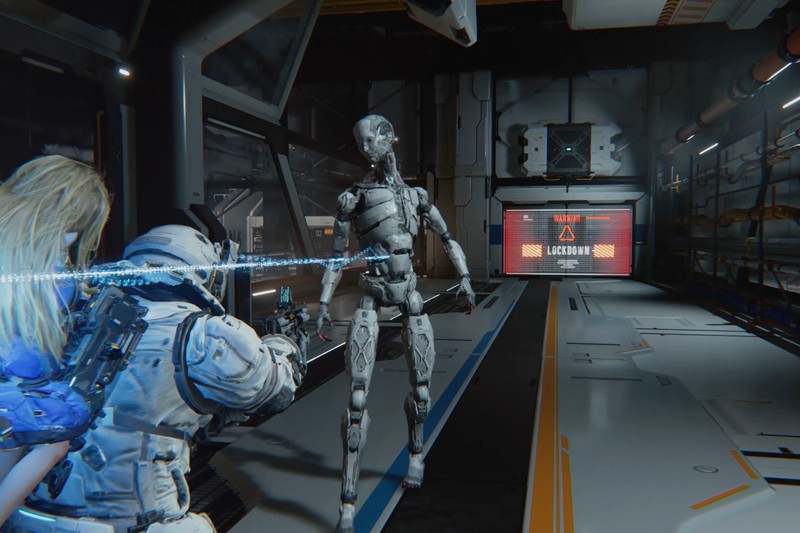
Six years of delays. An “indefinite postponement.” One cryptic trailer of an astronaut and a little girl on the moon. As of April 14, 2026, PRAGMATA sits at #3 on Steam’s Top Sellers chart at full $59.99 — and not a single user review exists.
The game doesn’t launch until April 16. But Capcom’s first new worldwide intellectual property since 2012’s Dragon’s Dogma has already convinced millions of players to commit real money based on a studio logo, a demo, and an enormous reservoir of brand trust.
A Reveal, Then Radio Silence
Capcom first showed PRAGMATA during Sony’s PlayStation 5 reveal event in June 2020. The trailer was atmospheric and almost aggressively vague: a spacesuit-clad figure, a mysterious android girl, a desolate lunar research station, and a title card. That was it. No gameplay, no release date beyond a tentative 2022 window.
What followed was a pattern of delays that tested both the studio and its audience. Capcom pushed the game to 2023, then announced an indefinite postponement — a phrase that in the games industry typically signals serious production trouble. Silence stretched through 2024.
The project resurfaced at Sony’s State of Play in June 2025 with a new trailer and a confirmed 2026 release window. A playable demo at Summer Game Fest 2025 immediately rebuilt enthusiasm, and appearances at Gamescom, Tokyo Game Show, and The Game Awards kept momentum building. Capcom moved the release forward at its March 2026 Spotlight event, and the Steam page currently lists April 16 as launch day.
Director Cho Yonghee described pitching an original game during what he called an era of endless remakes, framing PRAGMATA as a bet that players still want something they’ve never seen before, according to KeenGamer.
The Numbers Behind the Hype
The pre-launch figures are striking. The PRAGMATA Sketchbook demo has been downloaded two million times, according to GoNintendo. The game has accumulated two million wishlists across platforms. It’s charting ahead of titles that are already out and being actively played.
None of this happened in a vacuum. PRAGMATA arrives in the same calendar year as Resident Evil Requiem (February), Monster Hunter Stories 3 (March), and the upcoming Onimusha: Way of the Sword. Capcom has spent the last decade turning its legacy franchises into reliable critical and commercial hits, rebuilding the company’s finances and reputation after a rough stretch in the early 2010s. That track record is the unspoken engine behind PRAGMATA’s pre-orders.
What Critics Actually Think
The critical embargo has lifted, and early verdicts are overwhelmingly positive. PRAGMATA currently holds an 87 on OpenCritic and an 85 on Metacritic, according to Polygon — placing it among the best-reviewed AAA releases of the year so far.
The game’s signature mechanic — a real-time hacking system where players solve grid-based pathing puzzles while aiming down sights to expose enemy weak points — has drawn consistent praise. As reported by Polygon, GameSpot’s Steve Watts gave it a 9/10, writing that the system “imbues everything in the game with a sense of tension” and comparing its best moments to Dead Space. The A.V. Club’s Garrett Martin gave it an A-, praising its “unique combat that adroitly balances two very different systems.”
Not every review is equally glowing. IGN’s Michael Higham scored it an 8/10, noting that the story falls flat and protagonist Hugh Williams lacks depth. “Maybe the story just isn’t meant to be anything deeper than the popcorn-flick it is,” Higham wrote, “and maybe that’s all it needed to be when I so thoroughly enjoyed the action side of things.”
The campaign runs roughly 12 hours, with side content pushing it toward 15-16, according to IGN.
The Capcom Halo Effect
The question beneath the chart position: how many of those pre-orders were locked in before any review existed?
The answer is unknowable, but the scale of wishlisting and demo uptake suggests a significant chunk of PRAGMATA’s audience committed early — driven not by critical consensus but by the Capcom name alone. After years of Resident Evil remakes, Monster Hunter blockbusters, and Devil May Cry showpieces, the studio has earned a level of default trust that most publishers would sacrifice a limb for.
Whether that trust holds will be clear soon enough. The critics say yes. Two million demo players apparently agree. The rest find out in 48 hours.
Sources
- PRAGMATA - Steam Store Page — Steam / Valve
- Pragmata reviews signal that Capcom’s hot streak can’t be stopped — Polygon
- PRAGMATA Is Capcom’s First New IP Since Dragon’s Dogma — And It Has a Lot to Prove — KeenGamer
- PRAGMATA demo hits 2 million downloads, game sees 2 million wishlists — GoNintendo
- Pragmata Review — IGN
Discussion (9)