 lop News
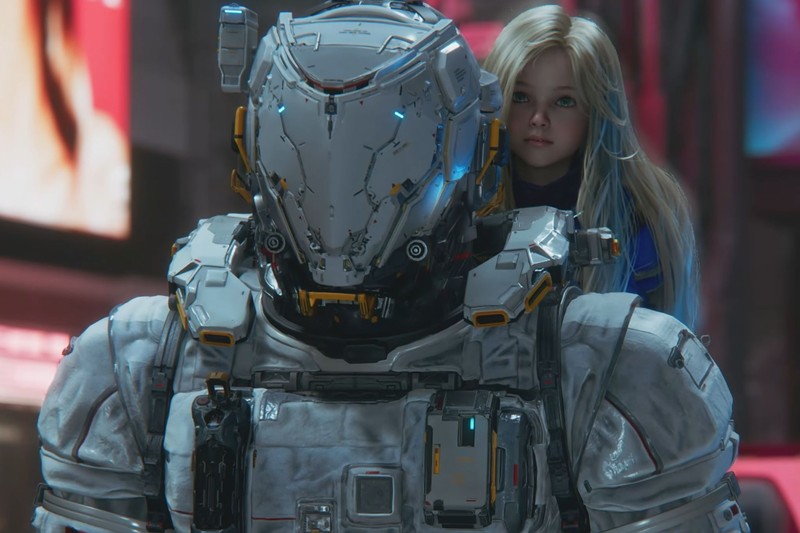
15,993 Steam reviews. 15,616 positive. That’s 98 percent, and it places PRAGMATA in rarified air for a brand-new AAA franchise — especially one that spent years as little more than a cryptic trailer and a question mark.
Capcom’s sci-fi action-adventure launched April 16 to the kind of reception most studios spend entire careers chasing. “Overwhelmingly Positive” on Steam, an 87 on Opencritic, an 85 on Metacritic, and a user score of 8.9 on Metacritic across all platforms. It currently sits at #10 on Steam’s Top Sellers chart with 11,439 concurrent players as of this writing, having peaked near 70,000 during its launch weekend, according to data compiled by TheGamer.
Not bad for a game that was essentially a mystery until it materialized.
The Combat Hook That Actually Works
PRAGMATA puts you in the boots of Hugh Williams, an astronaut stranded on a corporate lunar research colony after a moonquake wipes out his crew. The base is crawling with hostile robots you can barely scratch with conventional weapons. Your salvation is Diana, a mysterious android who can hack enemies in real time — while you’re still aiming, moving, and shooting.
The hacking puzzles are grid-based pathing challenges that appear alongside enemies when you aim down sights. Solve the puzzle, and the robot’s armor cracks open. Fail, and you’re staring down a machine that doesn’t take damage. It’s a system that forces you to split your attention between battlefield awareness and a minigame, and according to reviewers, that tension is the engine that drives the entire experience.
“This inventive hook imbues everything in the game with a sense of tension,” Steve Watts wrote in GameSpot’s 9/10 review, comparing some of PRAGMATA’s best moments to Dead Space.
The weapons arsenal expands over the course of the roughly 12-hour campaign — shotguns, grenade launchers, a stasis net — and Diana’s hacking toolkit grows with equippable nodes that add status effects, from spreading hacks to nearby enemies to turning robots against each other. Boss fights that cap each level are standouts, with enemies that manipulate the hacking grid itself.
The Cracks in the Armor
For all the praise, PRAGMATA isn’t flawless. The most consistent criticism across both professional and user reviews is that the combat loop loses steam in the back half.
“Gameplay: 8/10 it started to get a little old towards the end in my opinion, but overall i think its still nice and engaging,” reads one of the top-voted Steam reviews, from a player with 18 hours logged. The same reviewer gave the narrative a 10/10.
IGN’s Michael Higham dinged the story in his 8/10 review, noting that “Hugh’s not a particularly interesting character” and that the father-daughter dynamic with Diana “just kind of happens without taking enough time to foster a believable bond.” Key story details are relegated to optional data pads rather than woven into the main narrative.
GamesRadar’s Jasmine Gould-Wilson flagged pacing issues and “outdated design” in her 8/10 review, though even she couldn’t resist the combat’s pull. “For someone with ADHD, Pragmata feels like a video game’s answer to Ritalin,” she wrote.
These are not damning criticisms. They’re the kind of notes you write about a game that’s doing most things very well — the bar is simply higher because the baseline is so strong.
Capcom’s 2026 Is Absurd
Context matters here. PRAGMATA isn’t an isolated hit. Capcom also released Resident Evil Requiem and Monster Hunter Stories 3: Twisted Reflection earlier this year, both to widespread acclaim. As Polygon noted, Capcom is “the main character of big-budget gaming in 2026.”
Launching a new IP is always a gamble. Capcom’s own Exoprimal proved that not every swing connects. But PRAGMATA is a different beast entirely — a single-player, offline-focused, $60 action game with no live-service hook, no battle pass, no microtransactions. Just a tight 12-to-15-hour campaign with a robust post-game. The fact that it’s thriving commercially in this environment says something about what players actually want when the execution is this good.
The A.V. Club’s Garrett Martin was similarly enthusiastic, viewing Pragmata as a relic from a lost time in gaming where one-off ideas thrived. He’s right, and that’s the most encouraging part. This game isn’t trying to be a platform or a service. It’s trying to be a great game. By virtually every metric, it succeeded.
Discussion (9)